Roast Sirloin of Beef (1868)
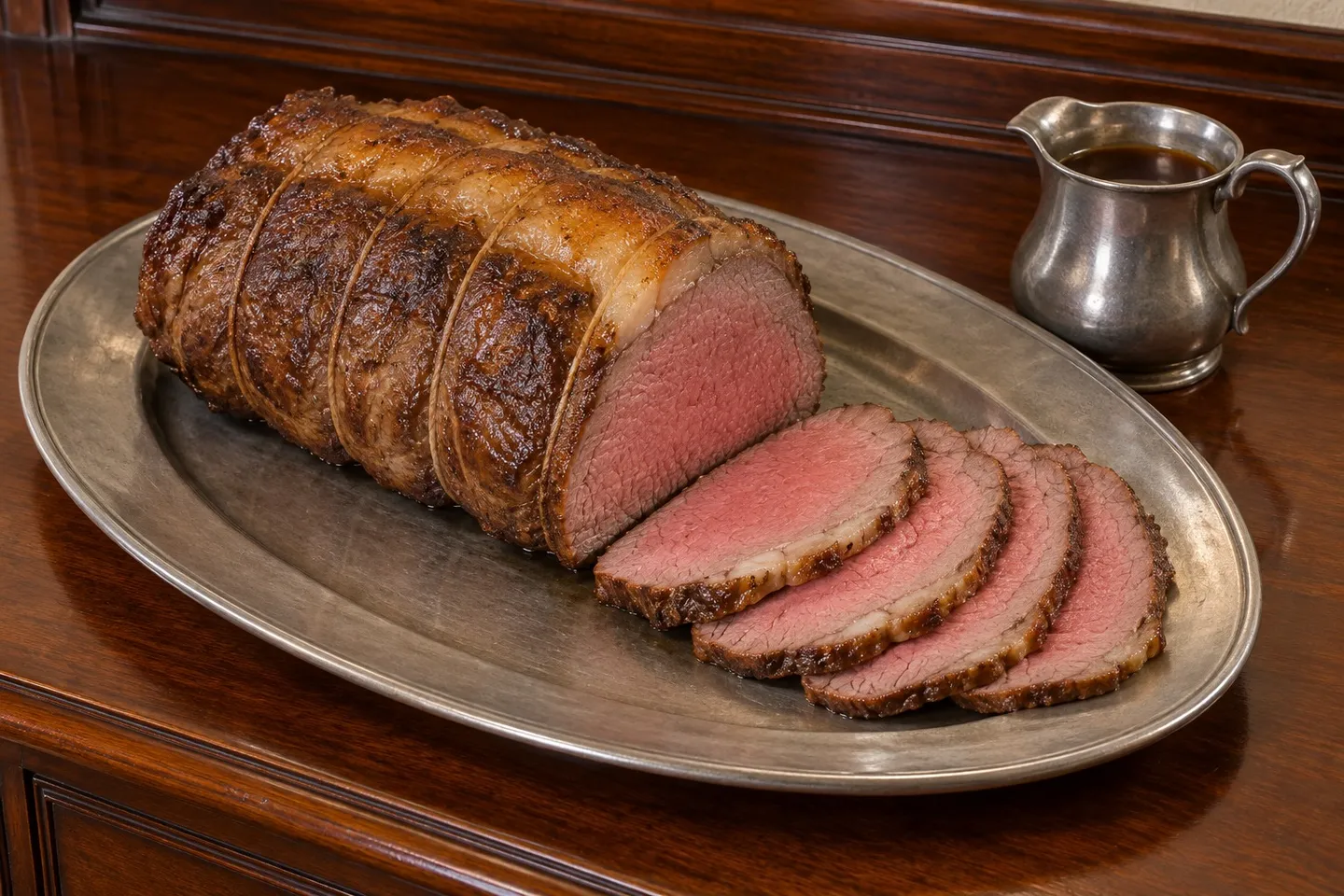
Reader ratingsJules Gouffé’s roast sirloin of beef, 1868: a tied joint roasted plain, with no seasoning before it cooks, and its own juices poured over at the table.
- Recipe makes
- About 1.5 kg roast beef, 8 servings
- Prep
- Cook
- Total
Take the beef out of the fridge an hour before roasting (not counted). It roasts about 20 minutes hot and 50 to 60 minutes more, then rests 20 minutes, which the cook time includes.
A rolled roast sirloin of beef, partly carved, with a jug of its juices.
The story behind the recipe
“Butcher’s meat needs no other flavour than its own,” Jules Gouffé wrote in 1868, and his sirloin follows the rule. The joint is tied, set on the spit and roasted as it is. On the menu of the supper at the Suez Canal opening, held at Ismailia on November 18, 1869, and printed by Fin-Bec in London seven years later, Roast Beef à l’Anglaise is the one dish named in English words, second among the large pieces after the fish of the two seas.
What did a French chef make of English roast beef?
He gave it a plain roasting on the spit, the English way. Gouffé was chef de cuisine of the Paris Jockey Club, and The Royal Cookery Book, the English version of his Livre de cuisine, came out in London a year before the canal opened. Its roast meats come with a short sermon: “I do not advise flavouring the meat in any way before roasting,” he writes; the only thing allowed is a little oil on a joint that must wait before it cooks, and that is to keep it, with no flavor in mind. Meat at its best, he adds, is cooked “neither too fresh nor high.”
His sirloin is the part of the loin with the fillet still attached, tied with the flap folded under and roasted on a spit before the fire. A seven-pound piece, he says, takes an hour and three quarters. Fin-Bec’s page names the joint and says nothing of how the cooks at Ismailia roasted theirs, or on what kind of fire.
Read more about this recipe
Making it today
A spit is the one thing most kitchens lack, so the beef roasts in the oven, first hot to brown it and then more gently, and a thermometer decides when it is done. A boned and rolled sirloin of about 2 kg makes a joint for eight. Salt and pepper wait for the table, and the juices from the tin are poured over the carved meat, as he does for his roast rib.
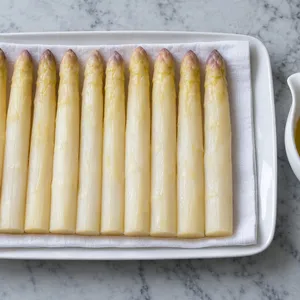
Sliced cold, the beef can share the table with Gouffé’s Asparagus with Oil and Vinegar (1868), which the same menu lists in its salad course.
The sirloin is the part of loin with the fillet attached.
Tie the flap end underneath, an put on the spit as indicated in Plate IV. No. 6. A piece of sirloin weighing 7 lbs. will take an hour and three quarters’ roasting.
Recipe makes: About 1.5 kg roast beef, 8 servings
Ingredients
For about 1.5 kg roast beef, 8 servings. Quantities are shown as written.
Quantities as written here, for about 1.5 kg roast beef, 8 servings.
- Boneless sirloin of beef, rolled2 kg
- Water, for the pan juices150 ml
- Flaky salt, to serve1 tsp
- Ground black pepper, to serve1/2 tsp
Measurement notes
Ingredients as written here
- 2 kg boneless sirloin of beef, rolled
- 150 ml water, for the pan juices
- 1 tsp flaky salt, to serve
- ½ tsp ground black pepper, to serve
Equipment
- Roasting tin with a rack
- Kitchen string
 Instant-read thermometer
- Fine sieve and a small spoon for skimming
- Carving board and a warm platter
Instructions
Take the sirloin of beef out of the fridge about an hour before roasting. If the butcher has not tied it, tie it with string at intervals of about 3 cm (1¼ in) so it keeps a round shape. Do not season it.
Heat the oven to 425°F (220°C), or 400°F (200°C) fan. Set the beef on the rack in the roasting tin, fat side up.
Roast for 20 minutes, until the outside has browned.
Pour the water into the tin under the rack, turn the oven down to 350°F (180°C), or 325°F (160°C) fan, and roast for 50 to 60 minutes more. Check the center of the joint with the thermometer from 40 minutes on, and take it out when it reads 145°F (63°C), the USDA safe minimum for a beef roast.
Move the beef to the carving board, cover it loosely with foil and let it rest for 20 minutes; the center will rise a few degrees more.
Strain the juices from the tin into a small pan, skim off the fat with the spoon and warm them through.
Remove the string, carve the beef across the grain into thin slices on the warm platter, and pour the juices over. Serve the flaky salt and black pepper at the table.
Nutrition
420calories per serving
- Recipe makes
- About 1.5 kg roast beef, 8 servings
- Servings
- 8
Estimated per serving (8) from USDA FoodData Central values for roasted beef top loin, lean and fat.
Recipe notes
When adjusting quantities
Allow about 250 g of raw boneless sirloin a head. A larger joint needs more time at the lower heat; go by the thermometer.
Notes
Quantities mentioned in these notes don’t change when you adjust the servings.
Gouffé roasts a 7 lb (about 3.2 kg) sirloin on the bone, with the fillet, on a spit in front of the fire; we use a boneless rolled joint, an oven at two heats, a thermometer and a rest. His sirloin recipe has no gravy; pouring the skimmed tin juices over the meat comes from his roast rib on the same page, and we add water to the tin to keep the juices from burning. He seasons nothing before roasting, and the salt and pepper at the table are our addition. Chill leftovers within 2 hours; cold roast beef, thinly sliced, keeps 3 to 4 days in the fridge.
Scaling changes the ingredients only; pan sizes and cooking times need their own judgment. To adapt this recipe further, try the recipe tool at TuneMyRecipe (opens in a new tab), our sister site.
Sources and attribution
After Jules Gouffé, The Royal Cookery Book, trans. Alphonse Gouffé (London: Sampson Low, 1868), Roast Sirloin of Beef; the dish as named on the Ismailia supper menu of November 18, 1869
See the original pages (scan at Internet Archive) (opens in a new tab)
Recipe details
- Course
- Main course
- Dish family
- Meat & Poultry
- Region
- French
- Era
- 19th century
- Source decade
- 1860s
- Main ingredient
- Beef
- Difficulty
- Easy
- Occasion
- Dinner partyState banquet
- Season
- Autumn