Water Bread (1896)
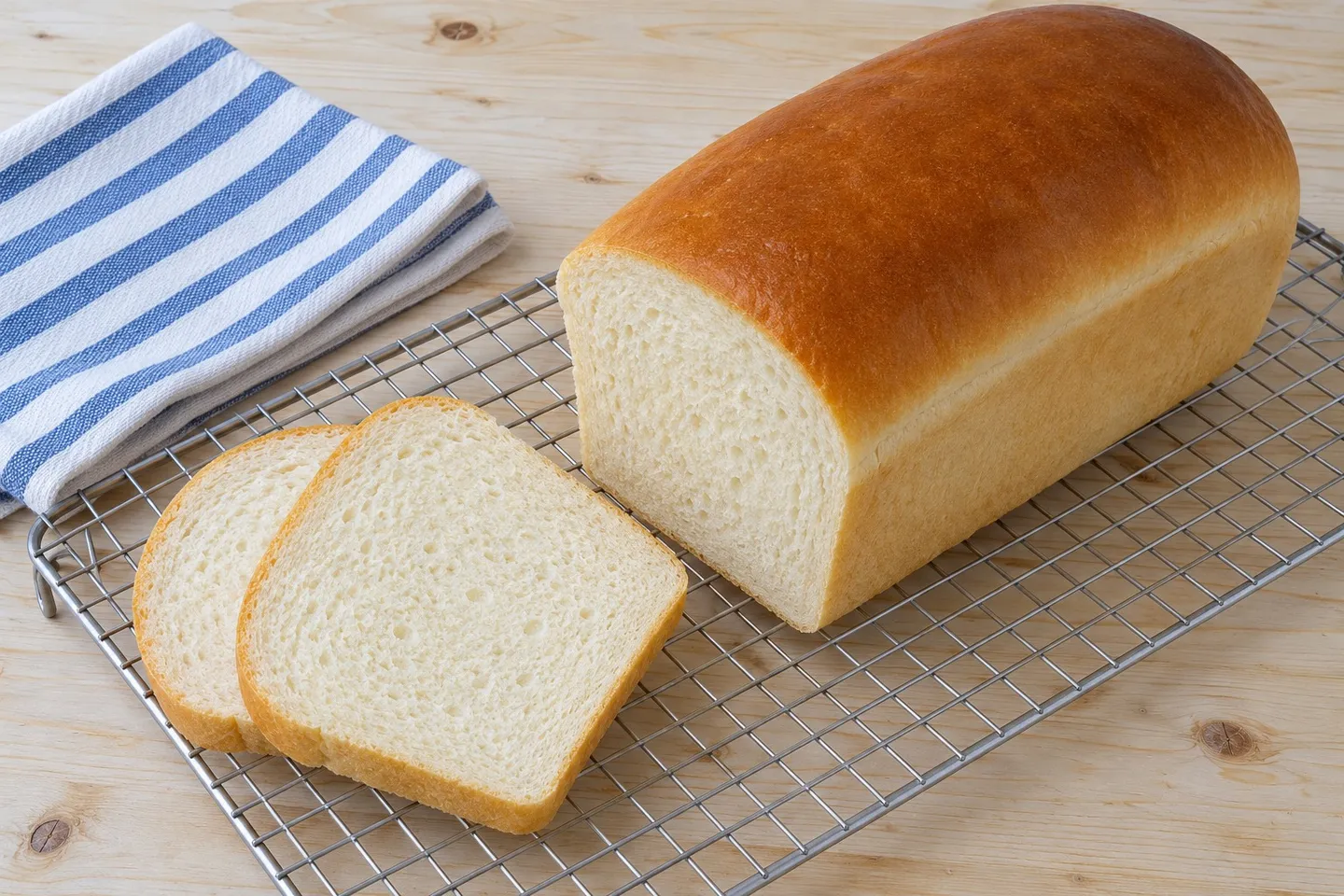
Reader ratingsFannie Farmer’s Water Bread from The Boston Cooking-School Cook Book, 1896: a plain white yeast loaf of water, flour, a little butter, lard and sugar, kneaded, raised twice and baked in a hot oven.
- Recipe makes
- 1 loaf, about 12 slices
- Prep
- Cook
- Total
About 25 minutes to mix, knead and shape, 2 hours for the first rise and 1 hour for the second, 35 to 40 minutes in the oven, then about 1 hour on the rack before slicing.
A white yeast loaf cooling on a rack, with two slices cut.
The story behind the recipe
Water Bread is the plainest yeast loaf in Fannie Merritt Farmer’s 1896 Boston Cooking-School Cook Book: boiling water, a tablespoon each of butter, lard and sugar, salt, a quarter of a yeast cake and six cups of sifted flour. Raised overnight and baked in a hot oven, it made, in Farmer’s words, “a double loaf of bread and pan of biscuit.”
Counted loaves
Djefaihapi’s contracts at Asyut count bread with care and never say how it was made. The third promises him 400 flat loaves and 10 white loaves from the senior priest alone at the Wag feast; the fourth asks each lay priest for a white loaf for his statue on the same day. Nothing gives the loaves’ size, flour or rising, and no Egyptian recipe for them survives. Farmer’s recipe, printed in Boston about 3,800 years later, comes from an American kitchen. What it adds to a tally is scale: one batch of her dough becomes two loaves, or one loaf and a pan of biscuits, depending on how the cook shapes it. The Governor Who Made a Contract With Himself follows the loaves from one contract to the next.
Farmer could time the bread but not measure the oven. Her pages on baking expect the loaf to keep rising for the first fifteen minutes, brown for the next twenty and finish in the last fifteen, yet she admits, “Experience is the best guide for testing temperature of oven. Various oven thermometers have been made, but none have proved practical.” She also notes that bread shortened with butter “has a good flavor, but is not as white as when lard is used,” which is why the recipe asks for both.
Read more about this recipe
Making it today
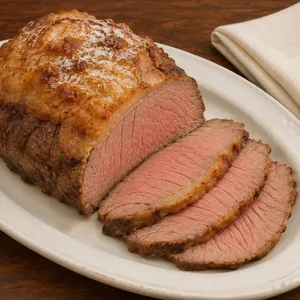
This is half her quantity, one loaf, raised during the day. Farmer allowed for that herself: “Bread mixed and baked during the day requires a larger quantity of yeast.” Using active dry yeast in place of her yeast cake, and the amount of it, are our choices, as are the oven settings and the loaf pan. Farmer’s Roast Beef (1896) follows the same plan in the oven, a hot start and a lowered heat.
Water Bread.
2 cups boiling water. 1 tablespoon butter. 1 tablespoon lard. 1 tablespoon sugar. 1½ teaspoons salt. ¼ yeast cake dissolved in ¼ cup lukewarm water. 6 cups sifted flour.
Put butter, lard, sugar, and salt in bread raiser, or large bowl without a lip; pour on boiling water; when lukewarm, add dissolved yeast cake and five cups of flour; then stir until thoroughly mixed, using a knife or mixing-spoon. Add remaining flour, mix, and turn on a floured board, leaving a clean bowl; knead until mixture is smooth, elastic to touch, and bubbles may be seen under the surface. Some practice is required to knead quickly, but the motion once acquired will never be forgotten. Return to bowl, cover with a clean cloth kept for the purpose, and board or tin cover; let rise over night in temperature of 65° F. In morning cut down: this is accomplished by cutting through and turning over dough several times with a case knife, and checks fermentation for a short time; dough may be again raised, and recut down if it is not convenient to shape into loaves or biscuits after first cutting. When properly cared for, bread need never sour. Toss on board slightly floured, knead, shape into loaves or biscuits, place in greased pans, having pans nearly half full. Cover, let rise again to double its bulk, and bake in hot oven. (See Baking of Bread and Time Table for Baking.) This recipe will make a double loaf of bread and pan of biscuit. Cottolene, coto-suet, or beef drippings may be used for shortening, one-third less being required. Bread shortened with butter has a good flavor, but is not as white as when lard is used.
Recipe makes: 1 loaf, about 12 slices
Ingredients
For 1 loaf, about 12 slices. Quantities are shown as written.
Quantities as written here, for 1 loaf, about 12 slices.
- Boiling water1 cup
- Butter1/2 tbsp
- Lard1/2 tbsp
- Sugar1/2 tbsp
- Salt3/4 tsp
- Active dry yeast1 tsp
- Lukewarm water2 tbsp
- Sifted all-purpose flour3 cups
- All-purpose flour, for the board2 tbsp
- Soft butter, for the pan1 tsp
Measurement notes
Ingredients as written here
- 1 cup boiling water
- ½ tbsp butter
- ½ tbsp lard
- ½ tbsp sugar
- ¾ tsp salt
- 1 tsp active dry yeast
- 2 tbsp lukewarm water
- 3 cups sifted all-purpose flour
- 2 tbsp all-purpose flour, for the board
- 1 tsp soft butter, for the pan
Equipment
 Large heatproof bowl
 Wooden spoon
 Instant-read thermometer
 Clean kitchen towel
 Loaf pan
 Wire rack
Instructions
Put the butter, lard, sugar and salt in the large bowl and pour on the boiling water. Stir until the fats melt, then leave it until it cools to lukewarm, about 100°F (38°C).
Meanwhile, stir the active dry yeast into the lukewarm water, about 105°F (41°C), and leave it for 5 minutes, until it looks creamy.
Add the yeast to the bowl with all but a sixth of the sifted flour, and stir with the wooden spoon until it is thoroughly mixed.
Stir in the rest of the sifted flour. Dust the board with some of the flour for the board and turn the dough out onto it.
Knead for about 10 minutes, dusting with a little more of the board flour only if the dough sticks, until it is smooth and elastic and you can see small bubbles under the surface.
Put the dough back in the bowl, cover it with the towel and leave it in a warm place, about 75°F (24°C), until it has doubled in bulk, about 2 hours.
Cut down the dough: cut through it and turn it over several times with a knife or the spoon, until it collapses.
Grease the 8½ by 4½-inch (21 by 11 cm) loaf pan with the soft butter for the pan. Knead the dough briefly on the lightly floured board, shape it into a smooth loaf with the seam underneath and set it in the pan.
Cover and leave it to rise again until doubled in bulk and just domed above the rim, about 1 hour. Heat the oven to 400°F (200°C) while it rises.
Bake for 15 minutes, while the loaf finishes rising, then turn the oven down to 375°F (190°C) and bake for 20 to 25 minutes more, until it is well browned. The loaf is done when it comes away from the sides of the pan and the center reads 195°F (91°C).
Turn the loaf out of the pan at once and set it on its side on the wire rack. Leave it uncovered for a crisp crust, or cover it with the towel for a soft one. Let it cool for about 1 hour before slicing.
Nutrition
120calories per serving
- Recipe makes
- 1 loaf, about 12 slices
- Servings
- 12
Estimated per slice (12) from USDA FoodData Central values for all-purpose flour, butter, lard and sugar.
Recipe notes
When adjusting quantities
Half of Farmer’s quantity, for one loaf. Doubled, it is her full recipe, which she says makes a double loaf of bread and a pan of biscuit.
Notes
Quantities mentioned in these notes don’t change when you adjust the servings.
This is half Farmer’s recipe by volume, with her 65°F (18°C) overnight rise moved to a warm daytime rise, as she allows for bread made during the day. Her quarter yeast cake becomes 1 teaspoon of active dry yeast, our choice, and the dough is mixed with a spoon in place of her knife. The pan size, the oven settings, the times, the extra flour for the board and the butter for greasing are ours; her baking pages give the timing pattern (rising, browning, finishing with the heat reduced) and the cue that a done loaf “will not cling to sides of pan.” She allows cottolene, coto-suet or beef drippings for the butter and lard, using a third less. Once cool, keep the bread in a tin box or jar, covered closely, as she advises, and never wrapped in cloth, which she says gives it an unpleasant taste.
Scaling changes the ingredients only; pan sizes and cooking times need their own judgment. To adapt this recipe further, try the recipe tool at TuneMyRecipe (opens in a new tab), our sister site.
Sources and attribution
After Fannie Merritt Farmer, The Boston Cooking-School Cook Book (Boston, 1896), Water Bread, with her Baking of Bread; half the quantity, raised in the daytime
See the original pages (scan at Internet Archive) (opens in a new tab)
Recipe details
- Course
- Bread & baking
- Dish family
- Breads & Cakes
- Region
- American
- Era
- 19th century
- Source decade
- 1890s
- Difficulty
- Intermediate