Roast Beef (1896)
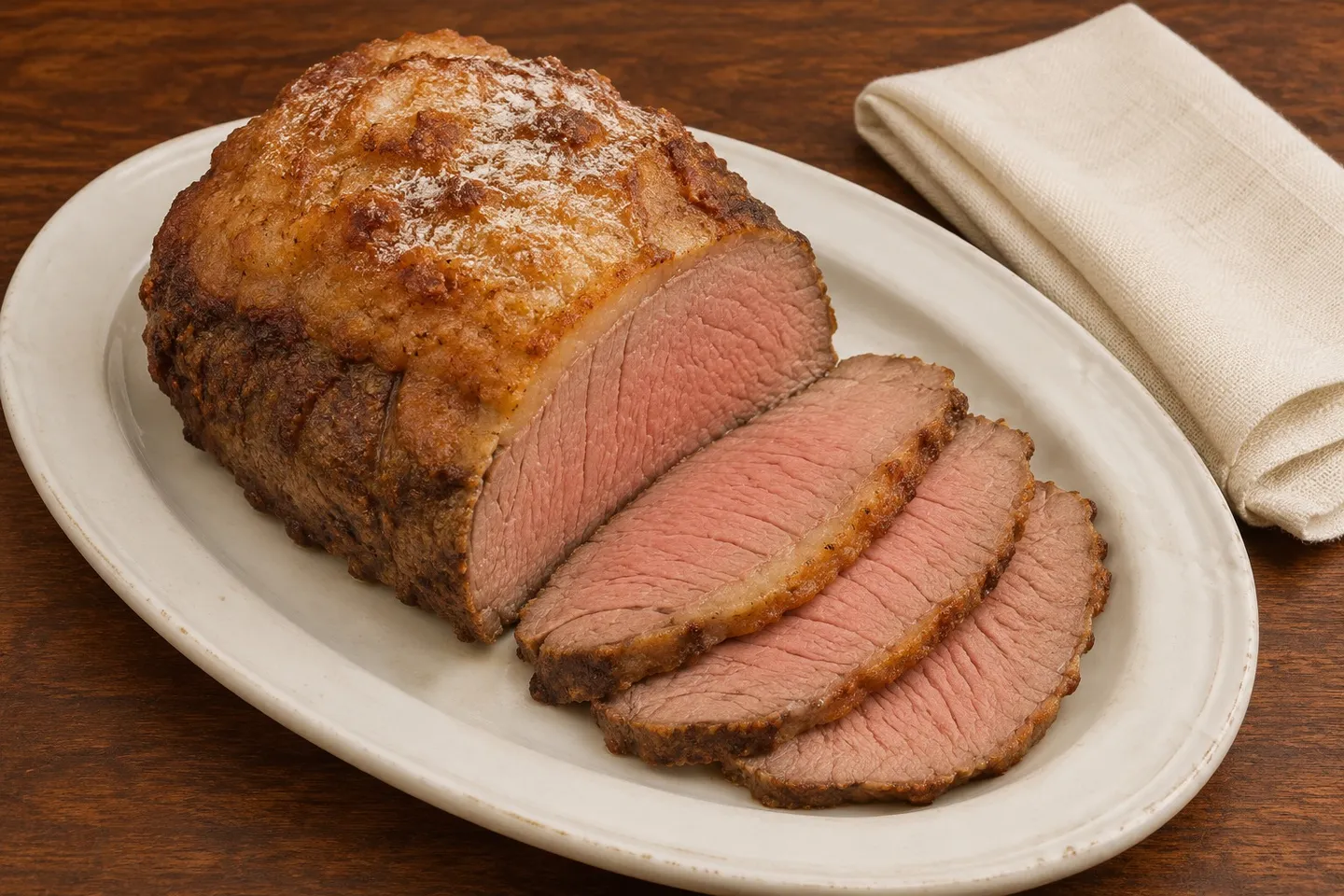
Reader ratingsFannie Farmer’s roast beef from The Boston Cooking-School Cook Book, 1896: a rib roast salted and floured, seared in a hot oven, basted every ten minutes and turned for a final browning.
- Recipe makes
- One 2 lb roast, 4 servings
- Prep
- Cook
- Total
About 65 minutes in the oven: 15 minutes at 425°F (220°C), then about 50 at 350°F (175°C) until the center reads 145°F (63°C). Then a 10-minute rest before carving.
A rib roast of beef with a browned, floured fat cap, partly carved.
The story behind the recipe
Fannie Merritt Farmer’s roast beef is a list of jobs for the cook: wipe the meat, salt it, flour it, sear it, lower the heat, baste it every ten minutes and turn it halfway so the fat side finishes on top. Her Boston Cooking-School Cook Book printed it in 1896 as “To Roast Beef,” and it stands here for the roast of meat that Djefaihapi, governor of Asyut, had owed to his statue from every bull slaughtered in Wepwawet’s temple.
A roast with no recipe
The contract names the roast and says where it goes: “due to my statue, (which is) in charge of my mortuary priest.” It gives no cut, weight, heat or seasoning, and no Egyptian recipe for it survives. This recipe was printed in Boston some 3,800 years later and shows nothing about how temple cooks roasted a bull. It shows the instructions a contract never needed, the story told in The Governor Who Made a Contract With Himself.
Farmer was exact about method and loose about quantity. She names no weight of salt, flour or fat, and sends the cook to a timetable on page 34 that covers sirloin or rib, rare or well done, at five and ten pounds: a rare five-pound roast in 1 hour 5 minutes, a well-done ten-pound one in 1 hour 50. Her ideal was beef “red throughout, with a crisp layer of golden brown fat on the top.” She had views on supply as well. Chicago Butt, a cut from the back of the rump, came “from Chicago, our greatest beef centre,” and from a heavy animal made “excellent roasts at a small price.”
Read more about this recipe
Making it today
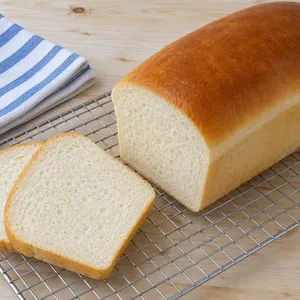
A two-pound boneless rib roast with its fat cap keeps the dish to one dinner; the cap takes the place of Farmer’s “skin side,” which starts face down and finishes face up. The size, the oven settings and the turning time are our choices, since Farmer leaves the heat to the cook’s judgment. The thermometer is ours too: her slices red throughout are rarer than the 145°F (63°C) that the USDA gives for a beef roast, so this one cooks to that and rests before carving. Farmer’s own Water Bread (1896) bakes in the morning and leaves the oven free for the beef.
To Roast Beef. Wipe, put on a rack in dripping-pan, skin side down, rub over with salt, and dredge meat and pan with flour. Place in hot oven, that the surface may be quickly seared, thus preventing escape of inner juices. After flour in pan is browned, reduce heat, and baste with fat which has tried out; if meat is quite lean, it may be necessary to put trimmings of fat in pan. Baste every ten minutes; if this rule is followed, meat will be found more juicy. When meat is about half done, turn it over and dredge with flour, that skin side may be uppermost for final browning. For roasting, consult Time Table for Baking Meats, page 34.
If there is danger of flour burning in pan, add a small quantity of water; this, however, is not desirable, and seldom need be done if size of pan is adapted to size of roast. Beef to be well roasted should be started in hot oven and heat decreased, so that when carved the slices will be red throughout, with a crisp layer of golden brown fat on the top. Beef roasted when temperature is so high that surface is hardened before heat can penetrate to the centre is most unsatisfactory.
Sirloin or rib roasts may have the bones removed, and be rolled, skewered, and tied in shape. Chicago Butt is cut from the most tender part of back of rump. They are shipped from Chicago, our greatest beef centre, and if fresh and from a heavy creature, make excellent roasts at a small price.
Recipe makes: One 2 lb roast, 4 servings
Ingredients
For One 2 lb roast, 4 servings. Quantities are shown as written.
Quantities as written here, for One 2 lb roast, 4 servings.
- Boneless beef rib roast, with its fat cap2 lb
- Fine salt1 tsp
- All-purpose flour, for the first dredging1 tbsp
- All-purpose flour, for the second dredging1 tbsp
- Beef drippings, if the roast gives little fat1 tbsp
- Water, only if the flour in the pan starts to burn1/4 cup
Measurement notes
Ingredients as written here
- 2 lb boneless beef rib roast, with its fat cap
- 1 tsp fine salt
- 1 tbsp all-purpose flour, for the first dredging
- 1 tbsp all-purpose flour, for the second dredging
- 1 tbsp beef drippings, if the roast gives little fat
- ¼ cup water, only if the flour in the pan starts to burn
Equipment
 Roasting pan with a rack
 Spoon
 Instant-read thermometer
 Tongs, board and knife
Instructions
Heat the oven to 425°F (220°C), with a shelf just below the middle.
Pat the beef rib roast dry with paper towels and set it on the rack in the roasting pan, fat cap down. Rub it all over with the fine salt, then dust the meat and the bottom of the pan with the flour for the first dredging.
Roast for 15 minutes, until the flour in the pan has browned. Turn the oven down to 350°F (175°C).
Baste the meat with the fat that has melted into the pan, and keep basting every 10 minutes. If the roast gives too little fat to baste with, add the beef drippings to the pan.
Watch the flour in the pan. If it starts to burn, add a little of the water at a time, only as much as it takes to stop it.
After about 30 minutes in the oven in all, turn the roast fat side up with the tongs and dust the top with the flour for the second dredging. Go on roasting and basting.
From 40 minutes on, check the thickest part of the meat with the thermometer, away from the fat. Take the roast out when it reads 145°F (63°C), about 65 minutes in all.
Move the roast to the board and let it rest for 10 minutes, then carve it in slices across the grain and serve at once.
Nutrition
470calories per serving
- Recipe makes
- One 2 lb roast, 4 servings
- Servings
- 4
Estimated per serving (4) from USDA FoodData Central values for roasted beef rib, lean and fat, with the flour and a little of the drippings.
Recipe notes
When adjusting quantities
Farmer gives no weight for the roast. Her own timetable runs from 5 to 10 lb; a larger roast needs a larger pan and more time at the lower heat, so go by the thermometer.
Notes
Quantities mentioned in these notes don’t change when you adjust the servings.
Farmer gives no amounts, so the roast’s size, the salt, both portions of flour, the drippings and the water are ours, along with the two oven settings, the turn at about 30 minutes and the thermometer reading. She wanted the slices red throughout, which is rarer than the USDA’s 145°F (63°C) for a whole beef roast followed by a 3-minute rest; this recipe cooks to that temperature and rests the meat 10 minutes. She also allows the bones removed and the roast rolled, skewered and tied; this version starts with a boneless piece and leaves it untied. Her gravy follows on the same page and is left out here. Chill leftovers within 2 hours.
Scaling changes the ingredients only; pan sizes and cooking times need their own judgment. To adapt this recipe further, try the recipe tool at TuneMyRecipe (opens in a new tab), our sister site.
Sources and attribution
After Fannie Merritt Farmer, The Boston Cooking-School Cook Book (Boston, 1896), To Roast Beef, with her Time Table for Baking Meats
See the original pages (scan at Internet Archive) (opens in a new tab)
Recipe details
- Course
- Main course
- Dish family
- Meat & Poultry
- Region
- American
- Era
- 19th century
- Source decade
- 1890s
- Main ingredient
- Beef
- Difficulty
- Easy