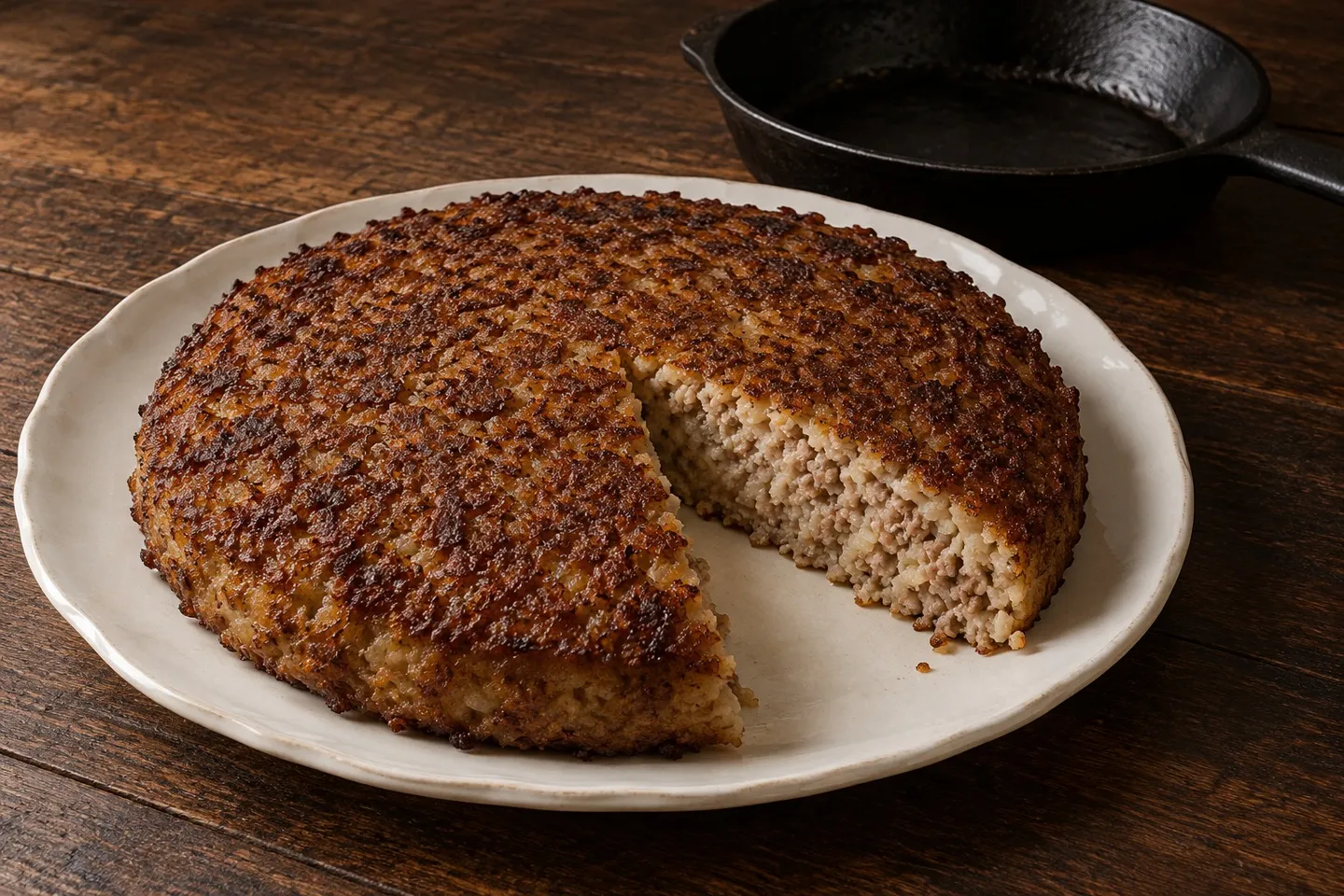
Dry Beef Hash (1896)
Reader ratingsDry beef hash from the 1896 Manual for Army Cooks: cold cooked beef, potato and parboiled onion minced, moistened with stock and fried in dripping until brown underneath.
- Recipe makes
- 4 servings
- Prep
- Cook
- Total
Five minutes to parboil the onion, a few to warm the mixture through, and about 15 minutes for the underside to fry brown.
Beef and potato hash fried brown and turned out in one cake.
The story behind the recipe
On four mornings out of ten, the army’s plan for a camp breakfast was “Beef hash, bread, coffee.” That is the sample bill of fare in the War Department’s Manual for Army Cooks of 1896, eleven days of meals for troops in camp, ten of them with a breakfast, and no other breakfast dish on it comes back as often. It was what the cook made of yesterday’s beef: the manual’s “dry hash,” cold meat, potato and onion minced fine and fried in one cake with a brown underside.
What went into army hash?
Whatever beef was left. The manual gives three hashes, baked, wet and dry, all “from cold cooked fresh beef, veal, or mutton,” and the dry one adds corned beef to the list, noting that a hash of corned beef alone needs “very little, if any, salt.” It asks for the meat “free from bone and gristle,” and gristle turned up in the scandal of 1898: when the commission investigating the War Department opened sample cans of the army’s canned roast beef, one held “a large amount of gristle.” The hash recipe itself sits in the garrison half of the book.
Read more about this recipe
Making it today
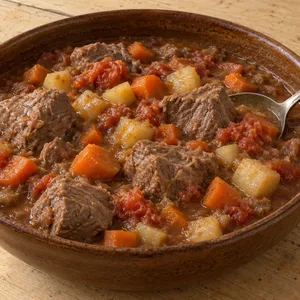
The manual wrote it for leftovers, so cold stewed, boiled or roast beef all fit, including the meat from its own Fresh Beef Stew (1896), and corned beef is the other meat the book names. Making a quarter of its batch, enough for a 10-inch skillet, is our choice, and so is the frying-pan finish over the baked one; the manual asks only that the cake come out of the pan “without breaking.” The beef the army shipped south, and the inquiry it set off, are the subject of What Was the “Embalmed Beef” Scandal of 1898?
From cold cooked fresh or corned beef, veal, or mutton. These meats may be used singly or together.
Four pounds of meat, free from bone and gristle; one large onion, parboiled; two pounds of cooked potato; the meat, potato, and onion minced. Mix all together; season with pepper and salt. Stir into the mixture about a pint or enough hot stock, gravy, beef dripping, or water to well moisten it; stock is preferable. Mix well; put into a frying pan enough lard or beef dripping so that when melted it will cover the bottom of the pan; when this is hot put in the hash; stir it for a few minutes, then let it fry until it becomes brown on the lower side; turn it out, without breaking, into a hot dish, and serve; or, after the hash has been stirred in the pan, empty it into a greased baking pan, smooth the top of the hash, and bake until it is browned on top; serve in the baking pan. If the hash is to be made of corned beef alone, very little, if any, salt for seasoning will be needed. Instead of parboiling the onion, it may be minced and fried to a light brown.
Recipe makes: 4 servings
Ingredients
For 4 servings. Quantities are shown as written.
Quantities as written here, for 4 servings.
- Cold cooked beef, fat and gristle removed1 lb
- Cold cooked potatoes0.5 lb
- Small onion1
- Salt1/4 tsp
- Black pepper1/4 tsp
- Hot beef stock1/2 cup
- Lard or beef dripping1 1/2 tbsp
Measurement notes
Ingredients as written here
- 1 lb cold cooked beef, fat and gristle removed
- ½ lb cold cooked potatoes
- 1 small onion
- ¼ tsp salt
- ¼ tsp black pepper
- ½ cup hot beef stock
- 1½ tbsp lard or beef dripping
Equipment
 Small saucepan
- Large chef’s knife or food grinder
 Large bowl
- Heavy 10-inch skillet, cast iron or nonstick
 Instant-read thermometer
Instructions
Peel the onion, drop it whole into a small pan of boiling water and parboil it for 5 minutes. Drain and let it cool a little.
Mince the cold cooked beef, the cold cooked potatoes and the onion finely, by knife or through the coarse plate of a food grinder; the pieces should be no bigger than a pea.
Mix them in the bowl with the salt and black pepper, then stir in the hot beef stock until the mixture is evenly moist and holds together when pressed.
Heat the lard in the skillet over medium heat until it covers the bottom and shimmers. Add the hash and stir it for 2 to 3 minutes to heat it through.
Press it into an even cake with the back of a spatula and leave it alone over medium-low heat for 12 to 15 minutes, until the underside is deep brown and crisp and the center reads at least 165°F (74°C). Loosen the edges and shake the pan to free it.
Set a warm plate over the skillet and turn the hash out in one piece, brown side up. Serve hot.
Nutrition
385calories per serving
- Recipe makes
- 4 servings
- Servings
- 4
Estimated per serving from USDA FoodData Central values for cooked beef chuck, boiled potato, onion, beef broth and lard.
Recipe notes
When adjusting quantities
A quarter of the manual’s batch, which used 4 lb of meat. For a larger batch, fry it in two pans or bake it in a greased pan as the manual allows.
Notes
Quantities mentioned in these notes don’t change when you adjust the servings.
We quartered the manual’s batch, chose the amounts of salt, pepper, stock and fat to fit it, and set the pea-sized mince, the 5-minute parboil and the frying times. Use salt only to taste if the beef is corned. The manual’s other finish empties the stirred hash into a greased baking pan and bakes it brown on top without naming a heat. For that version, bake it at 400°F (200°C) until brown on top and 165°F (74°C) in the center. Use cooked beef within 3 to 4 days of cooking it, kept in the refrigerator, and reheat the hash to 165°F (74°C). Leftover Stew with Canned Meat (1896) beef can go in too, drained of its broth. TuneMyRecipe has a later, potato-heavy relative from a 1934 government bulletin, Browned Potato and Meat Hash (1934) (opens in a new tab).
Scaling changes the ingredients only; pan sizes and cooking times need their own judgment.

Sources and attribution
After War Department, Manual for Army Cooks (Washington: Government Printing Office, 1896), Dry Hash
See the original pages (scan at Internet Archive) (opens in a new tab)
Recipe details
- Course
- Main course
- Dish family
- Meat & Poultry
- Region
- American
- Era
- 19th century
- Source decade
- 1890s
- Main ingredient
- Beef
- Difficulty
- Easy
- Occasion
- Everyday meal