Stewed Dried Peaches (1896)
Reader ratingsStewed dried peaches from the War Department’s Manual for Army Cooks, 1896: soaked overnight, simmered under a lid, sweetened at the end and served cold.
- Recipe makes
- About 2½ cups, 4 servings
- Prep
- Cook
- Total
Prep includes an overnight soak of about 12 hours in the refrigerator. After stewing, the fruit chills for at least 2 hours, since the manual serves it cold.
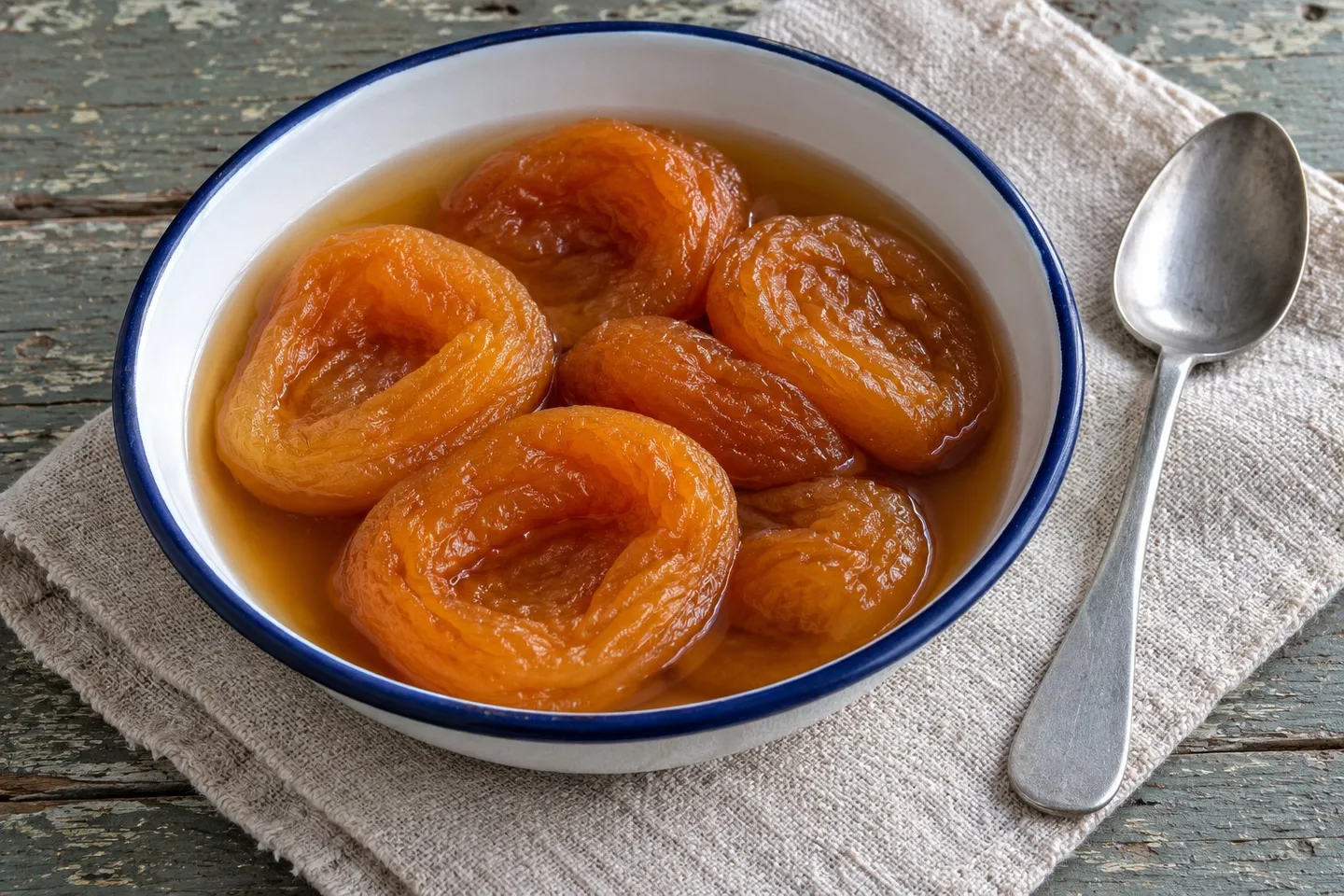
Stewed dried peach halves in their syrup in an enamel bowl.
The story behind the recipe
Twenty pounds of evaporated peaches went into one man’s year of groceries in the Seattle Klondyke and Yukon Guide, with as many of apples and of apricots. Dried peaches turned up again as the only sweet on the hotel plate Tappan Adney saw at Finnegan’s Point in August 1897.
What did the army know about dried peaches?
Its advice is mostly about where the flavor hides. The War Department’s Manual for Army Cooks of 1896 says “Dried peaches require more washing and rubbing than any other fruit in order to free the skin from fuzz,” yet warns against rubbing the skin away, since it “contains the principal flavor of the peach.” It prefers fruit dried with the skins on, and promises that the skins dissolve in the stewing. The sugar waits until the end, because “If sugar is added before the fruit is cooked it hardens it.” Any sugar would do, though “many persons prefer a brown sugar, grade extra C,” and the manual names allspice, cloves, cinnamon, mace, ginger and lemon as flavorings, to be “used sparingly, and varied from day to day.” It also hands out a period dietary opinion: “Dried fruits are a convenient and wholesome vehicle for sugar as a food.”
Read more about this recipe
Making it today
Adney’s “dried peaches” may have come stewed or plain; this recipe follows the army’s stewed version, which the manual says is “better served cold.” The manual gives no quantities, so the fruit, water and sugar here are our choices, as is soaking the fruit in the refrigerator every time (the manual does so only in hot weather). Light brown sugar stands in for extra C. The manual sets two hours at a slow simmer; modern dried peaches can soften sooner, so the timing here goes by tenderness. Cinnamon is our pick from its list. On Adney’s list they come after the beans and the bread and butter, here the Baking-Powder Biscuits (1896), and What Did Klondike Stampeders Eat on the Trail? follows the whole meal up the trail to Dawson.
Wash them thoroughly and soak them over night in the water (cold) they are to be cooked in, using only enough water to cover them. Put the fruit on the fire in a vessel not iron (an earthenware stone jar, well glazed, is very suitable) and simmer slowly (do not boil), closely covered, for two hours. Do not stir to break the fruit, and thus render it unsightly. When the fruit is cooked put in plenty of sugar; let it then cook five minutes. If sugar is added before the fruit is cooked it hardens it.
Dried peaches require more washing and rubbing than any other fruit in order to free the skin from fuzz, but the rubbing should not be so hard as to take off the skin, which contains the principal flavor of the peach.
The richest and best dried peaches are those dried with the skins on. The skins, however thick, entirely dissolve in cooking, and are imperceptible when the fruit is well stewed. Apricots require much sugar; it should be supplied liberally.
During hot weather fruit is liable to sour when put to soak over night; to avoid this put it in the refrigerator while soaking.
Flavoring should be used sparingly, and varied from day to day. Those especially recommended are allspice, cloves, cinnamon, mace, ginger, slices of lemon, or extract of lemon. If extract is used it should be added just before removing the fruit from the fire. Dried fruits are a convenient and wholesome vehicle for sugar as a food; any kind of sugar may be used, but on account of the peculiar flavor it gives many persons prefer a brown sugar, grade extra C.
All cooked fruits are better served cold. After they have been prepared, as here directed, they may also be used in many ways for pies, puddings, etc.
Recipe makes: About 2½ cups, 4 servings
Ingredients
For about 2½ cups, 4 servings. Quantities are shown as written.
Quantities as written here, for about 2½ cups, 4 servings.
- Dried peaches0.5 lb
- Cold water2 cups
- Light brown sugar1/4 cup
- Cinnamon stick (optional)1
Measurement notes
Ingredients as written here
- ½ lb dried peaches
- 2 cups cold water
- ¼ cup light brown sugar
- 1 cinnamon stick (optional)
Equipment
- Glass or ceramic bowl with a cover
 Stainless steel or enameled saucepan with a lid
 Instant-read thermometer
Instructions
Rinse the dried peaches in a bowl of water, rubbing them gently between your fingers to clean the skins without tearing them off.
Put them in the glass or ceramic bowl with the cold water, just enough to cover them. Cover the bowl and soak the peaches in the refrigerator overnight.
Tip the peaches and their soaking water into the saucepan and add the cinnamon stick, if using. Cover and bring slowly to a bare simmer, about 185°F (85°C), with only an occasional bubble.
Keep it covered at that gentle simmer, without boiling and without stirring, until the peaches are tender all the way through when pierced with a knife. Start checking at 45 minutes; the manual allows two hours.
Sprinkle the light brown sugar over the fruit, shake the pan gently to dissolve it and simmer 5 minutes more.
Remove the cinnamon stick. Let the peaches cool, then cover and chill them for at least 2 hours. Serve them cold in their syrup.
Keep leftovers covered in the refrigerator and eat them within 3 to 4 days.
Nutrition
190calories per serving
- Recipe makes
- About 2½ cups, 4 servings
- Servings
- 4
Estimated per serving (4) from USDA FoodData Central values for dried peaches (239 kcal per 100 g) and light brown sugar.
Recipe notes
When adjusting quantities
The manual gives no quantities; these are ours. Keep the water just covering the fruit at any size.
Notes
Quantities mentioned in these notes don’t change when you adjust the servings.
We chose the half pound of peaches, the water, the quarter cup of sugar and the cinnamon stick. Its earthenware jar or any pan “not iron” becomes a stainless or enameled saucepan. The overnight soak in the refrigerator, the 185°F (85°C) simmer, the check at 45 minutes in place of a fixed two hours and the light brown sugar for its extra C are our changes too. The same method serves for dried apples and apricots; the manual asks for more sugar with apricots.
Scaling changes the ingredients only; pan sizes and cooking times need their own judgment. To adapt this recipe further, try the recipe tool at TuneMyRecipe (opens in a new tab), our sister site.

Sources and attribution
After War Department, Manual for Army Cooks (Washington: Government Printing Office, 1896), Stewed Dried and Evaporated Apples, Apricots, and Peaches
See the original pages (scan at Internet Archive) (opens in a new tab)
Recipe details
- Course
- Dessert
- Dish family
- Desserts & Sweets
- Region
- American
- Era
- 19th century
- Source decade
- 1890s
- Main ingredient
- Fruit
- Difficulty
- Easy
- Occasion
- Everyday meal