Pork and Bean Soup (1862)
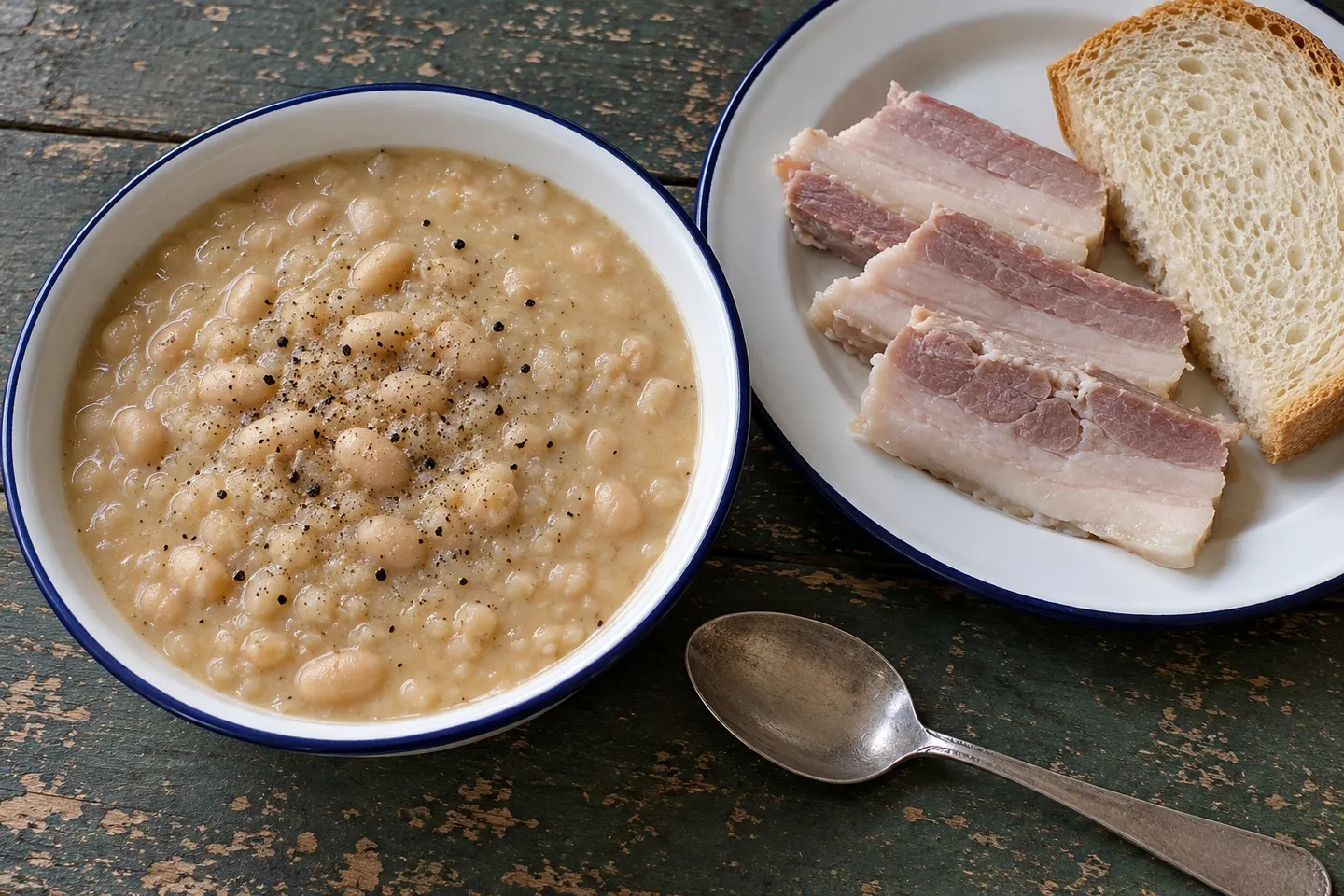
Reader ratingsPork and bean soup from the company kitchen in Sanderson’s 1862 army handbook: navy beans boiled with salt pork, finished with onion, pepper and a dash of vinegar and mashed thick, the pork served on the side.
- Recipe makes
- About 10 cups soup, 6 servings, with sliced pork
- Prep
- Cook
- Total
Soak the beans overnight, at least 8 hours. Next day the beans and the pork cook side by side for about 3 hours; most of it is unattended simmering.
Bean soup with boiled salt pork and bread.
The story behind the recipe
Company cooks made this soup from two things the ration usually held, dried beans and salt pork, boiled until the beans broke down and mashed thick. Captain James M. Sanderson printed this one in Camp Fires and Camp Cooking, his 1862 handbook for the troops, and it begins with a warning: “Never serve beans until they have been soaked over night.” No bean soup from Fort Larned’s kitchens is recorded, but the Park Service lists beans and bacon in the ration there.
Eight o’clock in the morning
Sanderson writes it as a timetable for a company kitchen. At eight the soaked beans go into two kettles, eight quarts of them, and boil hard for an hour. The water is thrown away, fresh water goes in with a pound of parboiled pork to each kettle, and they boil for an hour and a half more. At a quarter past eight three more kettles take the pork for serving, boiled in two waters. Then half the beans come out for the next morning, the rest get the pork liquor, onions, pepper, salt and a tablespoon of vinegar, and after fifteen minutes they are mashed “with a wooden stick made for the purpose.”
Read more about this recipe
Making it today
We keep all the beans in the soup and use a single kettle each for the beans and the serving pork. Salt pork varies a great deal in saltiness, so the pork liquor goes in by taste, and the soup may need no salt at all. Sanderson’s two onions to a kettle are few for so many beans, and our one onion to a pound is a little more generous.
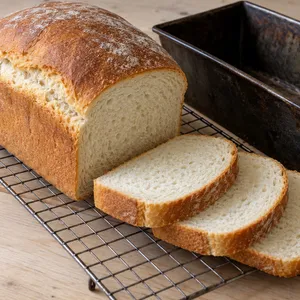
It sits beside the bread in How Was Bread Baked at a Frontier Fort?, as the kind of dish a company kitchen made from the same ration.
Never serve beans until they have been soaked over night. At eight o’clock in the morning, put eight quarts into two kettles, ...
Recipe makes: About 10 cups soup, 6 servings, with sliced pork
Ingredients
For about 10 cups soup, 6 servings, with sliced pork. Quantities are shown as written.
Quantities as written here, for about 10 cups soup, 6 servings, with sliced pork.
- Dried navy beans1 lb
- Salt pork for the beans, rind removed, cut in 1/2-inch cubes4 oz
- Salt pork for slicing, in one piece, rind removed8 oz
- Medium onion, chopped1
- Cider vinegar1 tsp
- Black pepper, or more to taste1/2 tsp
- Salt, if needed1 pinch
Measurement notes
Ingredients as written here
- 1 lb dried navy beans
- 4 oz salt pork for the beans, rind removed, cut in ½-inch cubes
- 8 oz salt pork for slicing, in one piece, rind removed
- 1 medium onion, chopped
- 1 tsp cider vinegar
- ½ tsp black pepper, or more to taste
- 1 pinch salt, if needed
Equipment
- 2 large heavy pots with lids
 Colander
 Potato masher
 Small saucepan
- Cutting board and knife
Instructions
The night before, put the beans in a large bowl, cover with plenty of cold water and leave to soak.
Next morning, drain the beans and put them in one of the pots with fresh cold water to cover by 2 inches. Bring to a boil and boil steadily for 1 hour, topping up with hot water if they peek out.
While the beans have their first boil, put the salt pork for slicing in the second pot, cover with water and boil for 1 hour. Pour off the water, cover with fresh hot water, and simmer for 1½ hours more, until tender.
Meanwhile, put the salt pork for the beans in a small pan of cold water, bring to a boil for 5 minutes, and drain.
Take the beans off the heat for 15 to 20 minutes, then drain them, cover again with fresh hot water, and add the drained pork. Simmer for 1½ hours, until the beans are very soft.
Lift the slicing pork out onto a board. Taste its cooking liquor, and add a few spoonfuls of it to the beans, more if it is mild.
Stir the onion, vinegar and pepper into the beans and simmer for 15 minutes. Mash the beans in the pot until most are broken and the soup is thick. Taste, and add salt only if it needs it.
Slice the pork and serve it on a separate plate beside the bowls of soup.
Nutrition
680calories per serving
- Recipe makes
- About 10 cups soup, 6 servings, with sliced pork
- Servings
- 6
Estimated per serving, with a share of the sliced pork, from USDA FoodData Central values for the listed ingredients.
Recipe notes
When adjusting quantities
Sanderson cooked eight quarts of dry beans for a company; a pound serves six.
Notes
Quantities mentioned in these notes don’t change when you adjust the servings.
Sanderson kept half the beans for breakfast, warmed in pans with a few onions chopped and lightly fried, pepper, salt and a little vinegar: “a first-rate dish for breakfast or supper with bread and coffee.” The soup keeps for 4 days in the refrigerator and thickens as it stands; thin it with water when you reheat it. Serve it with the Army Potato Bread (1862).
Scaling changes the ingredients only; pan sizes and cooking times need their own judgment. To adapt this recipe further, try the recipe tool at TuneMyRecipe (opens in a new tab), our sister site.

Sources and attribution
After James M. Sanderson, Camp Fires and Camp Cooking (Washington: Government Printing Office, 1862), Boiled Pork and Bean Soup
Recipe details
- Course
- Soup
- Dish family
- Soups & Broths
- Region
- American
- Era
- 19th century
- Source decade
- 1860s
- Main ingredient
- Pork & ham
- Difficulty
- Easy
- Occasion
- Everyday meal
- Season
- Winter