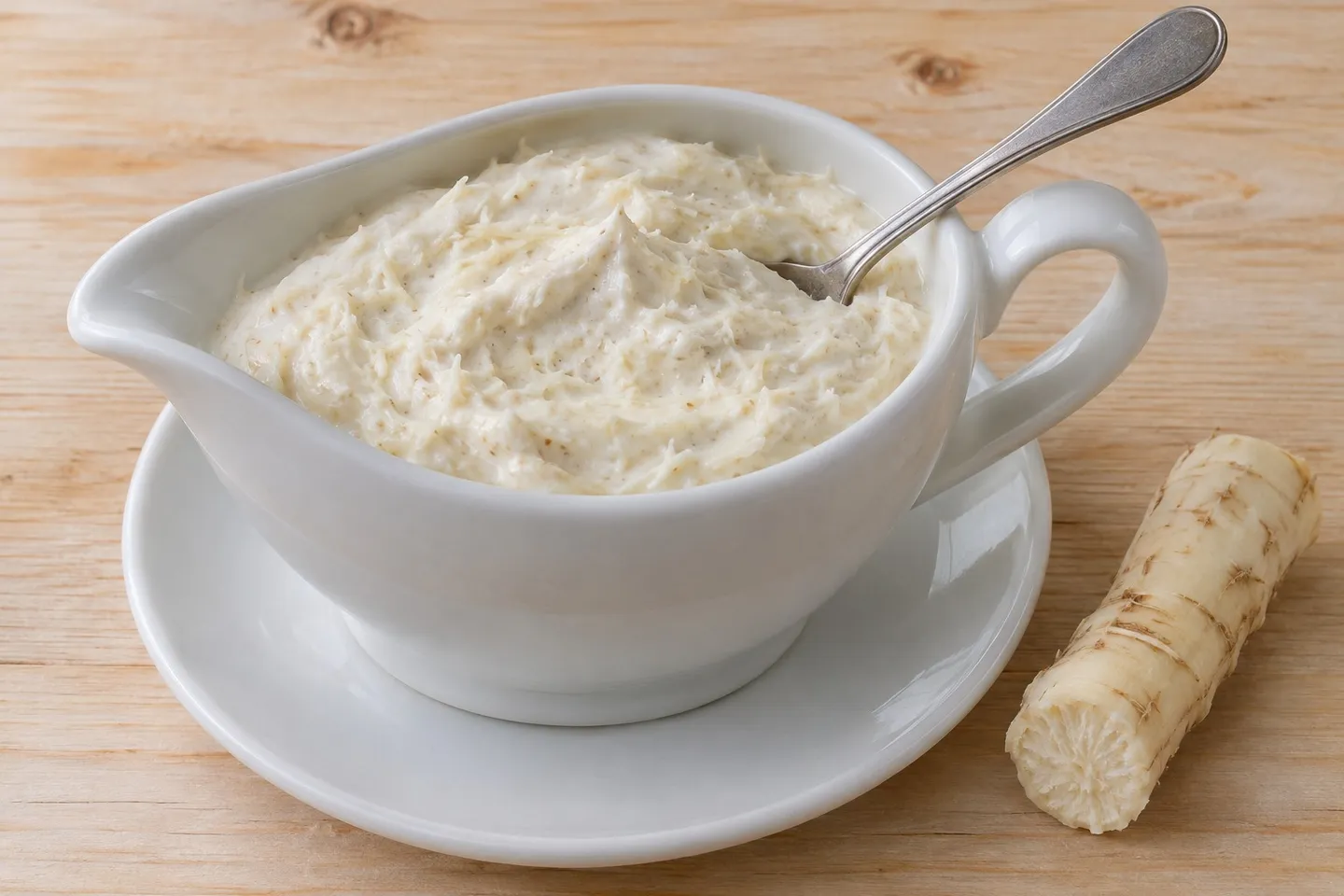
Horseradish Sauce (1896)
Reader ratingsFannie Farmer’s cold horseradish sauce from The Boston Cooking-School Cook Book, 1896: grated horseradish root, vinegar, salt and cayenne folded into stiffly whipped cream.
- Recipe makes
- About ¾ cup, for 6
- Prep
- Total
Ten minutes, all of it grating and whipping. Make it last, while the meat rests, and serve it at once.
Whipped horseradish cream in a small white sauceboat.
The story behind the recipe
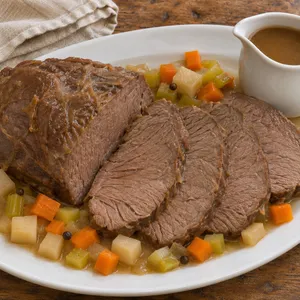
Horseradish Sauce I takes a single line of method in Fannie Merritt Farmer’s 1896 Boston Cooking-School Cook Book: grated root sharpened with vinegar, salt and cayenne, then folded into cream “beaten stiff.” Her braised beef ends by naming it, “Serve with Horseradish Sauce,” and her dinner menus at the back of the book put the two on one table.
Two sauces of one name
Farmer printed two horseradish sauces, one after the other across pages 246 and 247. The first is cold and takes no cooking at all. The second is a cooked sauce of cracker crumbs, horseradish and milk, finished with butter. Neither the braise nor the menu says which one Farmer meant, so either could follow the beef; this page gives the first.
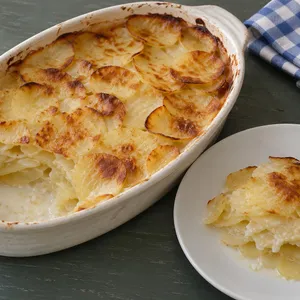
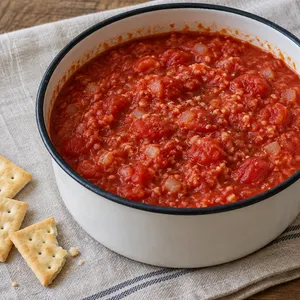
The menu in question, among her dinners on page 518, runs from tomato soup through braised beef with horseradish sauce, scalloped potatoes and squash, to a baked Indian pudding and café noir. The tomb of Yuya and Thuya held beef too, boxed and wrapped for a meal that was never meant to be cooked; that story is in Why Were Egyptian Meat Offerings Wrapped Like Mummies?.
Read more about this recipe
Making it today
Fresh horseradish root, peeled and grated just before mixing, is the one thing Farmer’s list depends on. She doesn’t name a vinegar; plain white or cider vinegar both fit “vinegar” in an American kitchen of the time, and the choice is ours. The cayenne is her “few grains,” a pinch here. Spoon it beside slices of Farmer’s Braised Beef (1896), the dish that names it.
Horseradish Sauce I.
3 tablespoons grated horseradish root. 1 tablespoon vinegar. ¼ teaspoon salt. Few grains cayenne. 4 tablespoons heavy cream.
Mix first four ingredients, and add cream beaten stiff.
Recipe makes: About ¾ cup, for 6
Ingredients
For about ¾ cup, for 6. Quantities are shown as written.
Quantities as written here, for about ¾ cup, for 6.
- Freshly grated horseradish root3 tbsp
- Vinegar1 tbsp
- Salt1/4 tsp
- Cayenne pepper1 pinch
- Heavy cream, cold1/4 cup
Measurement notes
Ingredients as written here
- 3 tbsp freshly grated horseradish root
- 1 tbsp vinegar
- ¼ tsp salt
- 1 pinch cayenne pepper
- ¼ cup heavy cream, cold
Equipment
 Vegetable peeler
 Box grater
 Small bowl
- Mixing bowl
 Whisk
Instructions
Peel a piece of fresh horseradish root and grate it on the fine side of the box grater until you have enough for the freshly grated horseradish root. Grate it in a well-aired spot, since the fumes are sharp.
In the small bowl, mix the grated horseradish with the vinegar, salt and cayenne pepper.
In the chilled mixing bowl, whisk the heavy cream until it holds stiff peaks.
Fold the horseradish mixture into the whipped cream until no streaks remain, and serve it at once.
Nutrition
40calories per serving
- Recipe makes
- About ¾ cup, for 6
- Servings
- 6
Estimated per serving (6) from USDA FoodData Central values for heavy cream and raw horseradish.
Recipe notes
When adjusting quantities
Farmer’s own quantity, enough for her three-pound braised beef. Keep the horseradish, vinegar and cream at 3 to 1 to 4 by the spoonful.
Notes
Quantities mentioned in these notes don’t change when you adjust the servings.
The quantities and method are Farmer’s; the pinch for her “few grains,” the choice of vinegar and the fresh-root grating are ours. A jar of prepared horseradish, well drained, can stand in for fresh root; since it already holds vinegar, leave out most of the vinegar and taste before adding salt. Make it on the day, keep it cold, and refrigerate any left over within 2 hours. Contains dairy.
Scaling changes the ingredients only; pan sizes and cooking times need their own judgment. To adapt this recipe further, try the recipe tool at TuneMyRecipe (opens in a new tab), our sister site.
Sources and attribution
After Fannie Merritt Farmer, The Boston Cooking-School Cook Book (Boston: Little, Brown, and Company, 1896), Horseradish Sauce I
See the original pages (scan at Internet Archive) (opens in a new tab)
Recipe details
- Course
- Side dish
- Dish family
- Vegetables & Sides
- Region
- American
- Era
- 19th century
- Source decade
- 1890s
- Difficulty
- Easy
- Occasion
- Everyday meal