Golden Corn Cake (1896)
Reader ratingsGolden corn cake, Fannie Farmer’s sweetened cornbread of 1896: yellow cornmeal, wheat flour, milk and one egg, baked in a shallow pan in twenty minutes.
- Recipe makes
- One 9-inch square cake, 9 pieces
- Prep
- Cook
- Total
Heat the oven before you mix: the batter goes into the pan as soon as it is stirred. Farmer bakes it twenty minutes in a hot oven; a 9-inch pan at 400°F (200°C) takes about the same.
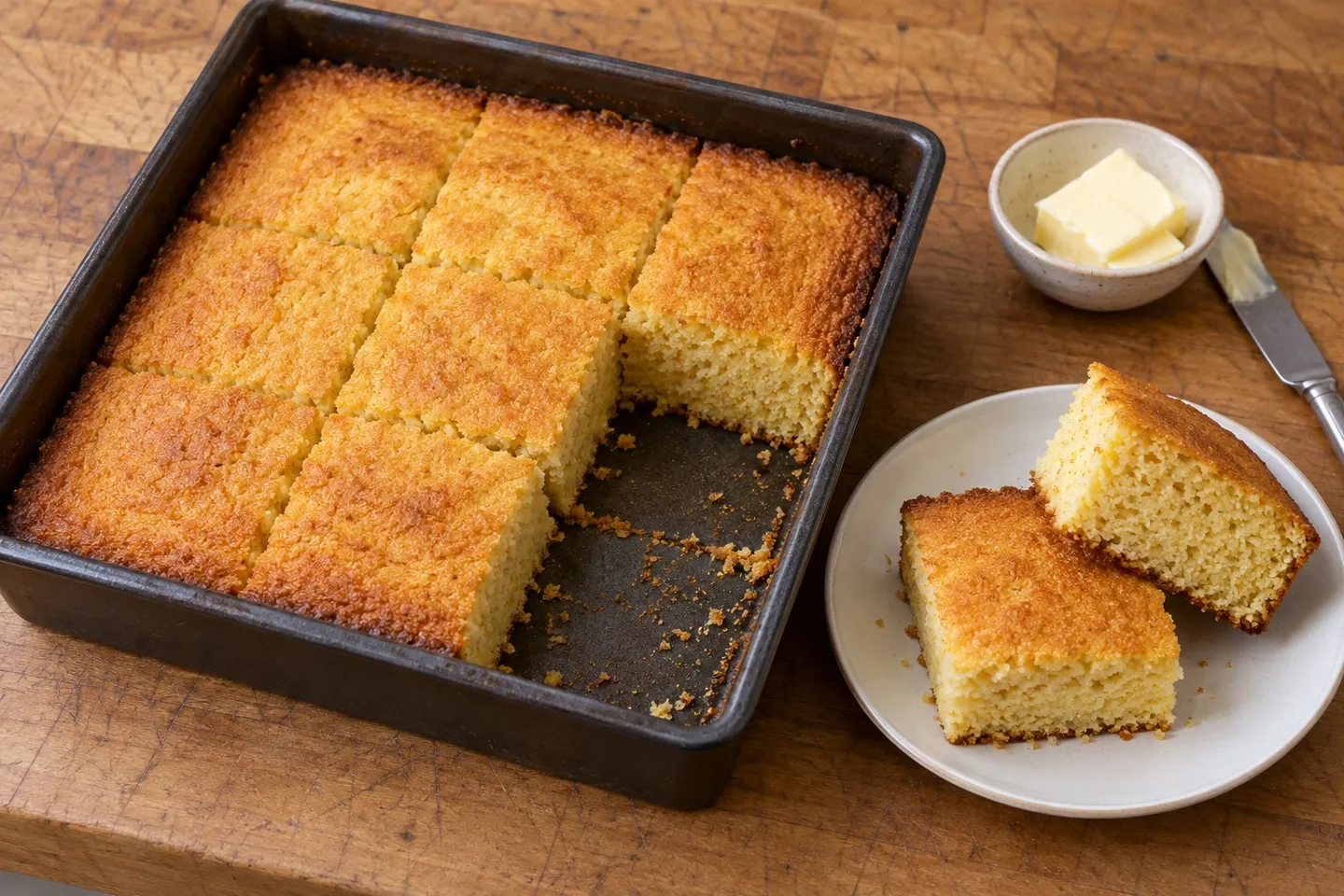
Golden corn cake cut into squares, two lifted out onto a plate, with butter.
The story behind the recipe
Ten cents bought “Corn Bread” at the Waldorf in New York on the breakfast card of April 22, 1896, and the card says nothing else about it. The bread here comes from Fannie Farmer’s Boston Cooking-School Cook Book, published the same year: her golden corn cake, a sweetened cornbread of cornmeal and wheat flour, raised with baking powder and baked in a shallow pan for twenty minutes. She prints it between Berkshire muffins and a corn cake sweetened with molasses. The hotel’s kitchen may well have made its corn bread another way.
How much wheat went into a Boston corn cake?
Farmer prints three corn cakes on one page, and wheat flour goes into all of them. The golden one uses more flour than meal, 1¼ cups to ¾, with a quarter cup of sugar. The molasses cake turns the proportions round, a cup of meal to ¾ cup of flour. The white corn cake takes equal parts of white meal and flour, creams butter and sugar first like a cake, and folds in the beaten whites of three eggs. A cornbread with no wheat at all is not on the page.
She was strict about how those cups were filled. On her page on measuring, flour and meal “should be sifted before measuring,” and “A cupful is measured level,” spooned in, leveled with a knife, “care being taken not to shake the cup.” A pressed-down cup of meal would make a heavier cake than the one she wrote.
Read more about this recipe
Making it today
The book’s “hot oven” is our 400°F (200°C), the setting modern cornbread recipes use, and its “shallow buttered pan” is a 9-inch square, which bakes this much batter in close to Farmer’s twenty minutes. The batter keeps her amounts. Golden is her word for it, and the white corn cake beside it names white meal, so we use fine yellow cornmeal.
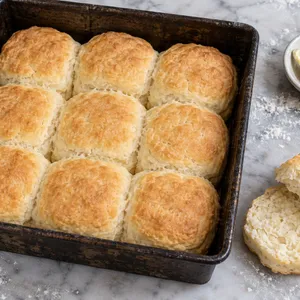
On the Waldorf card it sat among the 10-cent breads, on the line above the toast and Milk Toast (1896), and What Did People Eat for Breakfast in the 1890s? sets it beside the hotel’s other breads and their prices. For a plainer quick bread of the same year, made without egg or sugar, the army’s Baking-Powder Biscuits (1896) were baked by the panful.
¾ cup corn meal. 1¼ cups flour. ¼ cup sugar. 4 teaspoons baking powder. ½ teaspoon salt. 1 cup milk. 1 egg. 1 tablespoon melted butter.
Mix and sift dry ingredients; add milk, egg well beaten, and butter; bake in shallow buttered pan in hot oven twenty minutes.
Recipe makes: One 9-inch square cake, 9 pieces
Ingredients
For One 9-inch square cake, 9 pieces. Quantities are shown as written.
Quantities as written here, for One 9-inch square cake, 9 pieces.
- Fine yellow cornmeal3/4 cup
- All-purpose flour1 1/4 cups
- Sugar1/4 cup
- Baking powder4 tsp
- Salt1/2 tsp
- Whole milk1 cup
- Egg1
- Melted butter1 tbsp
- Soft butter, for the pan1 tsp
Measurement notes
Ingredients as written here
- ¾ cup fine yellow cornmeal
- 1¼ cups all-purpose flour
- ¼ cup sugar
- 4 tsp baking powder
- ½ tsp salt
- 1 cup whole milk
- 1 egg
- 1 tbsp melted butter
- 1 tsp soft butter, for the pan
Equipment
 Sieve
- Two mixing bowls
 Whisk or fork
- 9-inch square metal baking pan
 Instant-read thermometer
Instructions
Heat the oven to 400°F (200°C) and grease a 9-inch square metal pan with the soft butter.
Sift the cornmeal, flour, sugar, baking powder and salt together into a mixing bowl. Spoon the cornmeal and flour into their cups and level them with a knife, without packing or shaking.
Beat the egg well in the second bowl, then beat in the milk.
Pour the milk and egg into the dry ingredients, add the melted butter, and stir just until no dry flour shows.
Spread the batter evenly in the pan.
Bake for 20 minutes, until risen and golden, springy when pressed in the middle, a toothpick comes out clean and the center reads about 200°F (93°C).
Cut into nine squares in the pan and serve warm, with butter if you like.
Nutrition
160calories per serving
- Recipe makes
- One 9-inch square cake, 9 pieces
- Servings
- 9
Estimated per piece (9) from USDA FoodData Central (SR Legacy) values for whole-grain yellow cornmeal, all-purpose flour, sugar, baking powder, whole milk, egg and butter, including the butter for the pan.
Recipe notes
When adjusting quantities
Farmer’s own batch fills one 9-inch square pan. For a double batch use a 9 by 13-inch pan and start checking at 22 minutes.
Notes
Quantities mentioned in these notes don’t change when you adjust the servings.
The amounts are Farmer’s. The 400°F (200°C) oven, the 9-inch pan, the nine pieces and the butter for greasing are our choices; she says only “shallow buttered pan” and “hot oven.” We use modern double-acting baking powder at Farmer’s four teaspoons; her book names no brand. Her molasses corn cake on the same page has its own proportions, more meal than flour, and is mixed and baked the same way, with the molasses stirred into the milk. The cake is best the day it is baked. Don’t taste the raw batter: it holds raw egg and raw flour.
Scaling changes the ingredients only; pan sizes and cooking times need their own judgment. To adapt this recipe further, try the recipe tool at TuneMyRecipe (opens in a new tab), our sister site.

Sources and attribution
After Fannie Merritt Farmer, The Boston Cooking-School Cook Book (Boston, 1896), Golden Corn Cake
Recipe details
- Course
- Bread & bakingBreakfast
- Dish family
- Breads & Cakes
- Region
- American
- Era
- 19th century
- Source decade
- 1890s
- Main ingredient
- Grains & rice
- Difficulty
- Easy