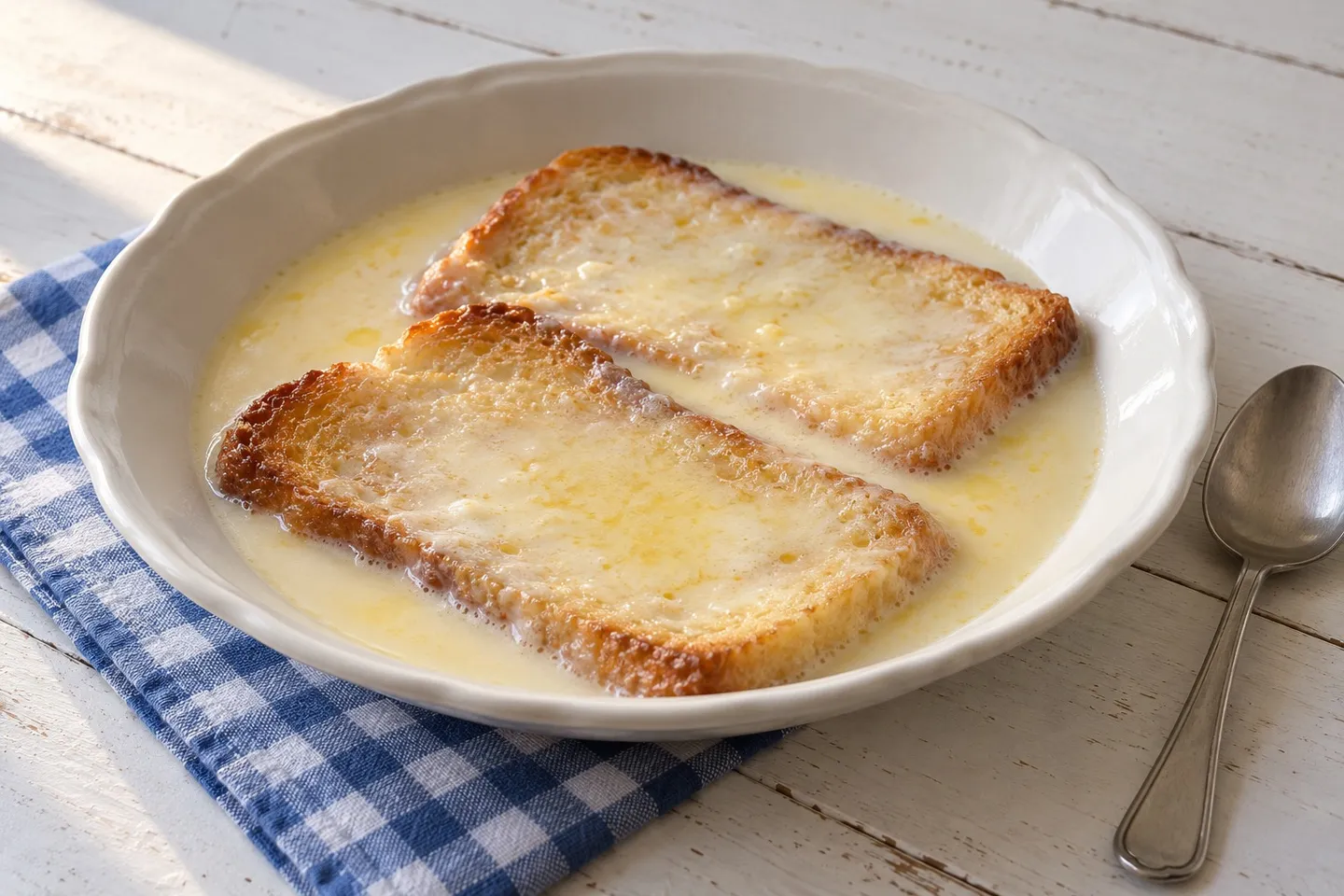
Milk Toast (1896)
Reader ratingsMilk toast as Fannie Farmer made it in 1896: dry toast dipped slice by slice in a milk sauce cooked for twenty minutes, then covered with the rest of the sauce.
- Recipe makes
- 6 slices, 3 servings
- Prep
- Cook
- Total
The bread dries and toasts while the milk heats; the sauce then cooks covered for 20 minutes. Use bread a day or two old, as Farmer does.
Two slices of milk toast softened in a thin, buttery milk sauce.
The story behind the recipe
Milk toast is dry toast dipped one slice at a time in hot thickened milk until soft, then covered with the rest of the sauce. It had a line of its own at the Waldorf in New York, where the breakfast card of April 22, 1896, prices “Dipped or Milk toast” at 25 cents, and Fannie Farmer’s Boston Cooking-School Cook Book, published in Boston the same year, gives two ways to make it. This is her first, Milk Toast I. The Waldorf’s card names the dish without a method, so the hotel’s version may have differed.
Who corrected Farmer’s milk toast?
Someone, in the Harvard copy of the 1896 edition. The printed list for Milk Toast I has “1 pint scalded milk” and, in the second column, “1 cup milk,” and in that copy the cup of milk is struck through by hand. The method never mentions a second measure of milk. The same hand, or another, crossed out the 1½ in “1½ tablespoons bread flour” and wrote a 2 beside it. Who made the marks, and when, is unknown; they belong to one reader of one copy. The Original below is the recipe as Farmer’s printer set it.
Read more about this recipe
Why does the toast have to be dry?
Because the sauce is the point. Farmer’s toast starts with stale bread cut a quarter inch thick, dried well away from the coals and only then browned close to them, and she warns that toast “if piled compactly and allowed to stand, will soon become moist.” The sauce then gets more time than the toast: after it thickens, Farmer covers it and cooks it for twenty minutes before the butter goes in.
Making it today
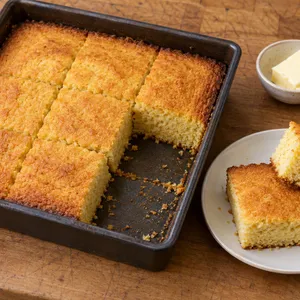
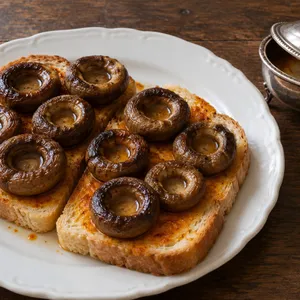
A low oven dries the slices and a toaster browns them, our stand-ins for the wire toaster held over a coal fire. We keep the printed amounts, a pint of milk and 1½ tablespoons of flour, and leave out the struck cup of milk, which the method has no place for. Farmer’s breakfast menus pair milk toast with corned beef hash; on the Waldorf card it sits beside Golden Corn Cake (1896) among the breads, and What Did People Eat for Breakfast in the 1890s? follows its price up from plain toast. For toast served hot in a different way, a New York bachelor’s Mushrooms on Toast (1896) came from a chafing dish.
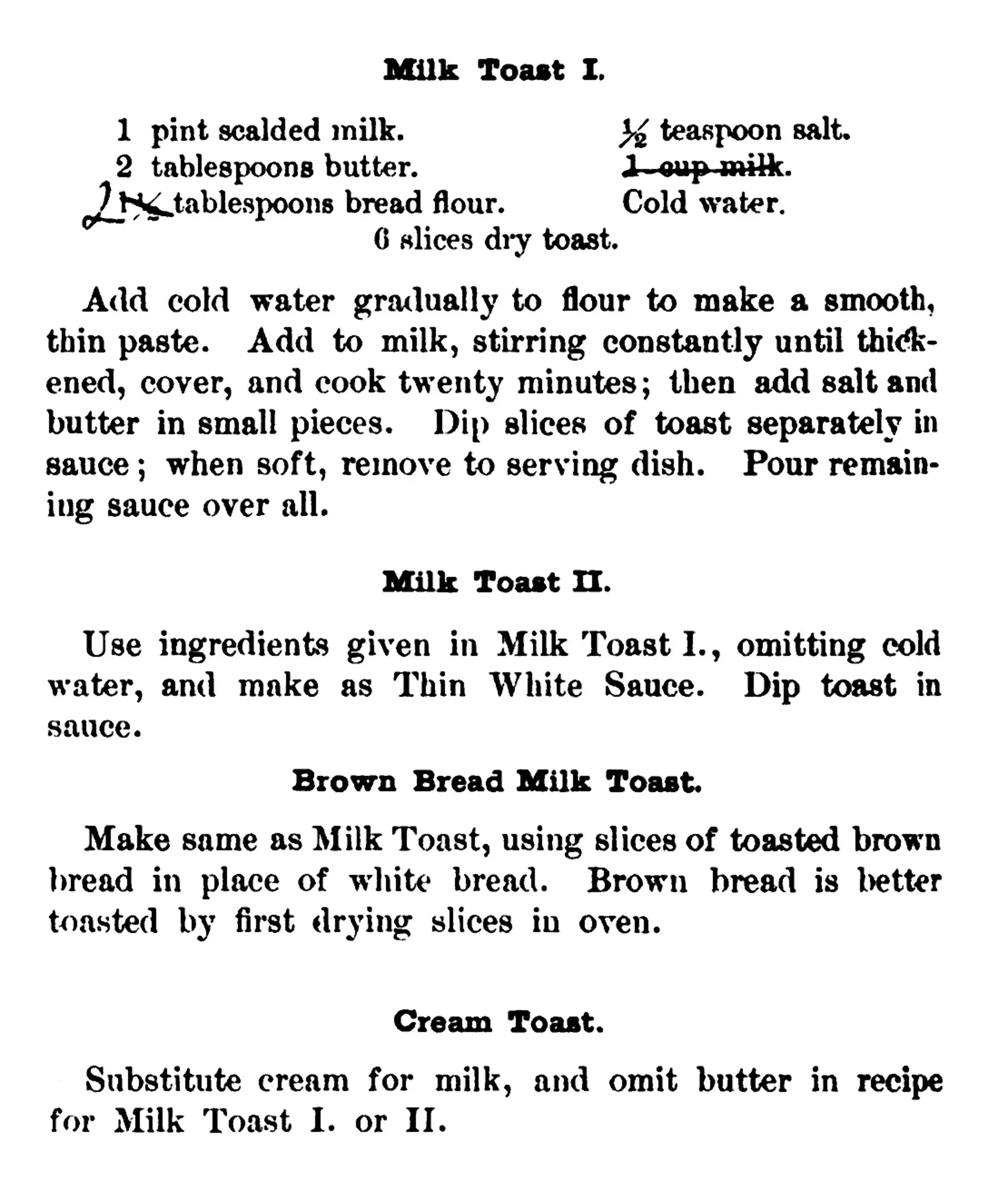
Dry Toast. Cut stale bread in one-fourth inch slices. Crust may or may not be removed. Put slices on wire toaster, lock toaster and place over clear fire to dry, holding some distance from coals; turn and dry other side. Hold nearer to coals and color a golden brown on each side. Toast, if piled compactly and allowed to stand, will soon become moist. Toast may be buttered at table or before sending to table.
Milk Toast I.
1 pint scalded milk. 2 tablespoons butter. 1½ tablespoons bread flour. ½ teaspoon salt. 1 cup milk. Cold water. 6 slices dry toast.
Add cold water gradually to flour to make a smooth, thin paste. Add to milk, stirring constantly until thickened, cover, and cook twenty minutes; then add salt and butter in small pieces. Dip slices of toast separately in sauce; when soft, remove to serving dish. Pour remaining sauce over all.
Recipe makes: 6 slices, 3 servings
Ingredients
For 6 slices, 3 servings. Quantities are shown as written.
Quantities as written here, for 6 slices, 3 servings.
- Stale white bread6 slices
- Whole milk2 cups
- Bread flour1 1/2 tbsp
- Cold water2 tbsp
- Salt1/2 tsp
- Unsalted butter, cut in small pieces2 tbsp
Measurement notes
Ingredients as written here
- 6 slices stale white bread
- 2 cups whole milk
- 1½ tbsp bread flour
- 2 tbsp cold water
- ½ tsp salt
- 2 tbsp unsalted butter, cut in small pieces
Equipment
- Baking sheet with a wire rack
- Toaster or broiler
 Saucepan with a lid
- Small bowl and whisk
- Shallow serving dish
Instructions
Heat the oven to 300°F (150°C). Cut the stale white bread ¼ inch thick if it isn’t already, and lay the slices on a wire rack set on a baking sheet. Dry them for 10 minutes, turning the slices once, until crisp but still pale.
Toast the dried slices in a toaster or under the broiler until golden brown on both sides. Stand them upright or lean them against each other so they stay crisp; don’t stack them.
Meanwhile heat the whole milk in the saucepan over medium heat until it steams and small bubbles form at the edge, about 180°F (82°C).
Stir the cold water into the bread flour a little at a time to make a smooth, thin paste.
Whisk the paste into the hot milk and keep stirring until the milk thickens slightly and begins to simmer.
Cover the pan, turn the heat to very low and cook for 20 minutes, stirring every few minutes and scraping the bottom so the sauce doesn’t catch.
Stir in the salt, then the unsalted butter piece by piece.
Dip the slices of toast in the sauce one at a time, leaving each until it softens, and lift them onto a warm serving dish.
Pour the remaining sauce over all and serve at once.
Nutrition
290calories per serving
- Recipe makes
- 6 slices, 3 servings
- Servings
- 3
Estimated per serving (3) from USDA FoodData Central (SR Legacy) values for white bread, whole milk, bread flour and butter, counting all the sauce as eaten.
Recipe notes
When adjusting quantities
Farmer’s own batch: a pint of milk for six slices of toast. Double everything for twelve slices in a wider pan.
Notes
Quantities mentioned in these notes don’t change when you adjust the servings.
The amounts are Farmer’s printed ones, less the struck cup of milk; the oven drying, the toaster, the 300°F (150°C) setting and unsalted butter (her book doesn’t say which) are our choices. The reader’s 2 tablespoons of flour in place of 1½ makes a slightly thicker sauce. For cream toast, which cost 35 cents on the Waldorf card, Farmer substitutes cream for the milk and leaves out the butter. Her brown bread milk toast uses toasted brown bread, which she says “is better toasted by first drying slices in oven.” Milk toast doesn’t keep; make it just before serving.
Scaling changes the ingredients only; pan sizes and cooking times need their own judgment. To adapt this recipe further, try the recipe tool at TuneMyRecipe (opens in a new tab), our sister site.

Sources and attribution
After Fannie Merritt Farmer, The Boston Cooking-School Cook Book (Boston, 1896), Dry Toast and Milk Toast I
Recipe details
- Course
- Bread & bakingBreakfast
- Dish family
- Breads & Cakes
- Region
- American
- Era
- 19th century
- Source decade
- 1890s
- Main ingredient
- Milk & cream
- Difficulty
- Easy