Fava Beans Vitellian Style (Apicius)
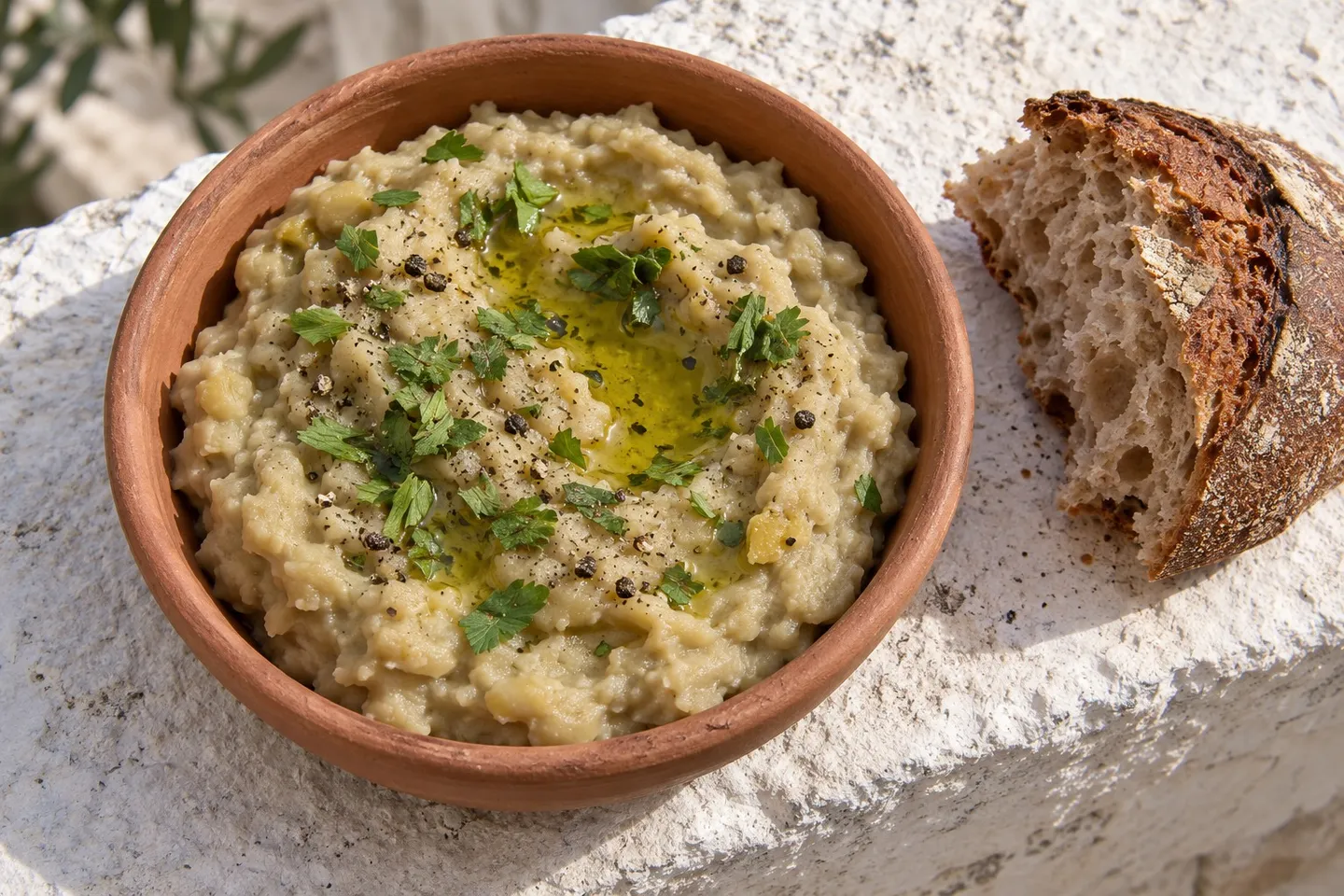
Reader ratingsFava beans Vitellian style, from the Roman cookbook Apicius: split beans simmered soft with leek and coriander, seasoned with pepper, lovage, oregano, fennel seed, fish sauce and wine, finished with green olive oil.
- Recipe makes
- 4 servings
- Prep
- Cook
- Total
Peeled split fava beans need no soaking. They are done when they fall apart at a touch, usually in 45 to 60 minutes; whole or unpeeled beans take much longer.
Mashed fava beans with oil and herbs, in a terracotta bowl.
The story behind the recipe
The archaeologists who emptied a street counter at Pompeii in 2020 found ground fava beans at the bottom of one of its jars. They had been put in the wine, the excavators reported, to change its taste and lighten its color. As food, favas get several recipes in the cookbook that goes under the name of Apicius, and this is one of the plainest: a pot of beans finished with herbs, spices, fish sauce, wine and a pour of green oil.
A dish with an emperor’s name
The recipe is headed Pisam sive fabam Vitellianam, peas or fava beans in the Vitellian style. The name points to the Vitellii, and most likely to Aulus Vitellius, who was emperor for most of the year 69, ten years before the eruption. His biographer Suetonius gave him “an appetite that was not only boundless, but also regardless of time or decency,” and listed the pike livers and pheasant brains served on his giant platter. Yet the dish named for him is cheap: beans, a leek, garden herbs, a few seeds from the spice jar. Apicius rarely gives amounts, and here he gives none.
The collection as it survives was put together long after Pompeii, so the cook who wrote this one could have lived before or after 79. It is a Roman way to cook favas as food; the beans in the counter’s jar went into its wine.
Read more about this recipe
Making it today
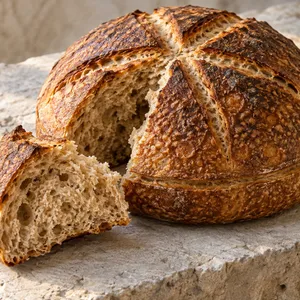
Peeled split fava beans, sold in Middle Eastern and Mediterranean shops, cook to a soft purée without soaking or skinning. Liquamen, the Roman fermented fish sauce, is replaced by Southeast Asian fish sauce, a close modern relative. Fresh lovage tastes like strong celery, and celery leaves are our substitute when it can’t be found. Apicius also adds mallow flowers, which we leave out. The bowl is good with a wedge of Pompeii Sourdough Loaf (AD 79), and What Did Pompeii Buy at the Street Counter? tells what else the counter held.
Pisam sive fabam Vitellianam: pisam sive fabam coques. cum despumaverit, mittis porrum, coriandrum et flores malvarum. dum coquitur, teres piper, ligusticum, origanum, feniculi semen, suffundis liquamen et vinum, ⟨mittis⟩ in caccabum, adicies oleum. cum ferbuerit, agitas. oleum viride insuper mittis et inferes.
Apicius, De re coquinaria 5.3.9, in the 1922 edition of Cesare Giarratano and Friedrich Vollmer. In our translation: “Peas or beans in the Vitellian style: cook the peas or beans. When they have been skimmed, add leek, coriander and mallow flowers. While they cook, pound pepper, lovage, oregano and fennel seed, moisten with fish sauce and wine, put this into the pot and add oil. When it boils, stir. Pour green oil over the top and serve.”
Recipe makes: 4 servings
Ingredients
For 4 servings. Quantities are shown as written.
Quantities as written here, for 4 servings.
Beans
- Dried split fava beans, peeled250 g
- Water, plus more as needed1.25 l
- Leek, white and pale green parts, thinly sliced1
- Chopped fresh coriander leaves (cilantro)2 tbsp
Seasoning
- Black peppercorns1/2 tsp
- Fennel seed1 tsp
- Dried oregano1 tsp
- Chopped fresh lovage or celery leaves1 tbsp
- Fish sauce1 1/2 tbsp
- Dry white wine60 ml
- Olive oil1 tbsp
To finish
- Extra-virgin olive oil, the greenest you have2 tbsp
Measurement notes
Ingredients as written here
- 250 g dried split fava beans, peeled
- 1.25 l water, plus more as needed
- 1 leek, white and pale green parts, thinly sliced
- 2 tbsp chopped fresh coriander leaves (cilantro)
- 0.5 tsp black peppercorns
- 1 tsp fennel seed
- 1 tsp dried oregano
- 1 tbsp chopped fresh lovage or celery leaves
- 1.5 tbsp fish sauce
- 60 ml dry white wine
- 1 tbsp olive oil
- 2 tbsp extra-virgin olive oil, the greenest you have
Equipment
- Heavy saucepan with a lid, about 3 liters
- Slotted spoon
- Mortar and pestle or spice grinder
- Wooden spoon or potato masher
- Warm serving bowl
Instructions
Rinse the fava beans in a sieve until the water runs clear. Put them in the saucepan with the water and bring to a boil.
Skim off the gray foam with the slotted spoon as it rises, then lower the heat, half cover and simmer for 30 minutes, stirring now and then.
Add the leek and the coriander. Simmer for 15 to 30 minutes more, stirring often and adding a splash of water if the pot looks dry, until the beans fall apart when pressed against the side.
Meanwhile, grind the peppercorns and fennel seed in the mortar, then pound in the oregano and lovage. Stir in the fish sauce and the white wine.
Pour the seasoning into the pot and add the olive oil. Bring back to a boil, then beat with the wooden spoon for a minute or two, until the beans are a thick, rough purée, about as thick as soft mashed potatoes. Add hot water if it is stiff, or simmer a few minutes longer if it is loose.
Taste, and add a little more fish sauce if it needs salt. Spoon into the warm bowl, pour the extra-virgin olive oil over the top and serve warm.
Nutrition
330calories per serving
- Recipe makes
- 4 servings
- Servings
- 4
Estimated per serving from USDA FoodData Central values for dried fava beans, leek, olive oil, white wine and fish sauce, counting part of the wine as cooked off.
Recipe notes
When adjusting quantities
Doubles well in a wider pot. Add the seasoning a little at a time and taste, since fish sauces differ in strength.
Notes
Quantities mentioned in these notes don’t change when you adjust the servings.
If you can find edible mallow or hollyhock flowers, a handful added with the leek follows Apicius. Dried green split peas can replace the favas, as the recipe allows, and cook in about the same time. The purée thickens as it cools; loosen leftovers with a little hot water. People with G6PD deficiency should not eat fava beans. Contains fish.
Scaling changes the ingredients only; pan sizes and cooking times need their own judgment. To adapt this recipe further, try the recipe tool at TuneMyRecipe (opens in a new tab), our sister site.
Sources and attribution
After Apicius, De re coquinaria, book 5, Pisam sive fabam Vitellianam; Latin text ed. Cesare Giarratano and Friedrich Vollmer (Leipzig: Teubner, 1922); our translation
Recipe details
- Course
- Side dish
- Dish family
- Vegetables & Sides
- Era
- Ancient Rome
- Main ingredient
- Vegetables
- Difficulty
- Easy
- Occasion
- Everyday meal