US Food Administration wheatless days · United States
How Did You Feed a Hundred People Without Wheat in 1918?
When the 1918 wheatless days reached America’s lunch rooms, one manager wrote down how to feed a hundred: corn, barley, rice and peas, weighed to the ounce.
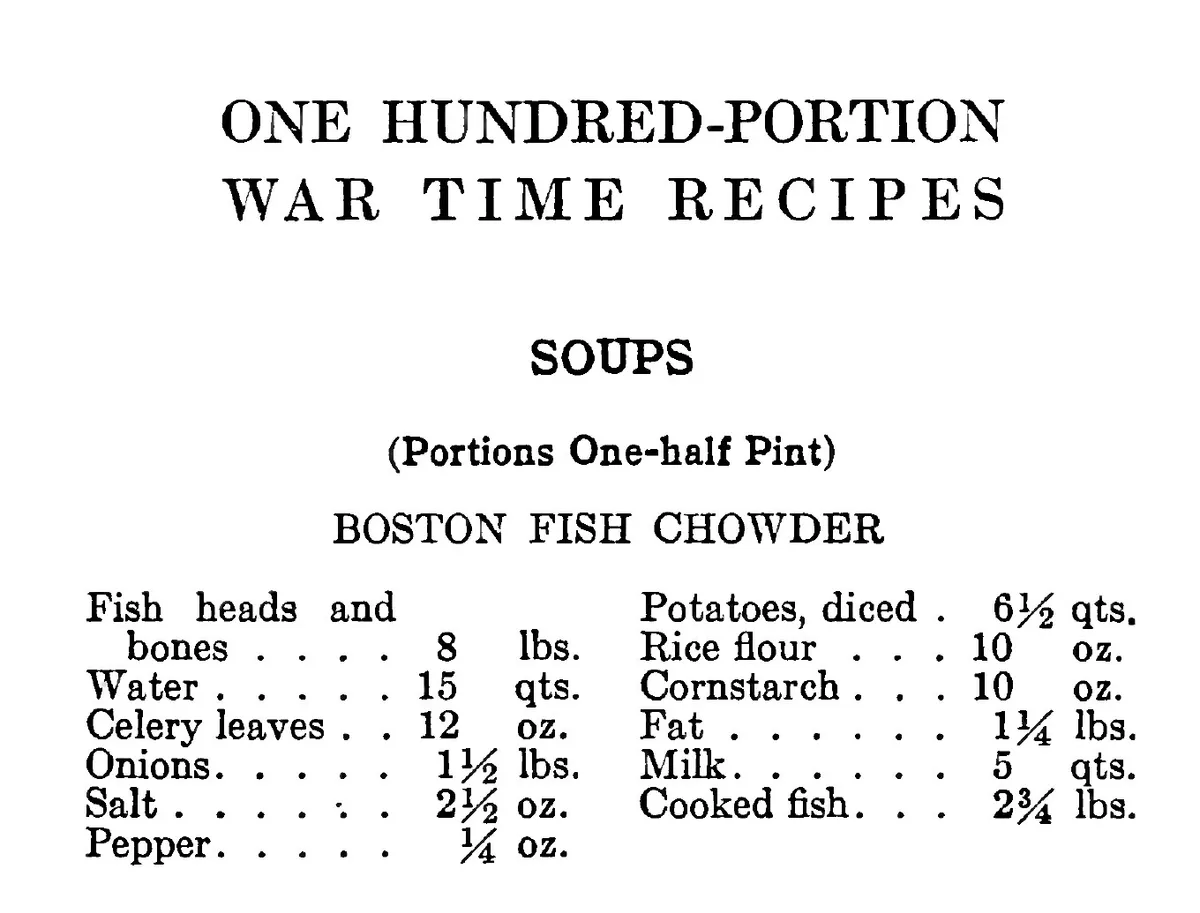
You weighed it, and you cooked with corn, barley, rice and dried peas. In January 1918 the US Food Administration asked the whole country to go without wheat two days a week and at one meal every day, in public eating places as well as at home. A lunch room that served a hundred people could not stretch a recipe by the cupful. Bertha E. Nettleton, who ran the Horace Mann Lunch Room at Teachers College in New York, published a book that year with every recipe sized for a hundred portions: chowders thickened with rice flour and cornstarch, loaves of dried peas and rice where the meat would have been, breads of barley and oats raised without yeast, and cornmeal puddings baked for hours. The dry ingredients are given in pounds and ounces.
The rules that reached the lunch room
The rules came at the end of January. A proclamation from the White House was dated January 18, and on January 26 the Food Administration, headed by Herbert Hoover, set out what it wanted. The Mount Airy News in North Carolina told its readers that the country would “go on a war bread diet Monday,” which was January 28.
The Sunday Oregonian printed the details on January 27. “Monday and Wednesday of each week are to be observed as wheatless days and one meal of each day as a wheatless meal,” it reported, and “this applies both in the home and in the public eating places.” Where a state food administrator didn’t name the wheatless meal, the Food Administration asked for it to be the evening meal. Tuesday was to be meatless, and Tuesday and Saturday porkless, which the paper explained as “without pork, ham, bacon, lard or pork products, fresh or preserved.”
Restaurants had less room to choose. The same report said hotels and restaurants would be classed as bakeries and required to serve the new victory bread, made with a share of grains other than wheat. That share started small and was to rise to a fifth by late February. Home cooks got simpler advice: “If you bake bread at home use wheat substitutes: If you buy it, buy only Victory bread.”
Most of this ran on pledges. Households were asked to sign one promising to keep the rules, and by January 1918 the Food Administration counted “Ten million American homes—and more” as signed, though no law made a family keep its word. The Food Administration’s posters put the case in four words: food will win the war.
A manual for the lunch room
Nettleton’s book is One Hundred-Portion War Time Recipes, published in Philadelphia by J. B. Lippincott in 1918. The title page calls her “Manager of Horace Mann Lunch Room, Assistant in Institutional Administration, Teachers College, Columbia University.”
Her introduction opens with the problem. Planning menus that met “suggestions and requirements of the Food Administration” while still paying their way, she wrote, left “the resources of the Institutional Manager or Lunch Room Director” taxed “to the utmost.” Plenty had been printed for the homemaker, but “little has been published, in practical form, to meet the need of the larger institutions.”
She had a particular reader in mind. The war had created jobs in “group feeding in military hospitals, canteens and community kitchens,” and many of them were going to “inexperienced young people going direct from college or training school.” For them she wanted dishes that were “palatable, nutritious, economical and practicable,” including new ways to serve unfamiliar foods and to stretch the ones the country was asked to save.
Each recipe gives “one hundred generous portions sufficient for the substantial part of the meal,” and each says how large a portion is, from half a pint of soup to two ounces of muffin. Dry ingredients are weighed. A small kitchen, she says, can manage with a balance or dial scale, a large one with “table-size platform and balance scales.” She also says where the recipes came from: “The recipes are chosen from those used and found popular at the Horace Mann Lunch Room, Teachers College.”
The book is short, forty-three pages, with its recipes in twelve groups from soups to quick breads. It prints no menus. Grouping the dishes by type, Nettleton explains, “makes easy the selection of dishes for each course in a meal.”
Where the wheat went
Not one recipe in the book lists wheat flour. Every place it would normally go, Nettleton uses something else.
Soups and sauces are thickened with rice flour and cornstarch, cooked together with fat into a roux. The Boston Fish Chowder on the book’s first recipe page takes 10 ounces of each for a hundred half-pints. Pastry is made from barley flour, potato flour and corn flour. Cakes use barley flour, rice flour, corn flour and cornmeal, and the sponge drop cakes are made with potato flour, thirty eggs and thirty extra yolks.
For the meatless days there is a whole chapter of meat substitutes. Kidney beans bake “ten to fourteen hours in a slow oven.” Lima beans come with a mock hollandaise. Fried corn mush has cheese ground into it, and dried peas, carrots and rice are ground together and baked as a loaf. The book does use bread crumbs, to coat croquettes, to top baked dishes and to layer an apple brown Betty, without saying what bread they came from. The Betty allows cake or muffin crumbs instead, and a baked chocolate pudding is made with soaked cracker crumbs, “all kinds of crackers,” saltines included.
Bread without yeast
The bread chapter is where the book is most unlike a home cookbook. Every bread in it is a quick bread. The word “yeast” doesn’t appear anywhere in the book.
Nettleton doesn’t say why. A likely reason is in the grain. C. Houston and Alberta M. Goudiss, whose Foods That Will Win the War and How to Cook Them came out the same year for home cooks, explained that “with the exception of rye, grains other than wheat do not contain sufficient gluten for yeast bread.” A home baker could replace part of the wheat and keep the yeast. The Goudisses advised that “rice and cornmeal can be added to wheat breads in a 10 per cent. proportion,” and said a third of barley flour made a light-colored, good-flavored loaf.
A kitchen trying to use no wheat flour at all would have struggled to raise a yeast loaf, and Nettleton doesn’t try. Even her rye goes into baking powder muffins. Her breads are barley muffins, corn muffins, rye muffins, oatmeal muffins, a wheatless biscuit with mashed potato in it, and two loaves, a prune bread and a barley nut bread, all raised with baking powder. Her rye muffins use barley flour beside the rye, and the oatmeal breads soak their oats in scalded milk before anything else goes in.
Home and lunch room
Home cookbooks of 1918 had their own problem: rules written by weight for cooks who measured in cups. TuneMyRecipe’s Wheatless and Meatless in 1918 (opens in a new tab) follows how those books turned ounces into cups. Nettleton didn’t have to, because a lunch room bought and cooked by the pound.
The two kinds of book also cook the same dish differently. The Goudisses’ Indian pudding for six uses four cups of milk, a third of a cup each of cornmeal and molasses, and no fat or fruit, served “with milk.” Nettleton’s pudding for a hundred, cut down to six, takes about twice the molasses and adds ground beef suet and raisins, served with cream. The Goudisses called theirs “a good and nourishing dessert.” Nettleton printed hers for lunch rooms that were already going without wheat.
The Food Administration’s work wound down quickly after the Armistice of November 11, 1918. Nettleton’s book outlasted them. Wartime Canada records that a copy now at the University of Guelph was consulted by a food distribution company in Guelph, Ontario, during the Second World War.
The recipes
Nettleton printed no menus, so these four follow the order of her chapters: a soup, a meat substitute, a bread and a pudding. Each is cut down from the book’s institutional quantities to a family-sized batch.
- Corn Chowder (1918): canned corn and potatoes in a celery-leaf stock, thickened with rice flour and cornstarch.
- Carrot and Green Pea Loaf (1918): dried peas, carrots and rice from the meat substitutes chapter, ground and baked.
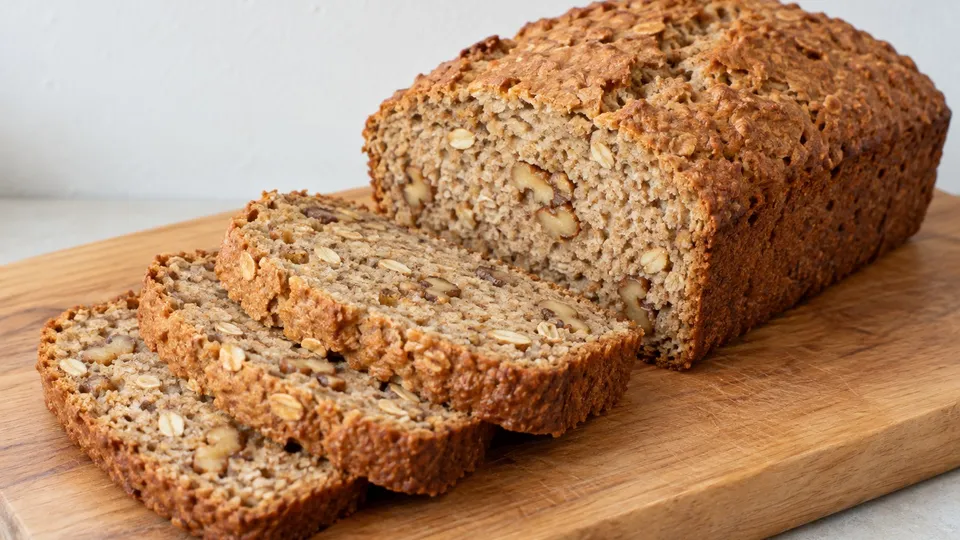
- Barley Nut Bread (1918): barley flour, rolled oats and walnuts, with no yeast and, as the book notes, no fat.
- Baked Indian Pudding (1918): cornmeal, milk, molasses and suet, baked slowly and served with cream.
Cutting it down
Nettleton knew where a small batch goes wrong. “Because cooks are apt to be inaccurate in measuring small amounts,” she wrote, salt, pepper, onion and spice are given at their minimum. Divided by sixteen, a pound becomes an ounce, and divided by twenty, a quarter ounce of pepper becomes a pinch, so the recipes here give the small amounts in teaspoons and leave the rest to your taste, as she did. She ended her introduction modestly: “If they prove of value to others the purpose of the writer will have been accomplished.”
Start with the bread, a day ahead. Nettleton’s barley nut bread has to “keep eight to twelve hours before cutting,” so bake the Barley Nut Bread (1918) the evening before and slice it with the chowder the next day. The same war asked households to save butter as well, which is why the 1918 recipes in the story of America’s margarine laws were written for margarine. The four recipes are among our First World War recipes, with the lunch the peacemakers ate in Paris a year later.
 Cook it todayBarley Nut Bread (1918)
Sources
- Bertha E. Nettleton, One Hundred-Portion War Time Recipes (Philadelphia and London: J. B. Lippincott, 1918).
- C. Houston Goudiss and Alberta M. Goudiss, Foods That Will Win the War and How to Cook Them (New York, 1918).
- “Hoover Announces Food Saving Rules,” The Sunday Oregonian (Portland), January 27, 1918, p. 5, at Historic Oregon Newspapers (opens in a new tab).
- The Mount Airy News (North Carolina), January 31, 1918, p. 1, at DigitalNC (opens in a new tab).
- United States Food Administration, War Economy in Food (opens in a new tab) (Washington: Government Printing Office, January 1918), pp. 7–8.
- “Records of the U.S. Food Administration (Record Group 4) (opens in a new tab),” Guide to Federal Records, National Archives.
- “Cooking for a crowd (opens in a new tab),” Wartime Canada.