The Supreme Court decides McCray v. United States · Washington, D.C.
Why Did Butter Make Margarine Expensive?
Artificially colored margarine owed ten cents a pound in tax, uncolored ¼ cent. In 1904 the Supreme Court ruled that dye arriving in the butter counted too.
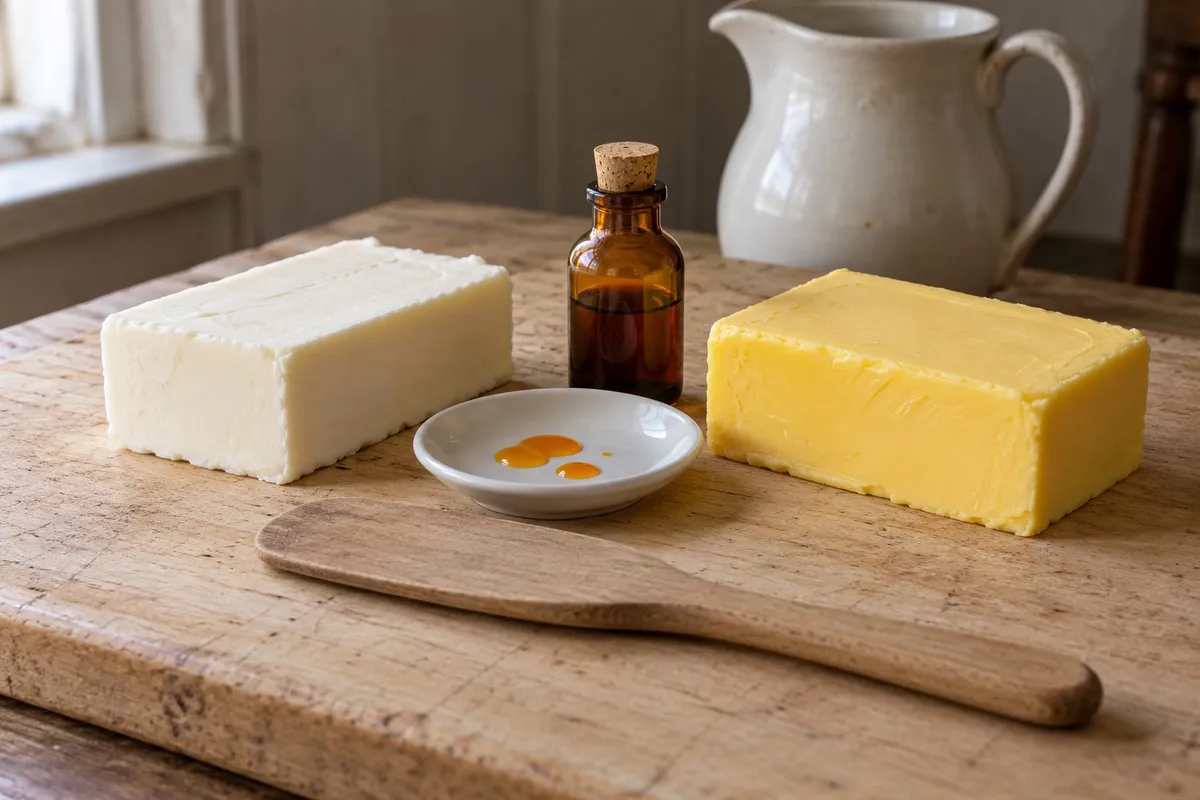
Because the dye came with it. From 1902, federal law taxed margarine artificially colored to look like butter at ten cents a pound (about $3.70 today, by US consumer prices), and margarine free of artificial color at a quarter of a cent. A retailer named McCray said his margarine came from an Ohio company that put plenty of creamery butter in it, butter that had been dyed yellow before the company bought it. On May 31, 1904, in McCray v. United States, the Supreme Court held that the dye still counted: margarine colored by dyed butter owed the full tax. Margarine made yellow by butter that was yellow by nature would have paid the quarter cent. The butter, dyed or not, owed nothing.
A fifty-pound package
The case began with one shopkeeper and one package. McCray was a licensed retail dealer in oleomargarine, and he bought a fifty-pound package of it to sell. It carried federal revenue stamps at a quarter of a cent a pound. The government said it needed stamps at ten cents, and sued him for the statutory penalty of fifty dollars. On fifty pounds, the gap between the two rates came to less than five dollars (about $180 today).
McCray admitted buying it. His answer to the court explained what was in the package. The Ohio Butterine Company had made it, he said, from a formula of “oleo oil, 20 pounds; natural lard, 30 pounds; creamery butter, 50 pounds; milk and cream, 30 pounds; common salt, 7 pounds.” The company, his answer said, had added no coloring of its own. The butter it bought on the open market had already been colored a deep yellow with Wells-Richardson’s improved butter color, a preparation his answer said was used all over the country to color butter, and the margarine took its yellow from that.
Two cents, then ten
Margarine had been taxed since 1886, when Congress put two cents on every pound and license fees on everyone who made, wholesaled or sold it. The states went further. The economic historian Ruth Dupré counts 32 states that had forbidden yellow margarine by 1900, and New Hampshire and West Virginia in 1891 required it to be colored pink. In 1894 the Supreme Court upheld a Massachusetts law against margarine made in imitation of yellow butter.
An honest sale could still get through. On October 2, 1893, at 219 Callowhill Street in Philadelphia, George Schollenberger, agent for a margarine maker in Providence, Rhode Island, sold James Anderson a sealed forty-pound tub of it. Anderson knew exactly what he was buying; the jury found that he had been told it was oleomargarine and not butter. Pennsylvania banned margarine outright. The trial court found for Schollenberger, but the state’s supreme court ruled against him, and in 1898 the US Supreme Court reversed that judgment: a state could not keep out margarine from another state sold in its original package. Congress closed that gap in 1902: margarine brought into a state would be subject to that state’s laws on arrival, original package or not.
In 1902 Congress split the federal tax by color. Margarine artificially colored to look like butter would pay ten cents a pound. Margarine “free from artificial coloration that causes it to look like butter of any shade of yellow” would pay a quarter of a cent. The licenses for dealers who sold only the white kind came down too. By 1914, Dupré reports from the revenue office’s figures, 954 retailers in the country sold colored margarine and 62,606 sold it white.
Yellow from the butter
McCray’s lawyers made two arguments. The first was about the words of the law: butter was an authorized ingredient, so color that arrived with the butter was not artificial coloration of the margarine. The second was about the Constitution. Butter made outside the spring, his answer said, was almost all colored to match the deep yellow of spring butter, buyers wanted that color, and white margarine would not sell. A ten-cent tax on yellow margarine would destroy the business for butter’s benefit. The government answered that the tax stopped no one making or selling it: with the ten cents added, its lawyers said, colored margarine cost about what butter did.
The court turned down both. Writing for the majority, Justice Edward Douglass White held that a maker who chose colored butter as an ingredient had made colored margarine, and the ten cents applied. As for the tax itself, Congress could pick what it taxed, and the courts could not strike down a tax for being too high. The opinion drew the line the law drew, between “natural butter artificially colored” and “oleomargarine artificially colored so as to cause it to look like butter,” and held that Congress could tax the second and leave the first alone. It went further: the “manufacture of artificially colored oleomargarine may be prohibited by a free government without a violation of fundamental rights.” Chief Justice Melville Fuller and Justices Henry Brown and Rufus Peckham dissented.
Equally wholesome
The court did not call margarine bad to eat. Its earlier rulings, which the opinion cites, turned on deception: yellow margarine could too easily pass for butter. In 1896 Fannie Merritt Farmer’s Boston Cooking-School Cook Book put it plainly: “Where butter cannot be afforded, there are several products on the market which have the same chemical composition as butter, and are equally wholesome. Examples: Butterine and oleomargarine.”
During the First World War, cookbooks pressed households to use it. In 1918 C. Houston Goudiss and Alberta M. Goudiss, in Foods That Will Win the War and How to Cook Them, told readers to use butter substitutes such as oleomargarine and nut margarine more widely at the table, “especially for adults,” and to save butter for children. The laws, they wrote, came from the fears of butter makers, though the inspection that followed made margarine “a cleaner and more reliable product than natural butter.” Bakers already used it, and “foolish prejudice against butter substitutes should not deter their use in the home.” Their drawn butter sauce and hard sauce call for “butter substitute” where Farmer’s call for butter, and one of their recipes blends a pound of butter with a pound of margarine “and use as butter.”
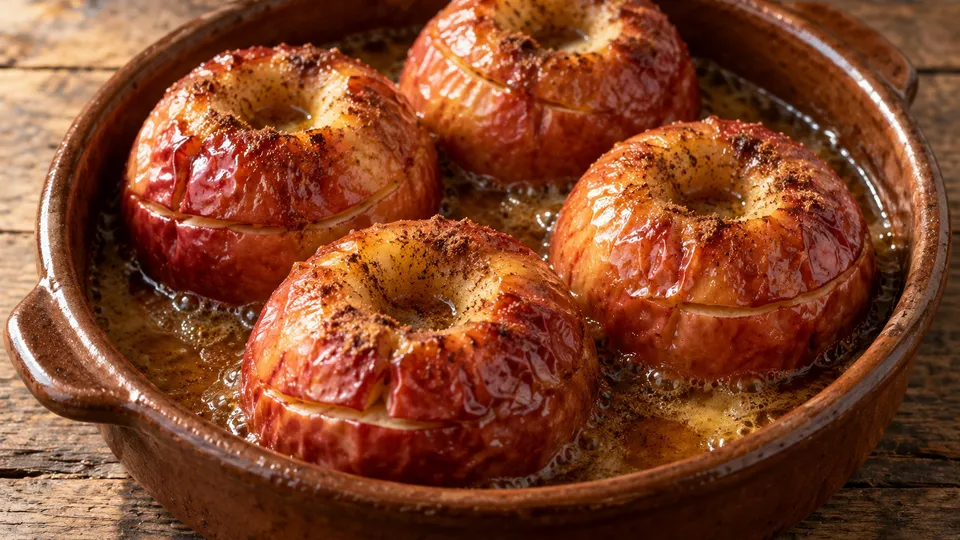
That same year, the Twentieth Century Club of Pittsburgh printed a war cookbook with honey-baked apples dotted with oleomargarine, and a cookery teacher in Bedford, Massachusetts, Carolyn Putnam Webber, made a chocolate cake with a quarter cup of oleomargarine, mashed potato and barley flour.
A bottle of coloring
There was one way around the white margarine. The 1902 act treated anyone who mixed coloring into margarine for others as a manufacturer, but it made an exception for a person coloring it for “his own family table, without compensation.” So the color could go in at home. The Goudisses’ recipe for stretching butter with milk adds “Vegetable coloring, such as comes with margarine or may be purchased separately,” if a deeper yellow is wanted.
Dora Morrell Hughes, in Thrift in the Household (1918), made fun of the whole arrangement. The butter interest, she wrote, had made “a heavy penalty fall on the merchant who sells it colored like butter,” while butter makers could color their own product without saying so on the wrapper. The butter-sellers’ complaint that margarine cut into the sale of butter, she wrote, was no argument against it “to the man whose salary is twenty dollars a week or less” (about $445 today). A bottle of coloring could be sold with the white margarine for the buyer to mix in, and that was lawful. “Isn’t that interesting, consistent, and amusing?” She had served butter at fifty-four cents a pound (about $12 today) beside oleomargarine at twenty-seven, she wrote, “and those at the table could not tell by taste or eye which was the butter.”
The ten-cent tax stood until Congress repealed the 1902 act in 1950. The last state bans on yellow margarine, in Minnesota and Wisconsin, were gone by 1967.
The recipes
No meal belongs to the case itself. All four recipes come from 1918 cookbooks, when the war asked households to save butter, as it asked them to go without wheat on set days, and each was written for margarine or another substitute; the two sauces come with their 1896 butter versions for comparison.
- Drawn Butter Sauce (1918): the Goudisses’ white sauce for fish and vegetables, with the last of the fat stirred in at the end.
- Baked Honey Apples (1918): scored apples baked in honey, dotted with oleomargarine and cinnamon.
- Chocolate Potato Cake (1918): Webber’s loaf with oleomargarine, mashed potato and barley flour.
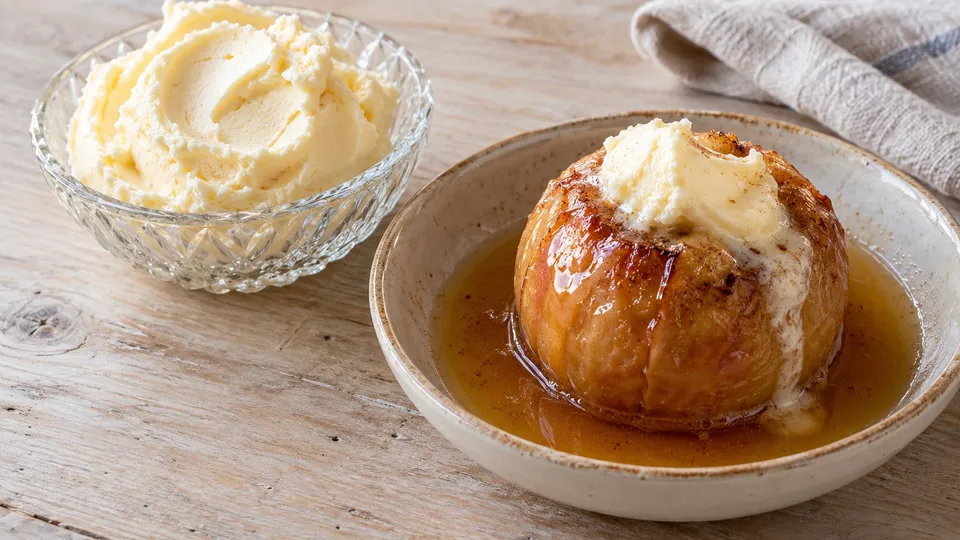
- Hard Sauce (1918): the pudding sauce made with a third of the usual sugar.
Cooking it
Use a stick margarine sold for baking; soft tub spreads carry more water and will not cream or melt the same way. Make the Baked Honey Apples (1918) first, and while they bake, beat up the Hard Sauce (1918) to spoon over them hot from the oven. The four 1918 recipes are part of our First World War recipes, with the barley and cornmeal of the wheatless days. Butter was not the only thing sold under a borrowed name; Forgotten Drink, our sister site, follows an 1898 lawsuit over Baker’s cocoa (opens in a new tab).
 Cook it todayBaked Honey Apples (1918)
 Cook it todayHard Sauce (1918)
Sources
- McCray v. United States, 195 U.S. 27 (1904), pp. 27 to 30, 41, 44 to 64.
- Schollenberger v. Pennsylvania, 171 U.S. 1 (1898), pp. 1 to 5, 13 to 25, including its account of Plumley v. Massachusetts, 155 U.S. 461 (1894).
- Ruth Dupré, “‘If It’s Yellow, It Must be Butter’: Margarine Regulation in North America Since 1886,” Journal of Economic History 59, no. 2 (1999), pp. 353 to 371 (PDF (opens in a new tab)).
- Federal Reserve Bank of Minneapolis, “Consumer Price Index, 1800- (opens in a new tab),” for the present-day equivalents.
- Fannie Merritt Farmer, The Boston Cooking-School Cook Book (Boston: Little, Brown, 1896), p. 12.
- C. Houston Goudiss and Alberta M. Goudiss, Foods That Will Win the War and How to Cook Them (New York: World Syndicate Company, 1918), pp. 76 to 81, 95, 97.
- Dora Morrell Hughes, Thrift in the Household (Boston: Lothrop, Lee and Shepard, 1918), pp. 158 to 161.
- Twentieth Century Club, War Time Cook Book (Pittsburgh: Pierpont, Siviter, 1918), p. 107.
- Carolyn Putnam Webber, Two Hundred and Seventy-Five War-Time Recipes (Bedford, Massachusetts, 1918), p. 51.