Viking Age food at Birka, York and Hofstaðir · Birka in Sweden, Coppergate in York, and Hofstaðir in Iceland · c. AD 900
What Did the Vikings Actually Eat?
Viking Age food, from the finds at Birka, York and Hofstaðir: barley bread, milk and curds, eels and herring, and beef when a hall gathered its people.
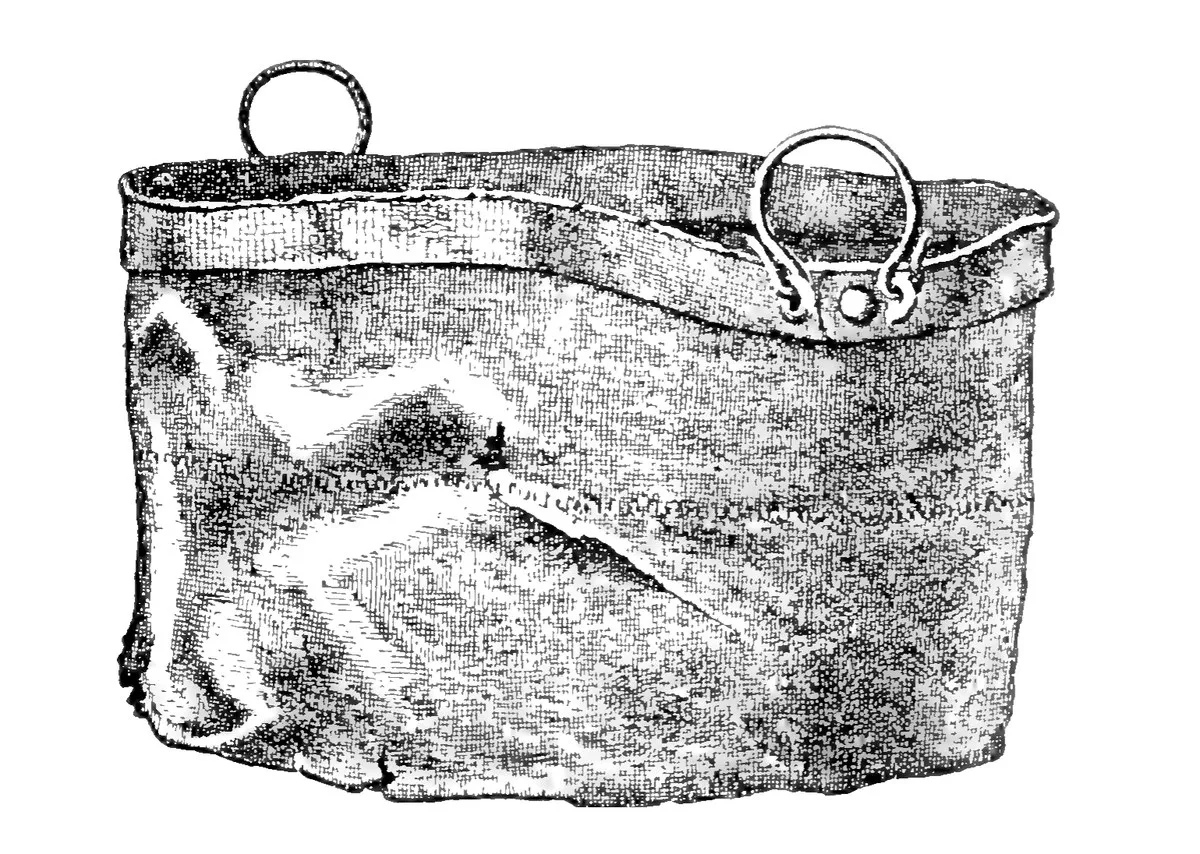
Barley bread, milk and what could be made from it, fish from the nearest river, and meat when an animal was killed: that is what the ground at three Viking Age sites shows people eating around the year 900. The evidence comes from charred loaves in the graves at Birka in Sweden, the bones in the wet soil of Coppergate in York, and the animal bones around a great hall at Hofstaðir in Iceland. No recipe survives from the Viking Age. The sagas that describe their feasts were written in Iceland in the 1200s, two or three centuries later, and they are best read as what later Icelanders believed.
Barley bread at Birka
Birka was a trading town on the island of Björkö in Lake Mälaren, west of present-day Stockholm, occupied from about 750 to 975. Its cemeteries, with those of farms elsewhere on the island, held some 575 cremation graves, and in 48 of them the mourners had put bread in the grave. Fire turned the loaves to charcoal, which is why they survived at all; the bread in Pompeii’s market stalls lasted the same way, as What Did Pompeii Buy at the Street Counter? shows.
The archaeobotanist Ann-Marie Hansson published a study of the Birka loaves in 1996, building on the microscope analyses of Hakon Hjelmqvist. Of the 33 loaves analyzed, 20 contained barley, most of it hulled barley, often with oats. Others had wheat, rye, flax or vetches, and three paired grain with peas. Most were small: where the size could be judged, 25 of 38 were rounds under 5 cm across and about half a centimeter thick. Most prehistoric Swedish loaves, she wrote in 2002, “were baked from finely sieved flour and have not been leavened.” One large Birka loaf, 17 to 18 cm across, “could have been baked in a turnable iron pan,” she suggested.
These were grave goods, so the loaves are evidence of what was baked and chosen for the dead. At least 15 were threaded on metal wire, and three oval loaves from one grave were strung together while still soft. Even so, they show the dough itself, which no saga does.
Eels and herring at York
At Coppergate, in the center of York, the waterlogged ground of the Anglo-Scandinavian town, from the mid 800s to the mid 1000s, kept bones that dry soil would have lost. T. P. O’Connor’s 1989 report found cattle in the majority, 53 to 65 percent of identified fragments, with sheep next and pigs close behind, and domestic fowl and geese among the birds.
The fish showed up when the soil was sieved. Eel bones turned up in four out of five samples from the earliest period and herring in more than half. “Herrings and eels were clearly an important and heavily exploited resource throughout the Anglo-Scandinavian settlement,” O’Connor wrote. Pike, salmon, trout and smelt came from the rivers and the estuary, and cod became more common in the early 1000s, perhaps as fishing moved out to sea.
The cooking pots held little of it. In 2026 Steven Ashby and colleagues analyzed the fats soaked into cooking pots from England and Denmark. Almost a quarter of the Danish pots had cooked fish; in England only 13 of 298 had, though four of those 13 came from Coppergate. The English pots held the fats of land animals. The fish, the authors conclude, “must have been prepared by non-ceramic means,” perhaps fried, grilled, baked, smoked or salted. A tenth-century iron pan has been dug up at Coppergate itself, though nothing shows what was cooked in it.
Milk first at Hofstaðir
Hofstaðir, near Lake Mývatn in northern Iceland, had an unusually large hall in the 900s. Around it, excavators found the skulls of at least 23 cattle. Those with teeth left were mostly young adults. The animals had been struck on the forehead and beheaded, and the heads displayed with their horns on until the bone weathered. Gavin Lucas and Thomas McGovern read them as the remains of sacrifices at gatherings, repeated over many years, where people ate the beef.
The rest of the bones tell the ordinary story. On most Icelandic farm sites, the cattle bones are mostly newborn calves and a few very old animals: the pattern of a dairy herd, where calves were killed young and the milk went to people. At Hofstaðir the husbandry was “largely geared towards secondary products (dairy and wool),” with a meat profile laid on top. Bulls were rare and expensive on dairy farms, which is what makes the Hofstaðir skulls so unusual: of the seven horn cores that could be sexed, five came from bulls. Milk came first.
What the sagas add
The sagas fill the table with food, and their settings are the Viking Age, but they were written long after it. Snorri Sturluson’s history of the Norwegian kings, written about 1230, has Olaf’s stepfather Sigurd Syr feeding the king’s men “on alternate days fish and milk, meat and ale,” as Paul Du Chaillu quoted it in 1889. In Njáls saga, written about 1280, a household is caught for stolen cheese when slices given away as a gift fit the victim’s cheese mold. Both show what Icelanders of the 1200s expected to find in a household’s stores. Neither is a record of a meal in 900.
The recipes
All three recipes are reconstructions. Each starts from a find and fills the gaps with a modern cook’s choices, named on its page.
- Birka Barley and Pea Flatbreads: small unleavened rounds of barley and pea flour, after two Birka loaves of hulled barley and peas.
- Coppergate Pan-Fried Herring: herring fillets fried in butter in an iron pan, after York’s fish bones and England’s nearly fish-free pots.
- Skyr-Style Fresh Curd: a thick, strained curd from skimmed milk, after the dairy herds behind Hofstaðir.
Cooking it
Start the Skyr-Style Fresh Curd the day before: it needs about 6 hours to set and a night to drain in the refrigerator, so it is ready when the flatbreads come off the griddle and the herring goes into the pan. The three dishes are part of our medieval recipes. The milk and whey that people drank with such a meal are on Forgotten Drink, our sister site, in What Did the Vikings Drink? (opens in a new tab)
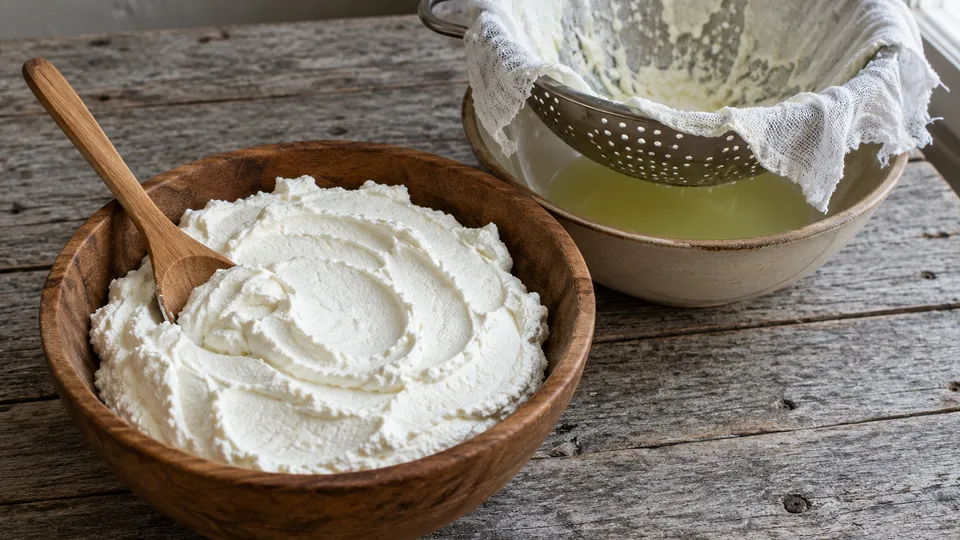 Cook it todaySkyr-Style Fresh Curd
Sources
- Ann-Marie Hansson, “Bread in Birka and on Björkö,” Laborativ Arkeologi 9 (1996), pp. 61–78.
- Ann-Marie Hansson, “Pre- and protohistoric bread in Sweden: a definition and a review,” Civilisations 49 (2002), pp. 183–190.
- T. P. O’Connor, Bones from Anglo-Scandinavian Levels at 16–22 Coppergate, The Archaeology of York 15/3 (London: Council for British Archaeology, 1989), pp. 154, 195–198, 203.
- Steven P. Ashby, Anita Radini, Gareth J. Perry, Alexandre Lucquin and Oliver E. Craig, “Cuisine and culture-contact: lipid residue analysis reveals lack of aquatic products in pottery from Viking Age England,” Antiquity 100 (2026), pp. 464–480.
- Gavin Lucas and Thomas McGovern, “Bloody Slaughter: Ritual Decapitation and Display at the Viking Settlement of Hofstaðir, Iceland,” European Journal of Archaeology 10, no. 1 (2007), pp. 7–30.
- Paul B. Du Chaillu, The Viking Age, vol. 2 (New York: Scribner, 1889), pp. 149, 276.
- The Story of Burnt Njal, trans. George Webbe Dasent (London: Grant Richards, 1900), pp. 85–88.