Watercress Porée (1393)
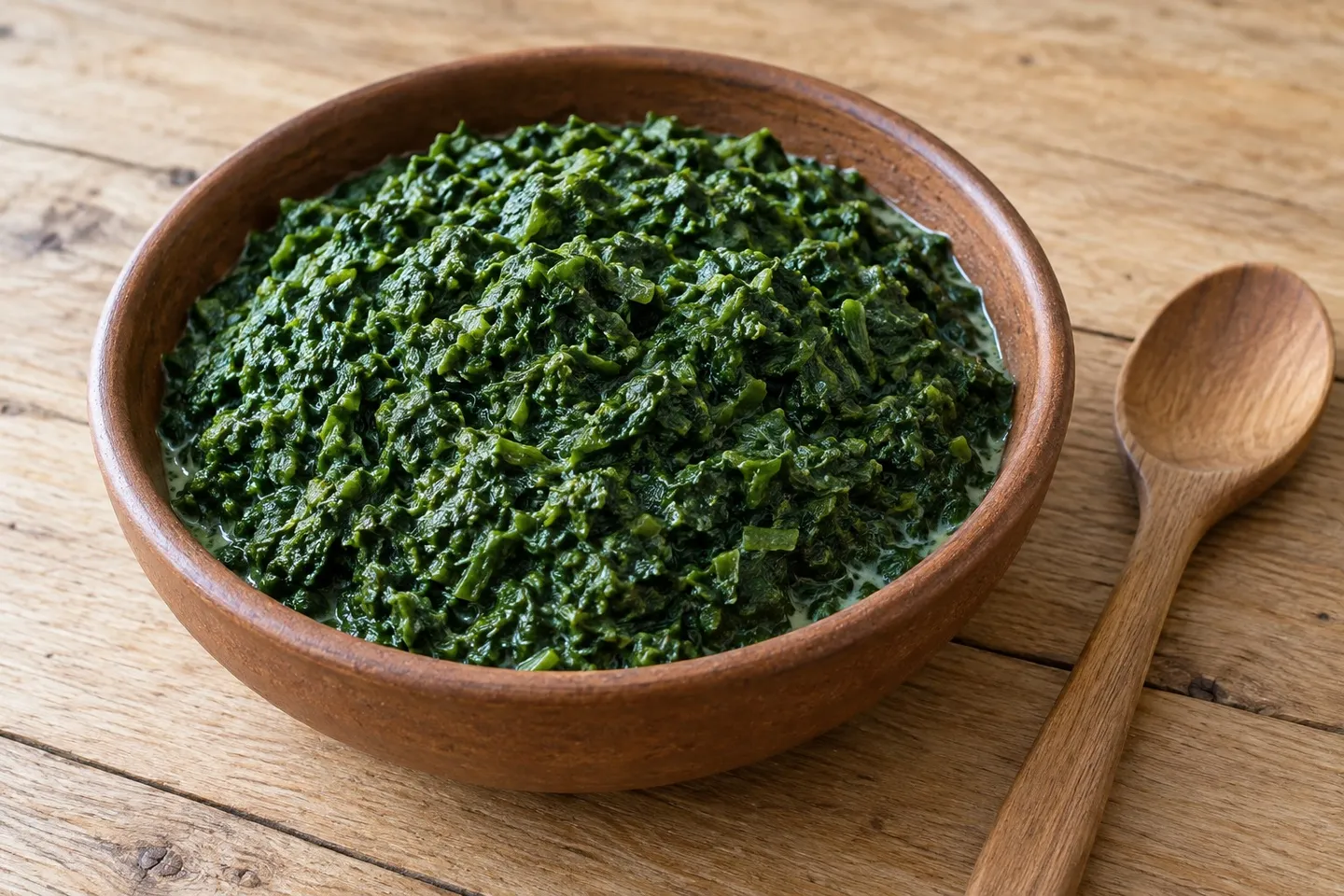
Reader ratingsWatercress porée, the green dish of a Paris fish-day dinner in the Ménagier de Paris: watercress and chard parboiled, chopped, fried in olive oil and simmered in almond milk.
- Recipe makes
- 4 small servings
- Prep
- Cook
- Total
Watercress porée, chopped greens simmered in almond milk.
The story behind the recipe
Watercress porée is the green dish of a fish-day first course in the Ménagier de Paris: dinner XXI sets a “porée de cresson” beside pease pottage, oysters, herring and salt eels. The recipe is in the book’s chapter of everyday pottages. Watercress is parboiled with a handful of chard, already chopped, then fried gently in oil and simmered in almond milk. That is the Lenten version. On other days, the author says, the greens can be fried in bacon fat and butter and thinned with meat broth, or finished with cheese.
What was porée?
Porée was a pottage of chopped greens, eaten with a spoon, and the book wants it “bien espoisse,” good and thick. The book sorts it into white, green and black kinds, by the names the cooks of the day gave them, and has firm views on keeping green porée green: chard that is chopped before it is parboiled stays greener than chard parboiled whole, and greens that are not parboiled at all stay greenest of all. Almond milk, made by pounding almonds with water, took the place of cow’s milk in Lent, when dairy was forbidden along with meat.
The author ends with a warning to serve it at once, before it turns brown. Pichon found the same dish, “avec quelques notables différences,” with some notable differences, in a manuscript of the royal cook Taillevent, under the name “Porée de cresson.”
Read more about this recipe
Making it today
We follow the book’s order: the chard is chopped first, both greens are parboiled for a minute, and the watercress is chopped once it is squeezed dry. The book names only “huille,” oil, and olive oil is our choice. Chard stands for the book’s bettes, beet leaves; young beet greens, where you can find them, are closer still. A carton of unsweetened almond milk saves pounding almonds. The book adds no salt to this porée; we do.
It opens the same fish-day dinners as Arboulastre, Herb Omelette (1393), and the two menus it comes from are in What Did a Paris Household Eat in 1393?
Item, de cresson en karesme au lait d’amandes. Prenez votre cresson et le mettez pourboulir et une pongnée de bettes avec hachées, et les friolez en huille, puis la mettez boulir en lait d’amandes; et en charnage, friolez au lart et au beurre tant qu’il soit cuit, puis destrempez de l’eaue de la char; ou au frommage et dressiez tantost, car il roussiroit. Toutesvoies, se l’en y met percil, il ne doit point estre esverdé.
In our translation: “Watercress in Lent with almond milk. Take your watercress and parboil it, with a handful of beet greens chopped with it, and fry them gently in oil, then boil it in almond milk; and outside Lent, fry it in bacon fat and butter until it is cooked, then thin it with the meat broth; or with cheese, and serve it at once, for it would turn brown. All the same, if parsley is put in, it must not be scalded.”
Recipe makes: 4 small servings
Ingredients
For 4 small servings. Quantities are shown as written.
Quantities as written here, for 4 small servings.
- Watercress200 g
- Chard leaves100 g
- Olive oil2 tbsp
- Unsweetened almond milk300 ml
- Salt1/2 tsp
Measurement notes
Ingredients as written here
- 200 g watercress
- 100 g chard leaves
- 2 tbsp olive oil
- 300 ml unsweetened almond milk
- 1/2 tsp salt
Equipment
 Large saucepan
 Colander
- Large frying pan or sauté pan
Instructions
Bring the large saucepan of water to a boil. Pick over the watercress, removing any thick stalks, and wash it. Wash the chard leaves and chop them finely.
Drop the watercress and chard into the boiling water together for 1 minute, until just wilted. Drain them in the colander, run cold water over them, and squeeze out as much water as you can.
Chop the watercress finely with the chard.
Warm the olive oil in the frying pan over medium heat. Add the greens and fry gently, stirring, for 3 minutes.
Pour in the almond milk, add the salt, and simmer for 5 to 8 minutes, stirring now and then, until the porée is thick and the milk has mostly been absorbed.
Serve at once in small bowls.
Nutrition
80calories per serving
- Recipe makes
- 4 small servings
- Servings
- 4
Estimated per serving from USDA FoodData Central values for watercress, Swiss chard, olive oil and unsweetened almond milk.
Recipe notes
When adjusting quantities
Keep about 150 ml almond milk to each 150 g of greens for a thick porée.
Notes
Quantities mentioned in these notes don’t change when you adjust the servings.
Best eaten as soon as it is made: the greens darken as they stand. Contains tree nuts (almond). For the book’s version for other days, fry the greens in butter with a little bacon fat and thin them with meat broth.
Scaling changes the ingredients only; pan sizes and cooking times need their own judgment. To adapt this recipe further, try the recipe tool at TuneMyRecipe (opens in a new tab), our sister site.



Sources and attribution
After the Ménagier de Paris, De cresson en karesme au lait d’amandes, as printed by Jérôme Pichon (Paris, 1846)
Recipe details
- Course
- Starter
- Dish family
- Soups & Broths
- Region
- French
- Era
- Medieval
- Main ingredient
- Vegetables
- Difficulty
- Easy