Rice Bread (1863)
Reader ratingsRice bread from the Confederate Receipt Book, printed in Richmond in 1863: a yeast loaf that stretches wheat flour with a cooked rice-flour paste.
- Recipe makes
- 1 loaf, about 2 lb, 16 slices
- Prep
- Cook
- Total
Most of the time is waiting: the rice paste cools for about 45 minutes, the dough rises twice, and the loaf should cool for an hour before slicing.
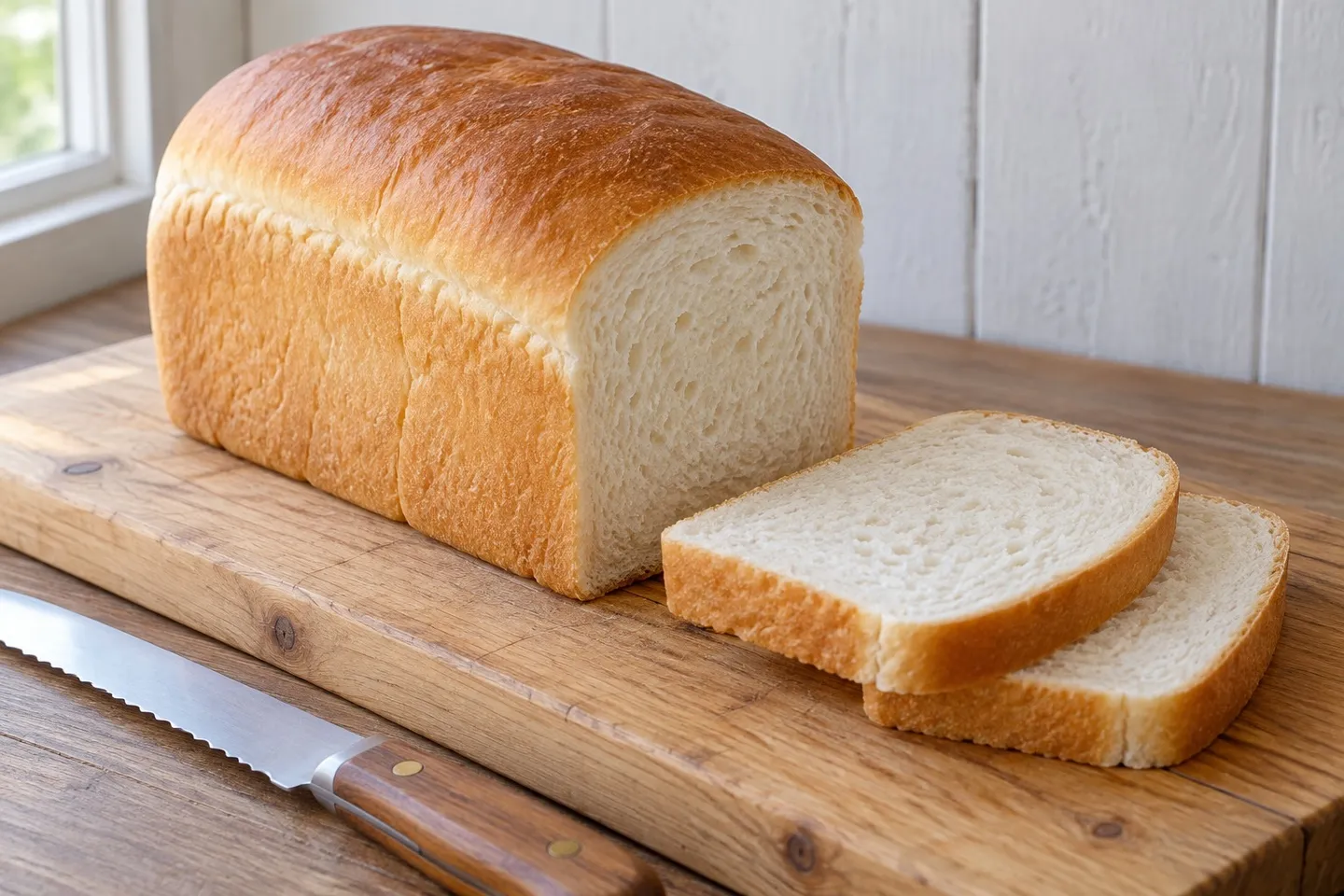
A rice and wheat pan loaf, sliced on a wooden board.
The story behind the recipe
Rice bread, as the Confederate Receipt Book (1863) gives it, is a wheat loaf with a cooked rice-flour paste kneaded into it, so a smaller weight of wheat flour makes a full loaf. It is the second bread in the book’s appendix of rice-flour recipes, under the plain heading “Another.”
From Charleston by way of Alabama
The appendix began as a letter. In September 1862 a reader in Russell County, Alabama, who signed as Elizabeth B. Lewis, wrote to the editors of the Columbus Sun in Georgia after seeing an inquiry in the paper for “recipes for making different kinds of bread with rice flour.” Lewis sent a set and added that they “were printed in Charleston, S. C., several years ago.” A year later the same recipes formed the appendix of a receipt book published in Richmond.
The appendix also explains its method. Rice flour is first boiled into a thick pap with water, and only then does the wheat go in. “In every case,” the closing note says, the pap “forms a support for them, and prevents the flour from settling at the bottom.”
What happened in Richmond that spring, on April 2 and in court the next day, is told in What Was Richmond Cooking in the Year of the Bread Riot?
Read more about this recipe
Making it today
The recipe names no yield, only a quart of rice flour, “as much as two or three quarts” of boiling water and half a pint of homemade yeast. We use an eighth of the rice flour and water, which makes one pan loaf, and instant yeast in place of the homemade kind. Bread flour gives the wheat its strength.
The book wants the pap “perfectly cold” before anything else is added. We let it cool only to lukewarm, which suits instant yeast. The first rice bread in the appendix is baked “as other bread,” and neither gives a heat or a time, so we chose the oven setting and the thermometer check.
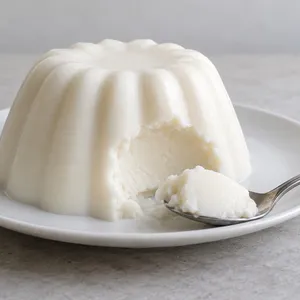
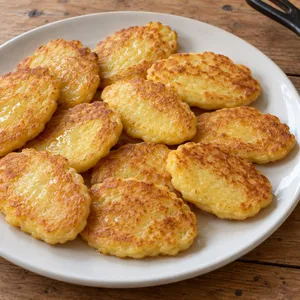
The same mixture, the recipe adds, “only made thinner and baked in rings make excellent muffins.” A few recipes further on, the appendix thickens milk with rice flour for an invalid’s pudding, the Rice Flour Blancmange (1863).
ANOTHER.—One quart of rice flour, make it into a stiff pap, by wetting with warm water, not so hot as to make it lumpy, when well wet add boiling water, as much as two or three quarts, stir it continually until it boils, put in half pint of yeast when it cools, and a little salt, knead in as much wheat flour as will make it a proper dough for bread, put it to rise, and when risen add a little more wheat flour, let it stand in a warm place half an hour, and bake it. This same mixture only made thinner and baked in rings make excellent muffins.
Recipe makes: 1 loaf, about 2 lb, 16 slices
Ingredients
For 1 loaf, about 2 lb, 16 slices. Quantities are shown as written.
Quantities as written here, for 1 loaf, about 2 lb, 16 slices.
Rice paste
- White rice flour2.5 oz
- Warm water3 fl oz
- Boiling water10 fl oz
Dough
- Instant yeast1 1/2 tsp
- Salt1 1/2 tsp
- Bread flour16 oz
- Bread flour to finish1 oz
- Butter for the pan1 tsp
Measurement notes
Ingredients as written here
- 2.5 oz white rice flour
- 3 fl oz warm water
- 10 fl oz boiling water
- 1.5 tsp instant yeast
- 1.5 tsp salt
- 16 oz bread flour
- 1 oz bread flour to finish
- 1 tsp butter for the pan
Equipment
 Medium saucepan
 Whisk
- Large mixing bowl
- 9 by 5-inch loaf pan
 Instant-read thermometer
Instructions
Put the rice flour in a medium saucepan and whisk in the warm water a little at a time to make a smooth, stiff paste with no lumps.
Whisk in the boiling water. Set the pan over medium heat and stir constantly until it comes to a boil and thickens into a smooth, glossy paste, about 3 minutes.
Scrape the paste into a large bowl and leave it to cool until just lukewarm, below 100°F (38°C), about 45 minutes.
Stir the instant yeast and salt into the paste. Add the bread flour a little at a time, mixing and then kneading, until you have a soft, smooth dough that no longer sticks to your hands, about 10 minutes. You may not need all the flour.
Cover the bowl and leave in a warm place until the dough has doubled, 1 to 1½ hours.
Grease the loaf pan with the butter for the pan. Knead the bread flour to finish into the risen dough, shape it into a loaf and lay it in the pan.
Cover and leave in a warm place for 30 to 45 minutes, until the dough rises just above the rim. Meanwhile, heat the oven to 400°F (200°C).
Bake for 40 to 45 minutes, until the crust is golden and the center of the loaf reaches 190 to 200°F (88 to 93°C).
Turn the loaf out onto a rack and leave it to cool for at least an hour before slicing.
Nutrition
130calories per serving
- Recipe makes
- 1 loaf, about 2 lb, 16 slices
- Servings
- 16
Estimated per slice (16) from USDA FoodData Central values for the listed ingredients.
Recipe notes
When adjusting quantities
The book gives no yield for this recipe. This is one eighth of its rice flour and water, enough for one 9 by 5-inch loaf; double everything for two.
Notes
Quantities mentioned in these notes don’t change when you adjust the servings.
Rice flour is weighed here at 5 oz to the cup. Use plain white rice flour. Sweet (glutinous) rice flour is a different product and isn’t a substitute here.
Wrapped in a cloth, the loaf keeps for two or three days at room temperature. The book’s recipe is made with wheat flour, so this bread contains gluten.
Scaling changes the ingredients only; pan sizes and cooking times need their own judgment. To adapt this recipe further, try the recipe tool at TuneMyRecipe (opens in a new tab), our sister site.
Sources and attribution
After the Confederate Receipt Book (Richmond: West & Johnston, 1863), Recipes for Making Bread, &c., from Rice Flour: Another
Recipe details
- Course
- Bread & baking
- Dish family
- Breads & Cakes
- Region
- American
- Era
- 19th century
- Source decade
- 1860s
- Main ingredient
- Grains & rice
- Difficulty
- Intermediate
- Occasion
- Everyday meal