Green Beans in Spiced Vinegar (1769)
Reader ratingsRaffald’s 1769 kidney beans made without her brass pan: young green beans boiled green, then dressed in spiced white wine vinegar.
- Recipe makes
- 4 side servings
- Prep
- Cook
- Total
Make the spiced vinegar first; it cools while the beans cook. Total time adds 30 minutes in the refrigerator. Serve the same day.
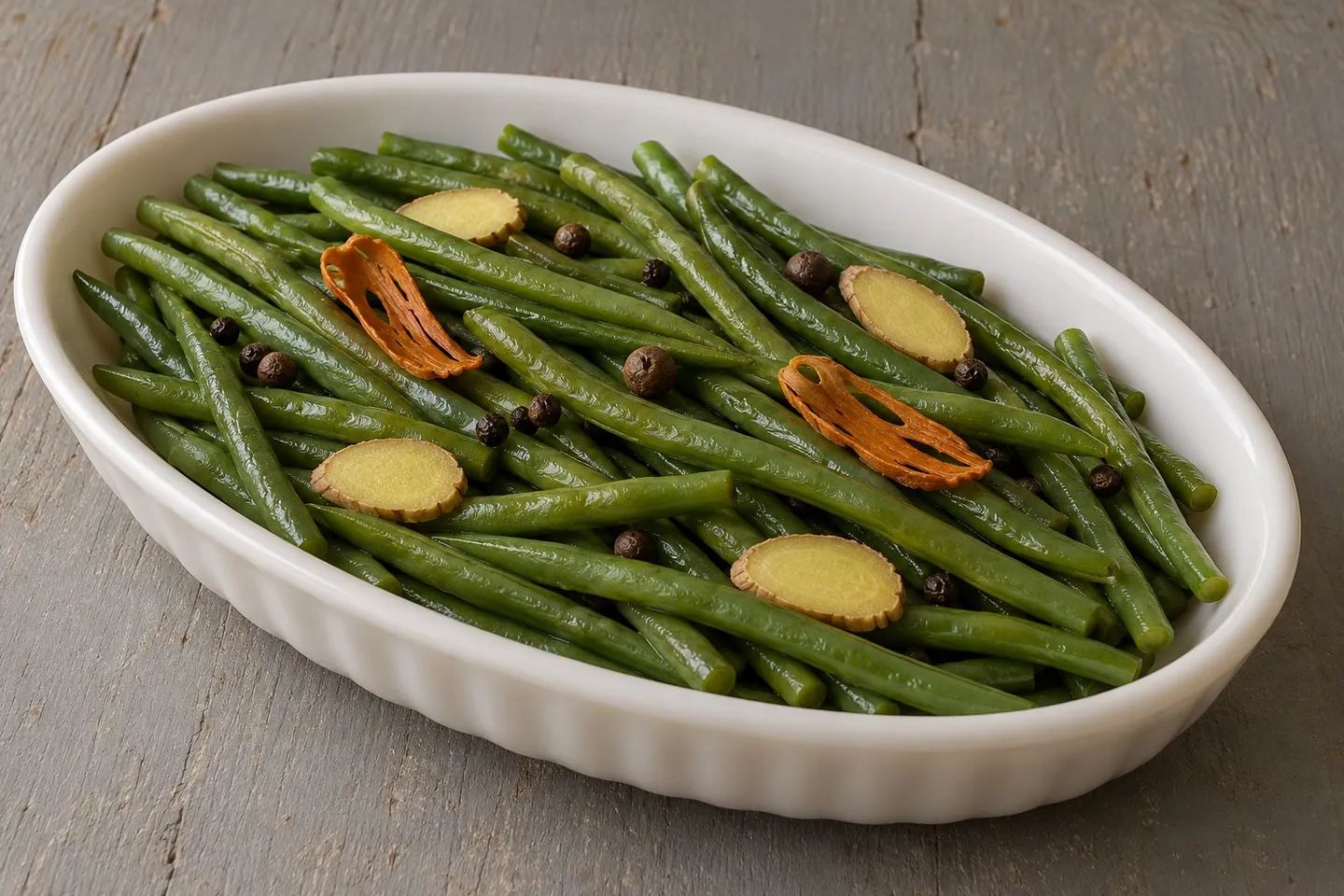
Whole green beans dressed in vinegar with allspice, mace and sliced ginger.
The story behind the recipe
Elizabeth Raffald’s “Kidney Beans” are young bean pods, and her recipe for pickling them is one of several in her pickling chapter that call for a brass pan. In The Experienced English House-keeper (Manchester, 1769) the beans, picked “young and small,” lie three days in strong salt water, then go into the pan between vine leaves with the same brine, over a very slow fire “‘till they are a fine Green.” Drained, they get a hot vinegar boiled with mace, Jamaica pepper, long pepper and ginger, and a bladder tied over the jar.
Why the brass pan?
Raffald wanted the color, and she knew the risk. Four pages earlier she warned against greening pickles in brass or with verdigris, cautioned against “Brass or Copper that is not well tinned,” and said they would green as well by heating the liquor. The bean recipe does not say whether its pan is tinned. Its brass stage heats only the beans’ own salt water; the vinegar comes later, and she never names the pan it boils in.
Jamaica pepper is allspice, the dried berry of a Caribbean tree. Long pepper, sold as small dark spikes, comes from a vine related to the one that gives black pepper.
In 1820 the chemist Fredrick Accum listed French beans among the pickles found “impregnated” with copper, and quoted Raffald by name, page numbers and all, telling cooks to boil pickles with halfpence. Those pages, in the three editions of 1769, 1771 and 1782, hold no such line. The search through her editions, and the case Accum built around her name, make up the second half of What Was in the Pot Accum Warned About in 1820?
Read more about this recipe
Making it today
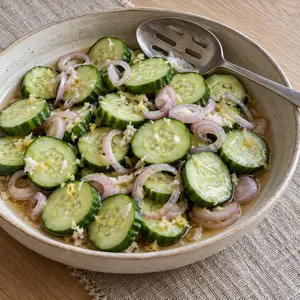
There is no brass, no brine and no vine leaf here. The beans are greened the way Raffald’s own warning advised, by heat: boiled in salted water in a stainless steel or enameled pot until bright green and just tender. Use fresh green beans, never dried red kidney beans, which are a different thing in the kitchen altogether. The vinegar goes on cool. Raffald poured hers on hot; this one cools first, because hot acid turns green beans olive faster. Black pepper takes the place of long pepper, which few shops stock. The beans are for the day they are made; they will not keep like Raffald’s. Serve them beside Cucumbers in Slices (1769), from the same chapter.
Get your Beans when they are young and small, then put them into a strong Salt and Water for three Days, stir them up two or three Times each Day, then put them into a Brass Pan, with Vine Leaves both under and over them, pour on the same Water as they came out off, cover them close, and set them over a very slow Fire ‘till they are a fine Green, then put them into a Hair Sieve to drain, and make a Pickle for them of White Wine Vinegar, or fine Ale Allegar, boil it five or six Minutes, with a little Mace, Jamaica Pepper, Long Pepper, and a Race or two of Ginger sliced, then pour it hot upon the Kidney Beans, and tie them down with a Bladder.
Recipe makes: 4 side servings
Ingredients
For 4 side servings. Quantities are shown as written.
Quantities as written here, for 4 side servings.
- Thin green beans400 g
- Water, for boiling2 l
- Salt, for the water1 tbsp
- White wine vinegar150 ml
- Water, for the pickle50 ml
- Salt, for the pickle1/2 tsp
- Blades mace2
- Allspice berries6
- Black peppercorns1/2 tsp
- Fresh ginger, thinly sliced10 g
Measurement notes
Ingredients as written here
- 400 g thin green beans
- 2 l water, for boiling
- 1 tbsp salt, for the water
- 150 ml white wine vinegar
- 50 ml water, for the pickle
- ½ tsp salt, for the pickle
- 2 blades mace
- 6 allspice berries
- ½ tsp black peppercorns
- 10 g fresh ginger, thinly sliced
Equipment
- Large stainless steel or enameled pot
- Small stainless steel or enameled saucepan
 Colander
- Glass or stainless steel bowl
Instructions
Put the white wine vinegar, water for the pickle, salt for the pickle, mace, allspice berries, black peppercorns and ginger in the small saucepan. Bring to a boil and simmer 5 minutes. Take it off the heat and leave it to cool.
Bring the water for boiling to a rolling boil in the large pot and add the salt for the water. Trim the stem ends of the green beans.
Drop the beans into the boiling water and cook, uncovered, until bright green and just tender when you bite one, 4 to 6 minutes.
Drain them in the colander and run cold water over them until they are cool, then shake them dry.
Put the beans in the glass or stainless steel bowl and pour the cooled spiced vinegar over them, spices and all. Toss well.
Cover and refrigerate for 30 minutes, tossing once. Serve cold, the same day, lifting the beans out of the vinegar.
Nutrition
35calories per serving
- Recipe makes
- 4 side servings
- Servings
- 4
Estimated per serving (4) from USDA FoodData Central values for boiled green snap beans and white wine vinegar.
Recipe notes
When adjusting quantities
Raffald gives no quantities. Keep the vinegar and water at three parts to one, enough to coat the beans.
Notes
Quantities mentioned in these notes don’t change when you adjust the servings.
Our changes from Raffald: fresh green beans boiled in salted water in place of three days in brine and slow greening in a brass pan between vine leaves; a stainless steel or enameled pan throughout; the vinegar cooled before it goes on, where she pours it hot; black pepper for long pepper; a covered bowl in the refrigerator in place of a jar tied down with a bladder; all quantities ours. Never green vegetables in copper or brass, and never add coins or copper salts to brighten them. The beans slowly lose their bright color in the vinegar, so dress them no more than a few hours before serving and keep them cold until then.
Scaling changes the ingredients only; pan sizes and cooking times need their own judgment. To adapt this recipe further, try the recipe tool at TuneMyRecipe (opens in a new tab), our sister site.

Sources and attribution
After Elizabeth Raffald, The Experienced English House-keeper (Manchester, 1769), To pickle Kidney Beans
Recipe details
- Course
- Side dish
- Dish family
- Vegetables & Sides
- Region
- British
- Era
- 18th century
- Source decade
- 1760s
- Main ingredient
- VegetablesSpices
- Difficulty
- Easy
- Occasion
- Everyday meal
- Season
- Summer