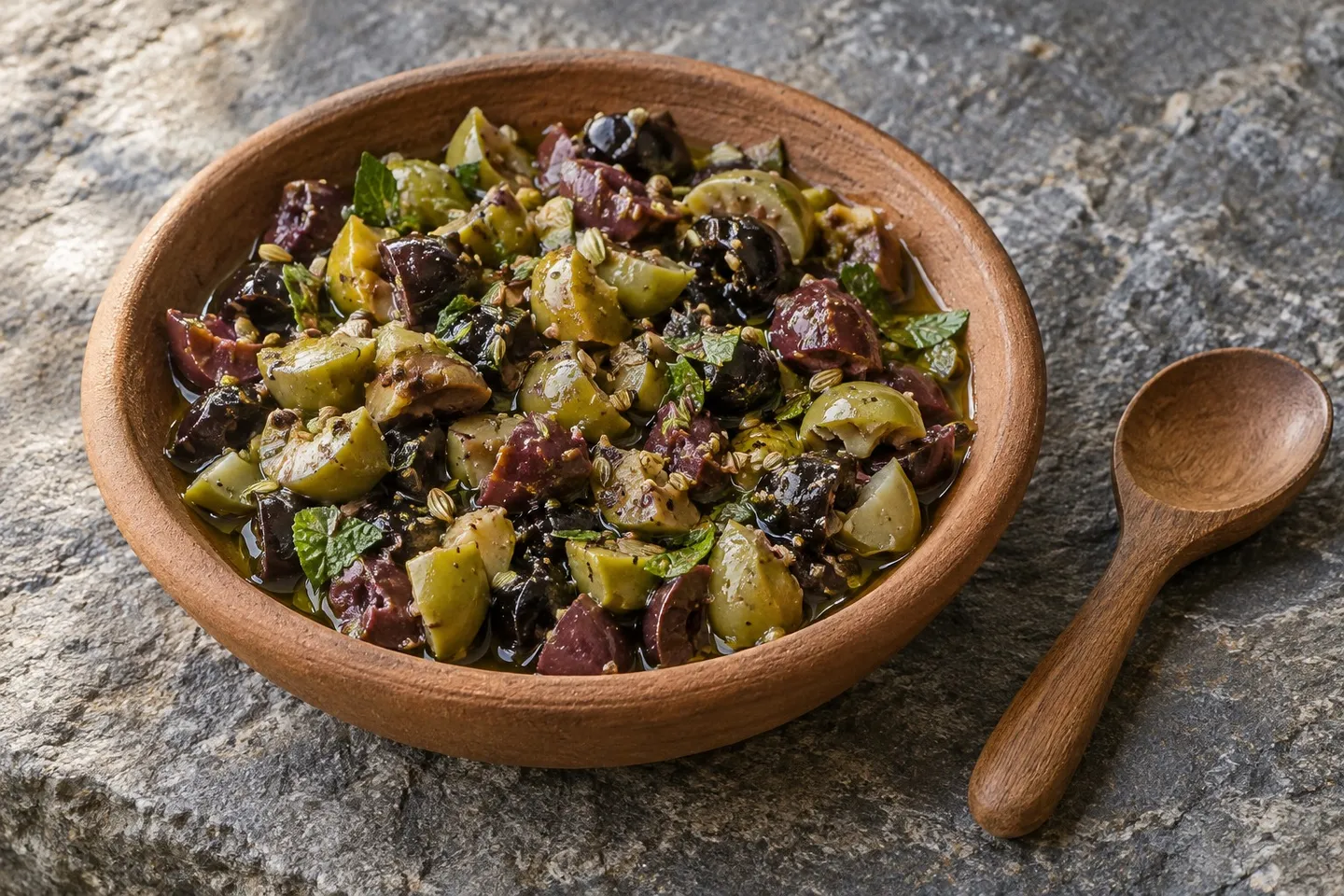
Epityrum, Olive Relish (Cato)
Reader ratingsEpityrum, Cato’s farm relish: green, black and purple olives, stoned and chopped with oil, vinegar, coriander, cumin, fennel, mint and a little rue, kept under oil.
- Recipe makes
- About 350 g, 8 servings
- Prep
- Total
Leave the relish for an hour so the seeds and herbs flavor the olives. It keeps 4 days in the refrigerator under its oil.
Epityrum, a chopped olive relish with seeds and mint.
The story behind the recipe
Olives were the relish of a Roman farm. Cato tells his overseer to “save the wind fall olives as much as possible as relishes for the hands,” and when they run out, to give the hands fish pickles and vinegar. Epityrum is the dressed-up version: olives stoned, chopped and steeped with herbs and seeds.
White, black and mottled
Cato’s chapter is for epityrum “white, black or mottled,” named for the olives that go in; Harrison’s English mixes all three, and so do we. Green, black and purple olives from a modern shop cover the same range. He has them stoned and cut up, then dressed with “oil, vinegar, coriander, cumin, fennel, rue and mint.” The Latin ends by telling the cook to put it up in a small jar, an orcula, with oil on top and use it from there.
The chapters around it are about keeping olives. Just before it, Cato puts up white olives, picked before they turn black: crushed, soaked in water changed often, then pressed and laid in vinegar and oil with half a pound of salt to a peck of olives. Fennel and mastic are kept apart in vinegar, and if the cook mixes them in, the olives must be eaten quickly. For white olives to eat after the vintage, he swaps half the vinegar for must. The epityrum is the same idea taken a step further, the olives already stoned and seasoned, ready for the table.
Read more about this recipe
Making it today
We toast the seeds and crack them, since Cato doesn’t say whether he means seed or leaf, and the seeds keep better under oil. Rue is bitter and strong, and many cooks will want to leave it out; anyone pregnant should. Cato leaves the amounts to the cook, so we set them.
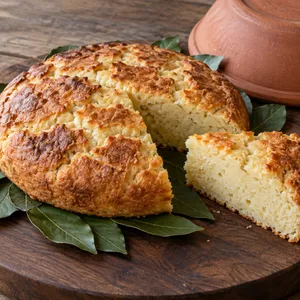
The relish opens the five recipes in What Did a Roman Farmhouse Bake?, and it goes well with Libum, Cheese Bread (Cato).
(CXIX) This is the recipe for olive salad (epityrum): Select some white, black and mottled olives and stone them. Mix and cut them up. Add a dressing of oil, vinegar, coriander, cumin, fennel, rue and mint. Mix well in an earthen ware dish, and serve with oil.
Recipe makes: About 350 g, 8 servings
Ingredients
For about 350 g, 8 servings. Quantities are shown as written.
Quantities as written here, for about 350 g, 8 servings.
- Mixed olives with pits, green, black and purple300 g
- Coriander seeds1 tsp
- Cumin seeds1/2 tsp
- Fennel seeds1/2 tsp
- Red wine vinegar1 tbsp
- Olive oil, plus more to cover3 tbsp
- Chopped mint leaves1 tbsp
- Small rue leaves, chopped (optional)3
Measurement notes
Ingredients as written here
- 300 g mixed olives with pits, green, black and purple
- 1 tsp coriander seeds
- 1/2 tsp cumin seeds
- 1/2 tsp fennel seeds
- 1 tbsp red wine vinegar
- 3 tbsp olive oil, plus more to cover
- 1 tbsp chopped mint leaves
- 3 small rue leaves, chopped (optional)
Equipment
 Small dry frying pan
 Mortar and pestle
- Cutting board and knife
- Jar with a lid, about 500 ml
Instructions
Pit the olives: press each one with the flat of a knife and pull out the pit. Chop them coarsely.
Toast the coriander seeds, cumin seeds and fennel seeds in the dry frying pan over medium heat, shaking the pan, until fragrant, about 1 minute. Tip them into the mortar and crack them coarsely.
Mix the olives in a bowl with the seeds, red wine vinegar, olive oil, mint and rue, if using.
Pack the relish into the jar, press it down, and pour over enough of the remaining oil to cover. Leave it for an hour before serving.
Keep the jar in the refrigerator and use the relish within 4 days. Let it stand 20 minutes at room temperature before serving, since the oil sets when cold.
Nutrition
110calories per serving
- Recipe makes
- About 350 g, 8 servings
- Servings
- 8
Estimated per serving from USDA FoodData Central values for green and ripe olives, olive oil, vinegar and spices.
Recipe notes
When adjusting quantities
Cato gives no amounts. Keep about one part vinegar to three of oil, and enough oil to cover the olives in the jar.
Notes
Quantities mentioned in these notes don’t change when you adjust the servings.
Use olives cured in brine. Oil-cured black olives are too dry for a relish. Fresh herbs kept under oil must stay cold: keep the jar refrigerated and don’t leave the relish out for more than two hours.
Scaling changes the ingredients only; pan sizes and cooking times need their own judgment. To adapt this recipe further, try the recipe tool at TuneMyRecipe (opens in a new tab), our sister site.
Sources and attribution
Cato, De agri cultura 119, in Fairfax Harrison’s translation, Roman Farm Management (New York, 1918)
Recipe details
- Course
- Starter
- Dish family
- Vegetables & Sides
- Era
- Ancient Rome
- Main ingredient
- Fruit
- Difficulty
- Easy
- Occasion
- Everyday meal