Kaneel Wafeltjes, Cinnamon Wafers (1769)
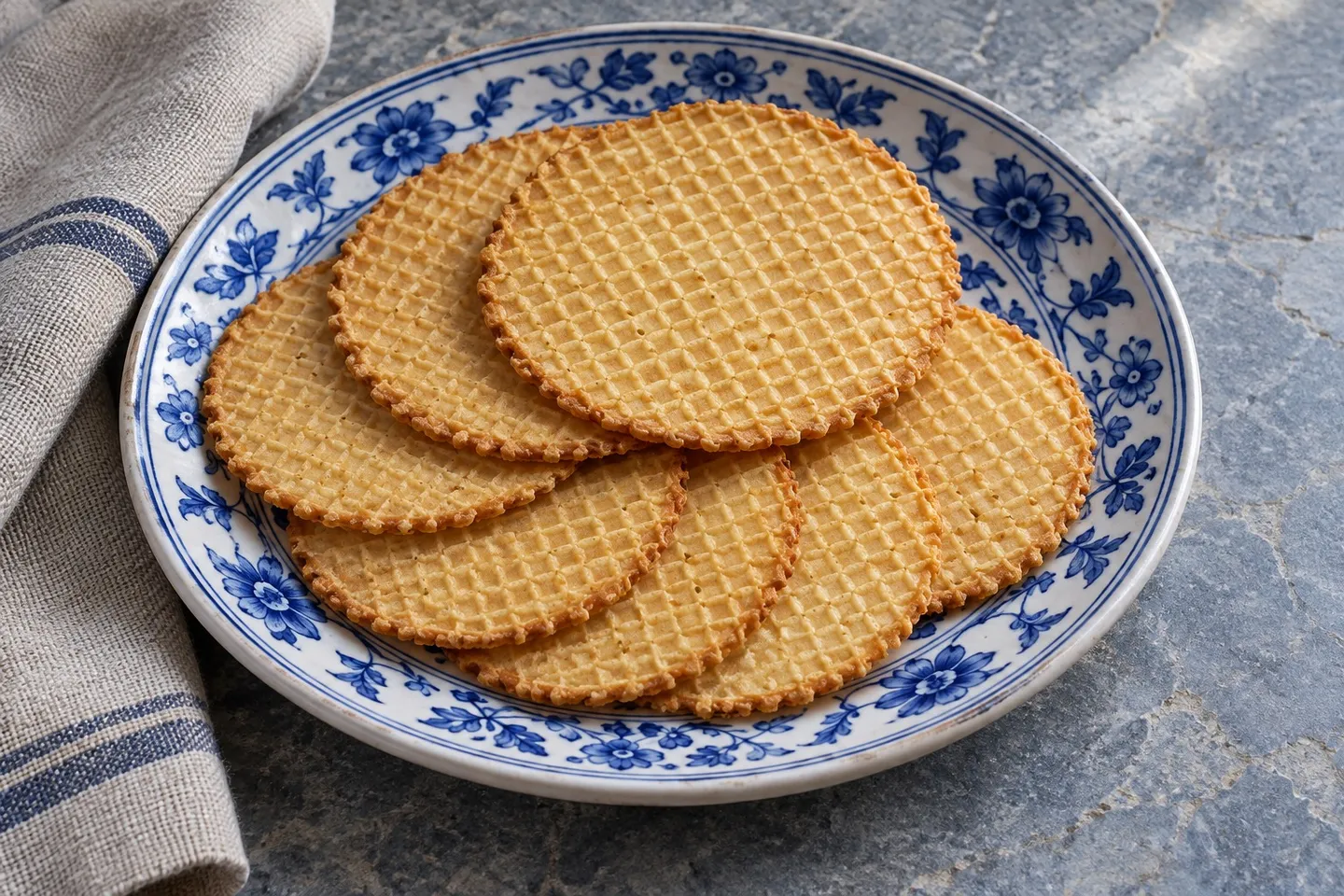
Reader ratingsCinnamon wafers from a 1769 Amsterdam cookbook: a butter dough of flour, sugar, cinnamon and egg, rolled into balls and pressed thin in a hot wafer iron.
- Recipe makes
- About 40 thin wafers
- Prep
- Cook
- Total
The dough chills for 1 hour so the balls hold their shape. Each wafer takes about a minute in the iron; times vary with the iron, so let the first one tell you.
Kaneel wafeltjes, thin cinnamon wafers pressed in an iron.
The story behind the recipe
These wafers share a page with the Hylikmaker, Spiced Honey Biscuits (1769) in a 1769 Amsterdam cookbook, and they need one thing the honey biscuits don’t: an iron. The dough is a pound of wheat flour, half a pound of butter and “zo veel zuiker,” as much sugar, with cinnamon to taste and a single egg. It is rolled into little balls and baked “in een yzertje,” in a little iron.
Why balls of dough for a wafer?
Pizzelle are usually made today from a soft batter dropped on the iron. This one is a stiff, short dough, firm enough to roll in the hands, and the iron does the rest, pressing each ball out flat and thin as it bakes. A similar method is still used in the Ardennes for the New Year wafers of Revin, made from walnut-size balls of chilled dough pressed between the two plates of a buttered iron, as the Val d’Ardenne tourist office’s recipe describes them.
Volmaakte grond-beginzelen der keuken-kunde leaves room to dress the wafers up: “men kan ‘er ook wat gember, saffraan, spaansche wyn en meerder eyeren in doen,” one may also put in some ginger, saffron, Spanish wine and more eggs. The plain version needs none of them. Whether anything like them reached the tent outside Batavia, where invited guests took refreshments while surplus spices burned, is unknown; Metzlar recalls that scene in Did the Dutch East India Company Really Burn Its Spices?
Read more about this recipe
Making it today
A pizzelle iron is the easiest stand-in for the book’s yzertje: it presses thin, flat wafers. A Belgian waffle iron is too deep and makes a soft waffle. We halve the book’s batch and use half an egg to keep its proportion, and the cinnamon amount is ours, since the book says only “na goedvinden,” as you see fit. The dough chills for an hour so the balls stay round until the iron closes on them.
Kaneel wafeltjes, maakt men van een pond tarwe meel, een half pond boter, zo veel zuiker en kaneel na goedvinden, en een ey daar in, waar van men balletjes maakt en in een yzertje bakt; men kan ‘er ook wat gember, saffraan, spaansche wyn en meerder eyeren in doen.
In our translation: “Cinnamon wafers are made from a pound of wheat flour, half a pound of butter, as much sugar, and cinnamon as you see fit, and an egg in it, of which one makes little balls and bakes them in a little iron; one may also put in some ginger, saffron, Spanish wine and more eggs.”
Recipe makes: About 40 thin wafers
Ingredients
For about 40 thin wafers. Quantities are shown as written.
Quantities as written here, for about 40 thin wafers.
- Unsalted butter, softened125 g
- Caster sugar125 g
- Ground cinnamon2 tsp
- Beaten egg (about half a large egg)25 g
- Plain flour250 g
- Melted butter, for the iron1 tsp
Measurement notes
Ingredients as written here
- 125 g unsalted butter, softened
- 125 g caster sugar
- 2 tsp ground cinnamon
- 25 g beaten egg (about half a large egg)
- 250 g plain flour
- 1 tsp melted butter, for the iron
Equipment
- Mixing bowl and wooden spoon
- Plastic wrap
- Pizzelle iron or thin wafer iron (a deep waffle iron won’t do)
- Pastry brush
- Thin spatula
- Wire rack
Instructions
Beat the butter and sugar together in the mixing bowl until smooth and pale. Beat in the cinnamon and the beaten egg.
Work in the flour with the spoon, then with your hand, until it comes together into a firm dough. Shape it into a flat disc, wrap it and refrigerate for 1 hour.
Heat the iron as its maker directs. Brush the plates lightly with the melted butter for the iron before the first wafers.
Pinch off pieces of dough and roll them between your palms into balls the size of a small walnut.
Set a ball in the middle of each plate, close the iron and press it down. Bake for about 45 seconds to 1 minute, until the wafers are an even pale gold.
Lift them out with the spatula onto the rack. They are soft when hot and crisp as they cool. Bake the rest the same way, adjusting the time to the first wafers.
Nutrition
60calories per serving
- Recipe makes
- About 40 thin wafers
- Servings
- 40
Estimated per wafer (about 40) from USDA FoodData Central values for flour, butter, sugar and egg.
Recipe notes
When adjusting quantities
The book’s batch is a pound of flour to half a pound each of butter and sugar and one egg; this is half of it. Double everything, with a whole egg, for the full batch.
Notes
Quantities mentioned in these notes don’t change when you adjust the servings.
Our changes from the book: half the batch, half an egg, the cinnamon amount, an hour’s chilling, a modern pizzelle iron and the baking time; the book’s optional ginger, saffron, Spanish wine and extra eggs are left out. We read “zo veel zuiker” as the same weight of sugar as butter; the phrase can also be read as sugar and cinnamon both to taste. If the dough cracks when you roll the balls, let it stand a few minutes at room temperature. Keep the wafers in an airtight tin. Contains gluten, egg and milk.
Scaling changes the ingredients only; pan sizes and cooking times need their own judgment. To adapt this recipe further, try the recipe tool at TuneMyRecipe (opens in a new tab), our sister site.
Sources and attribution
After Volmaakte grond-beginzelen der keuken-kunde (Amsterdam, 1769), Kaneel wafeltjes
See the original pages (scan at Internet Archive) (opens in a new tab)
Recipe details
- Course
- Dessert
- Dish family
- Desserts & Sweets
- Region
- Dutch
- Era
- 18th century
- Source decade
- 1760s
- Main ingredient
- Spices
- Difficulty
- Intermediate
- Occasion
- Everyday meal