Chicken Suprême (1814)
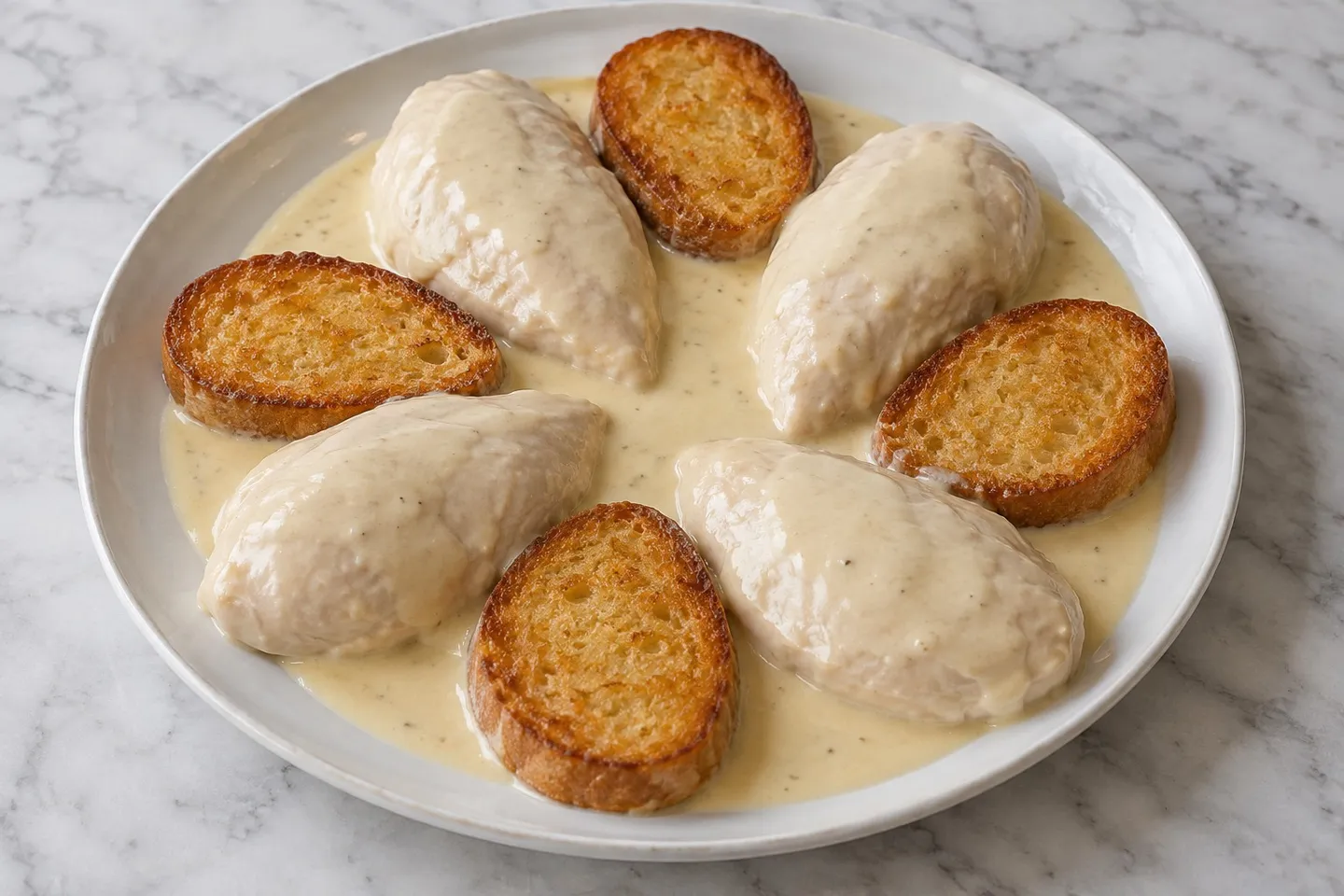
Reader ratingsBeauvilliers’s chicken suprême, 1814: breasts cooked white in butter and set in a crown with fried croûtons, under a sauce of reduced stock, velouté and butter.
- Recipe makes
- 4 breasts, 4 servings
- Prep
- Cook
- Total
Start the stock reducing first; it takes about 25 minutes, and the velouté, croûtons and chicken are made while it boils down.
Chicken breasts and fried croûtons in a ring under a pale velouté sauce.
The story behind the recipe
A suprême is chicken breast in a pale, buttery sauce, and it was the first dish Captain Rees Gronow named when he remembered the best table in Paris. In his Reminiscences of 1862 he wrote that Beauvilliers, the most celebrated restaurateur of Paris in 1815, was “also celebrated for his suprême de volaille.” In Beauvilliers’s own book of 1814 the dish is called Filets de Poulardes au Suprême: the breast fillets of three young hens, cooked gently in butter so they stay white, set in a crown with a fried croûton between each, under a sauce made from the birds’ own carcasses.
What made it a suprême?
Beauvilliers puts the whole difference in the sauce. He boils the carcasses into a consommé, reduces it almost to a glaze without letting it color, then adds six skimming-spoonfuls of reduced velouté and “deux pains de beurre,” two pats of butter. His separate Sauce au Suprême on page 44 follows the same idea and sharpens it with lemon juice or verjuice. One of his model dinners for twenty-five to thirty lists a suprême de volaille aux truffes, and the recipe ends with that version: truffles cut into coins, cooked in butter and poured into the center of the crown.
Nothing is wasted. The legs, he says, are to be lifted off carefully, keeping all the skin, so they can be shaped into “petits canetons” or “ballons,” little ducklings or balloons, for another entrée the same day or the next. His test for doneness is a finger pressed on the breast: if it resists, it is cooked.
Read more about this recipe
Making it today
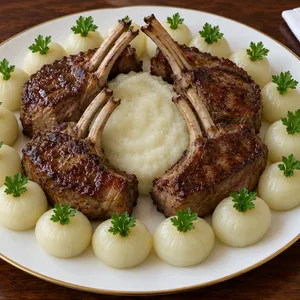
Boneless chicken breasts replace the poulardes, and a good unsalted chicken stock, boiled down, stands in for the consommé of carcasses. The velouté is a quick one of butter, flour and stock; Beauvilliers’s own is a long white sauce of veal, ham and vegetables, and the shortcut is our choice. A thermometer backs up his finger. Beauvilliers’s own dinner for twenty-five to thirty put this dish and the Lamb Cutlets à la Soubise (1814) on the same table. Gronow’s memory of the restaurant, and how far it can be trusted, is in Where Did the Victors Dine in Paris After Waterloo?
Filets de Poulardes au Suprême.
Levez les filets de trois moyennes poulardes, posez ces filets sur la table, et levez-en les petites peaux le plus mince possible; trempez dans l’eau le manche de votre couteau, et battez-les légèrement; parez-les; faites fondre dans une sauteuse une suffisante quantité de beurre; arrangez-y vos filets, en les trempant des deux côtés; saupoudrez-les d’un peu de sel, couvrez-les d’un rond de papier; levez avec soin les six cuisses pour vous en faire une entrée, soit pour le jour ou le lendemain : vous leur conserverez la totalité de la peau, pour former de ces cuisses des petits canetons ou des ballons; faites un consommé des carcasses; faites-le réduire presque en glace, sans lui donner de couleur; ajoutez-y six cuillerées à dégraisser pleines de velouté réduit, et deux pains de beurre; salez et vannez votre sauce; sautez vos filets en les retournant; faites qu’ils soient bien blancs; assurez-vous qu’ils sont bien cuits, en appuyant le doigt dessus : s’ils résistent, c’est qu’ils le sont; vous aurez passé six croûtons de mie de pain à potage, auxquels vous aurez donné la forme et l’épaisseur de vos filets; dressez ces filets en couronne, et mettez un croûton entre chacun d’eux; travaillez votre sauce, et saucez en marquant votre entrée : si vous voulez ces filets aux truffes, coupez des truffes en liards; faites-les cuire dans du beurre et un grain de sel; mettez-les dans une partie de votre sauce au suprême, et versez-les dans le puits de vos filets.
Recipe makes: 4 breasts, 4 servings
Ingredients
For 4 breasts, 4 servings. Quantities are shown as written.
Quantities as written here, for 4 breasts, 4 servings.
- Unsalted chicken stock for the reduction600 ml
- Butter for the velouté20 g
- All-purpose flour20 g
- Chicken stock for the velouté250 ml
- Boneless, skinless chicken breasts700 g
- Firm white bread4 slices
- Butter for the croûtons40 g
- Butter for cooking the chicken40 g
- Salt for the chicken1/2 tsp
- Cold butter to finish the sauce30 g
- Salt for the sauce1/4 tsp
Measurement notes
Ingredients as written here
- 600 ml unsalted chicken stock for the reduction
- 20 g butter for the velouté
- 20 g all-purpose flour
- 250 ml chicken stock for the velouté
- 700 g boneless, skinless chicken breasts
- 4 slices firm white bread
- 40 g butter for the croûtons
- 40 g butter for cooking the chicken
- 1/2 tsp salt for the chicken
- 30 g cold butter to finish the sauce
- 1/4 tsp salt for the sauce
Equipment
- Wide saucepan for reducing the stock
- Small saucepan and whisk
- Wide sauté pan with a lid or a round of parchment
- Frying pan for the croûtons
- Meat mallet or the handle of a heavy knife
 Instant-read thermometer
Instructions
Boil the stock for the reduction in the wide saucepan over medium-high heat for about 25 minutes, until about a quarter is left. Turn the heat down if it begins to darken; it should stay pale.
Meanwhile, melt the butter for the velouté in the small saucepan over medium-low heat, stir in the flour and cook for 2 minutes without letting it brown. Whisk in the stock for the velouté a little at a time and simmer for 10 minutes, stirring, until it is smooth and coats a spoon.
Pull off the small tenderloin from each chicken breast and keep it for another dish. Dip the mallet or knife handle in water and beat the breasts lightly to an even thickness, then trim the ragged edges.
Cut the crusts from the bread and cut each slice into a shape about the size and thickness of a breast. Fry the pieces in the butter for the croûtons over medium heat for 2 to 3 minutes a side, until golden. Drain them on paper and keep them warm.
Whisk the velouté into the reduced stock and simmer for a minute or two. Keep the sauce warm over very low heat.
Melt the butter for cooking the chicken in the sauté pan over medium-low heat. Lay in the breasts, turning them once to coat both sides, and sprinkle with the salt for the chicken. Cover with a round of parchment pressed onto the meat.
Cook gently for 12 to 15 minutes, turning the breasts once or twice, keeping the heat low enough that they stay white. They are done when they feel firm under a pressed finger and read 165°F (74°C) in the thickest part.
Take the sauce off the heat and whisk in the cold butter to finish the sauce and the salt for the sauce.
Arrange the breasts in a ring on a warm platter with a croûton between each one. Spoon the sauce over them and into the center, and serve at once.
Nutrition
560calories per serving
- Recipe makes
- 4 breasts, 4 servings
- Servings
- 4
Estimated per serving (4) from USDA FoodData Central values for skinless chicken breast, butter, white bread, flour and chicken stock.
Recipe notes
When adjusting quantities
Beauvilliers cooks the six breasts of three hens with six croûtons. Our four breasts fit one large sauté pan; for more, cook them in two pans and keep the sauce warm.
Notes
Quantities mentioned in these notes don’t change when you adjust the servings.
Beauvilliers leaves out the times, the butter for the breasts and the size of his spoons, so every amount here is our estimate. He cooks the breasts of three medium poulardes, six in all, with six croûtons; we cook four. A reduced bought or homemade chicken stock replaces his consommé of the carcasses, and the butter-and-flour velouté replaces his own reduced velouté. For his truffle version, slice a small black truffle thinly, warm the slices in a little butter with a pinch of salt, stir them into part of the sauce and pour it into the center. His separate Sauce au Suprême finishes with lemon juice or verjuice; a squeeze of lemon can go into this sauce with the last of the butter. Contains milk and wheat.
Scaling changes the ingredients only; pan sizes and cooking times need their own judgment. To adapt this recipe further, try the recipe tool at TuneMyRecipe (opens in a new tab), our sister site.
Sources and attribution
After Antoine Beauvilliers, L’Art du cuisinier (Paris, 1814), Filets de Poulardes au Suprême
See the original pages (scan at Internet Archive) (opens in a new tab)
Recipe details
- Course
- Main course
- Dish family
- Meat & Poultry
- Region
- French
- Era
- 19th century
- Source decade
- 1810s
- Main ingredient
- Poultry & game birds
- Difficulty
- Intermediate
- Occasion
- Dinner party