The Pan American Society of the United States’ dinner for the secretary of state and the governing board of the Pan American Union · Waldorf Astoria, New York City
What Was Served at the Pan American Society’s Dinner in 1912?
The Pan American Society’s 1912 Waldorf Astoria dinner for Latin America’s envoys: sorrel soup, sea bass meunière, squab chicken and alligator pears.
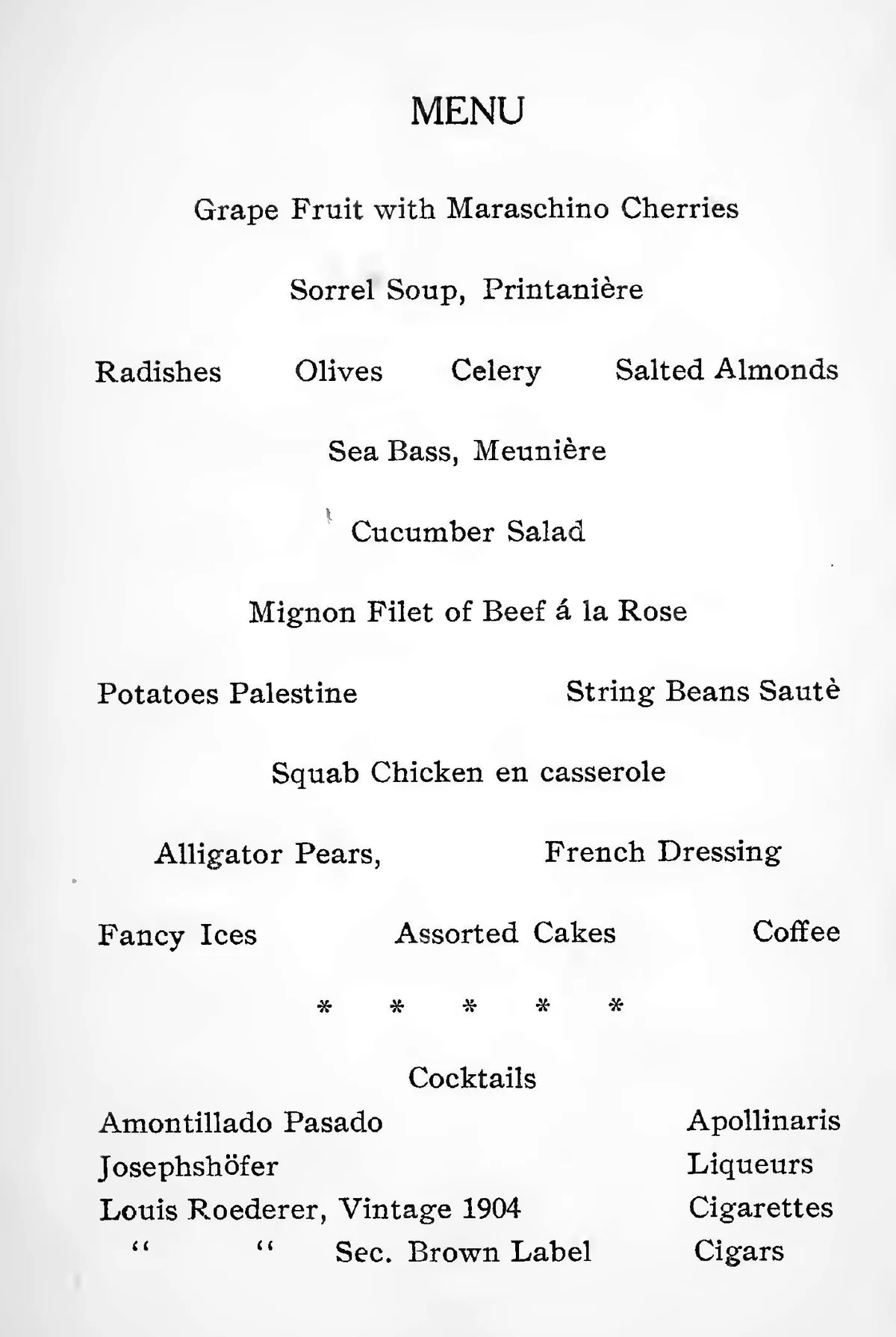
Grapefruit with maraschino cherries, sorrel soup, sea bass meunière, a small filet of beef, squab chicken en casserole and alligator pears with French dressing, then ices, cakes and coffee: that is the menu the Pan American Society of the United States printed for its dinner at the Waldorf Astoria on 27 May 1912. Its guests were the US secretary of state and the Latin American envoys in Washington, and the food was the French-named hotel cooking of the day, with one fruit from the south that many Americans still found strange.
A new society and its guests
The society was three months old. Its souvenir booklet, now in the Library of Congress, dates its founding to 15 February 1912 at the New York Chamber of Commerce, and gives its aims as acquaintance between the “representative men” of the Americas, hospitality to Latin American visitors, and other steps “involving no political policy.”
The dinner was in honor of Philander C. Knox, the secretary of state, and the ambassadors and ministers who formed the governing board of the Pan American Union in Washington. The title leaf lists them by country: the ambassadors of Brazil and Mexico, then the ministers of eighteen republics from Argentina to Venezuela, with a footnote that “Paraguay at present has no Diplomatic Mission.”
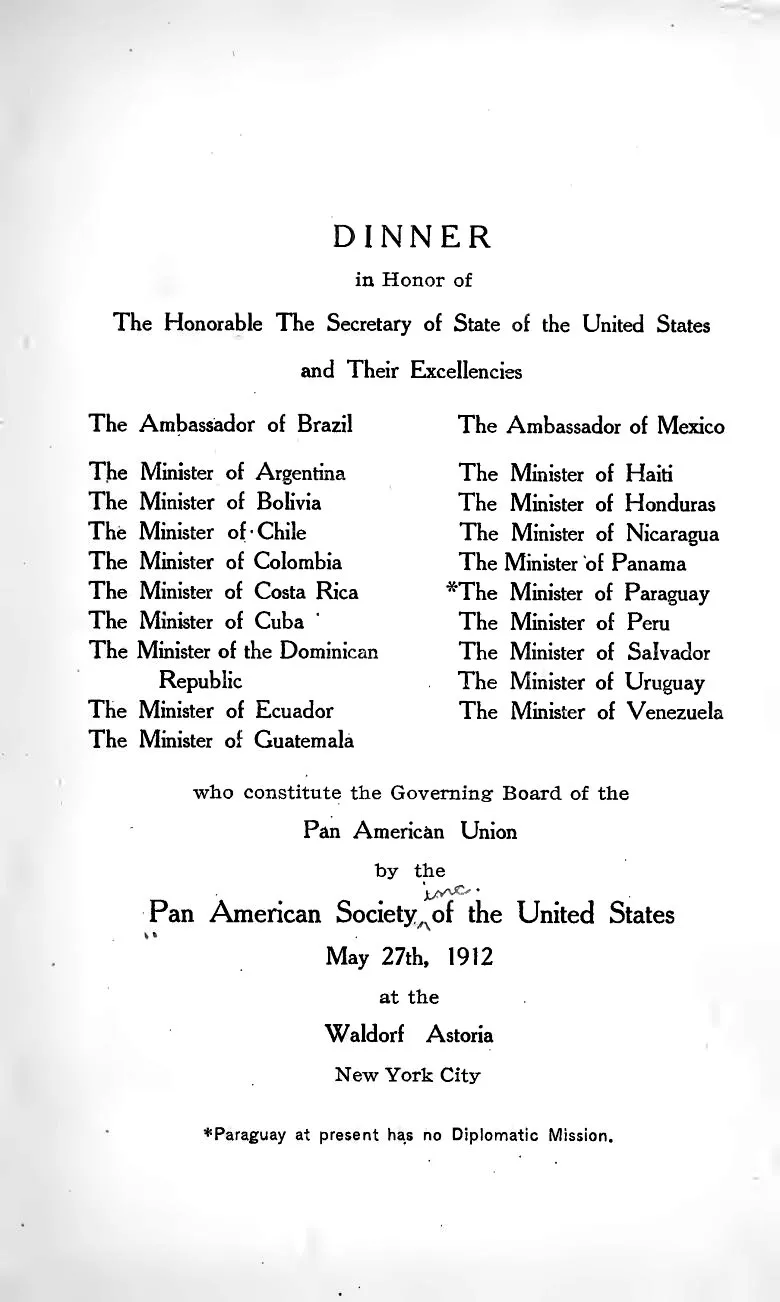 The title leaf of the society’s booklet for the dinner of 27 May 1912 (New York, 1912). Library of Congress.
The program named Henry White to preside. Its list of speakers runs from William J. Gaynor on “New York” and Nicholas Murray Butler with the welcome, through Knox on “Pan America,” Brazil’s ambassador Domício da Gama on “South America” and Mexico’s Manuel S. Calero on “Latin America in North America,” to William Sulzer on “United States.”
The menu
The booklet gives the menu a page of its own, printed in plain type with no prices and no kitchen named.
- Grape Fruit with Maraschino Cherries
- Sorrel Soup, Printanière
- Radishes, Olives, Celery, Salted Almonds
- Sea Bass, Meunière
- Cucumber Salad
- Mignon Filet of Beef á la Rose
- Potatoes Palestine, String Beans Sautè
- Squab Chicken en casserole
- Alligator Pears, French Dressing
- Fancy Ices, Assorted Cakes, Coffee
Many of the dishes carry a French word, and most of that French is the working vocabulary of a hotel kitchen. Printanière is a garnish of young vegetables; the English translation of Escoffier’s Guide of 1907 glosses it as “Vernal.” Meunière is a way of frying fish in butter with lemon and parsley that Escoffier sets out step by step. En casserole means cooked and served in the same dish, and by 1910 Fannie Farmer’s Boston household cookbook printed two chicken casseroles on one page.
The same kitchen French had filled the Titanic’s first-class menu six weeks earlier; What Was the Last First-Class Dinner on the Titanic? reads that card.
Some lines are harder to read. Neither Mignon Filet of Beef à la Rose nor Potatoes Palestine appears as a recipe in Escoffier’s Guide, Mrs. Beeton’s book or Fannie Farmer’s, so those two stay names on a card. And the card is a plan: it shows what the society ordered for the evening, and no account says what each guest ate.
It is a late-spring menu. Mrs. Beeton’s book of 1906 marks its sorrel soup “Seasonable in spring and summer,” and the dinner fell on the last Monday of May.
A fruit from the south
The alligator pear on this card was still news to many Americans. In 1899 Maximilian De Loup’s American Salad Book complained that the avocado “has been given the senseless name of alligator pear by English speaking people,” and noted that its popularity grew as the trees spread through the Gulf states and the fruit reached northern markets. Fourteen years later, Harvey W. Wiley’s Foods and Their Adulteration said it had “only lately been introduced into the United States” and that its cultivation “was first undertaken as a novelty.” He expected a great vogue for it once it reached “the people of ordinary means.”
De Loup called it native to tropical America, home to many of the diplomats the dinner honored. The menu sends it out with French dressing, the “simple dressing” De Loup said Americans preferred.
The recipes
The card gives only names, so each recipe here comes from a cookbook printed within a few years of the dinner, and each page says how close it is.
- Sorrel Soup, Printanière (1907): sorrel melted in butter in consommé, thickened with egg yolks and cream, with a garnish of spring vegetables, put together from Escoffier’s Potage Germiny, a sorrel soup, and his note on adding a vegetable garnish.
- Sea Bass Meunière (1907): Escoffier’s method for fish fried in butter and finished with lemon, parsley and butter browned until it smells of nuts.
- Squab Chicken en Casserole (1910): Fannie Farmer’s small young chickens baked with bacon, carrots, potato balls, brown sauce and sherry.
- Alligator Pear Salad (1899): De Loup’s strips of avocado, very cold, with Farmer’s French dressing.
The card’s other dishes are left out: the grapefruit, relishes and cucumber salad need no recipe, the ices and cakes aren’t named, and neither the filet of beef nor Potatoes Palestine turns up as a recipe in the books above.
Cooking it
The Alligator Pear Salad (1899) takes ten minutes once the fruit is cold: two ripe avocados, olive oil, vinegar, salt, pepper, and a few drops of onion juice, which De Loup called “a great improvement.” The soup, the bass and the squab are among our Edwardian recipes, along with the Titanic’s dinner of the same spring. Coffee closed the meal, and a lawsuit over Brazilian coffee filed nine days earlier gave Brazil’s ambassador the protest in his speech: Forgotten Drink, our sister site, tells that story and the drinks on the same card in A Coffee Row at a 1912 Diplomatic Dinner (opens in a new tab).
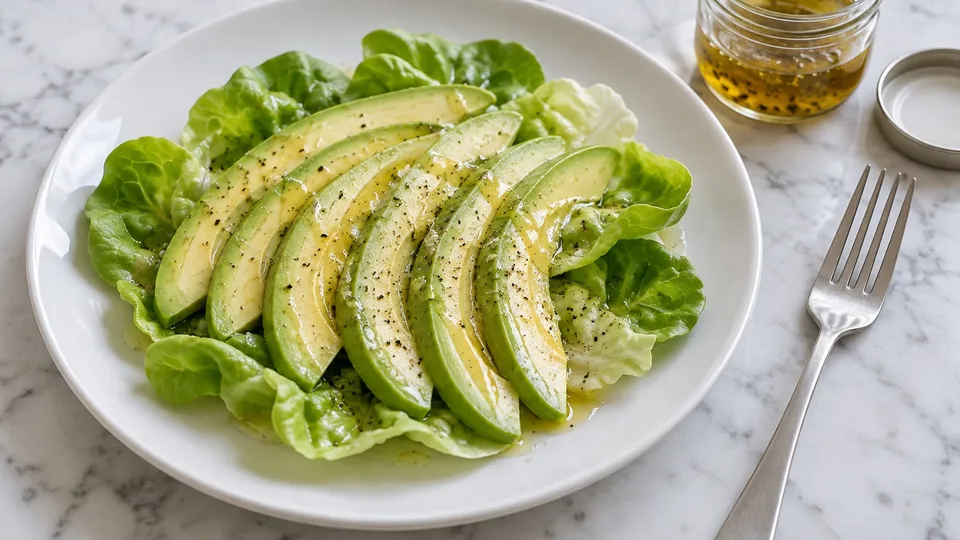 Cook it todayAlligator Pear Salad (1899)
Sources
- Dinner in Honor of the Honorable the Secretary of State of the United States and Their Excellencies … by the Pan American Society of the United States, May 27th, 1912, at the Waldorf Astoria (New York, 1912), unnumbered leaves: title leaf, menu, speakers, the society and its aims. Library of Congress, digitized by the Internet Archive (dinnerinhonorofs00pana).
- The Commercial and Financial Chronicle (New York), 1 June 1912, p. 1471. Federal Reserve Bank of St. Louis, FRASER.
- A. Escoffier, A Guide to Modern Cookery (London: William Heinemann, 1907), pp. xv, 57, 251–252 and 264–265.
- Fannie Merritt Farmer, The Boston Cooking-School Cook Book, revised edition (Boston: Little, Brown, 1910), pp. 252, 267 and 323.
- Maximilian De Loup, The American Salad Book (New York: Geo. R. Knapp, 1899), pp. 110–111.
- Harvey W. Wiley, Foods and Their Adulteration, 2nd edition (Philadelphia: P. Blakiston’s Son, 1913), p. 344.
- Isabella Beeton, Mrs. Beeton’s Book of Household Management, new edition (London: Ward, Lock, 1906), no. 131, Sorrel Soup.