Witch Winnie, a novel of the King’s Daughters, is published in New York · New York
What Did a Total Abstinence Candy Society Eat Instead?
In an 1889 novel written for a real New York charity, schoolgirls swear off bought candy to pay for a poor boy’s keep: what they gave up and ate instead.
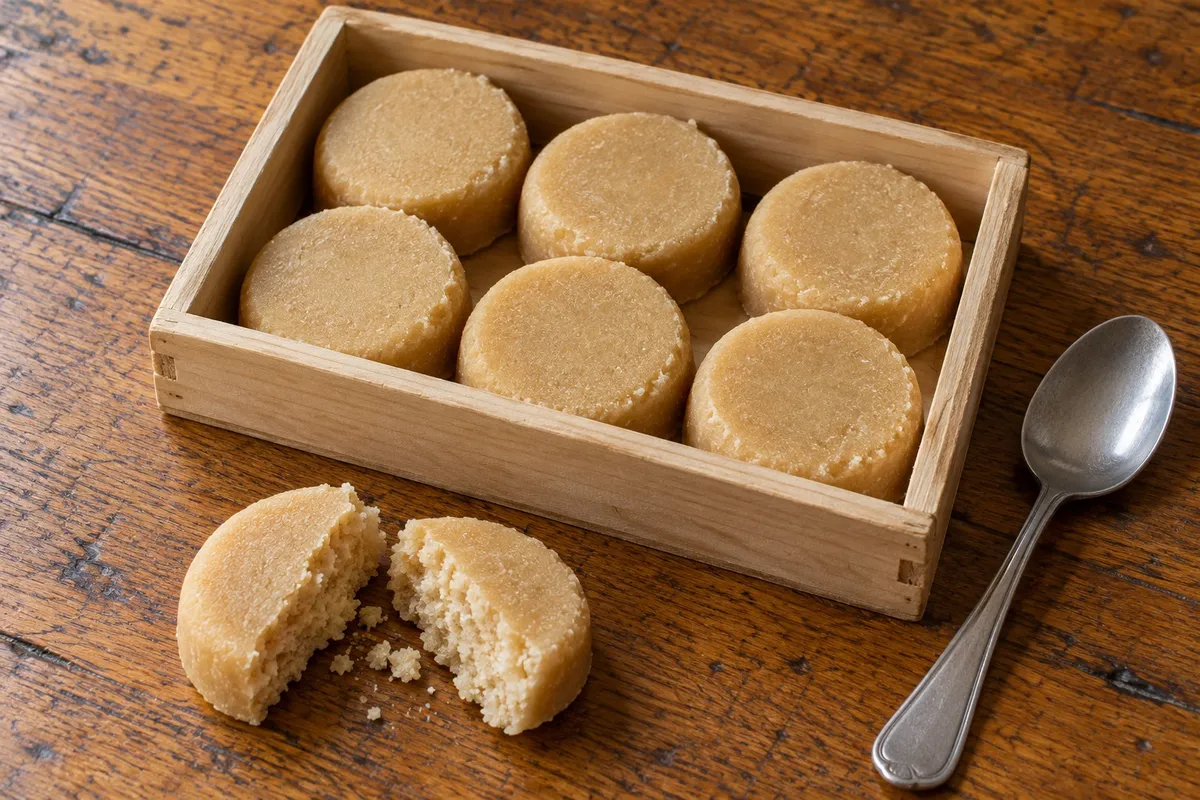
Maple sugar, one cake a day. In Elizabeth W. Champney’s novel Witch Winnie, published in New York in 1889, a rich schoolgirl named Milly Roseveldt gives up her confectioner’s candy so that the money can keep a poor boy, Jim, in a decent home. Her friend Emma Jane rewards her with “a cake of maple sugar every day” from a box sent by cousins in Vermont. The candy society is fiction. The charity behind the book was real, and the candies Milly gave up can be traced in a candy maker’s manual of the time.
Eight dollars at Maillard’s
The scene is a New York boarding school, and the girls are trying to find money for Jim, the son of a working woman. Milly is generous by habit, and the candy money pays for treats she shares with everyone. She loves “lumps of delight” in the way of marshmallows and chocolate creams, candied fruits and marrons glacés, and keeps her silver bonbonnière full of candied violets and rose leaves. Worst of all, the narrator says, are “certain little cordial drops,” because Milly “inherited a taste for alcoholic beverages through several generations.”
“Very well, girls,” Milly says, “if you will go without, I will, and we will form a total abstinence candy society.” She knows what it is worth: “I paid Maillard eight dollars last month.” That is about $300 today, by the US consumer price index (Minneapolis Fed). Henry Maillard was one of the best-known confectioners in New York, a Frenchman who had arrived in 1848 and whose chocolates and bonbons were sold to the city’s richest families. The name told readers exactly what sort of candy Milly was giving up.
The phrase “total abstinence” was the language of the temperance pledge, and the novel names temperance outright near its end: a gift of apples and potatoes for the children’s Home in the story comes on condition that a Loyal Legion Temperance Society be formed among its children. The real Loyal Temperance Legion was the children’s branch of the Woman’s Christian Temperance Union.
A cake of maple sugar
Emma Jane, who doesn’t care for sweets herself, offers the maple sugar if Milly keeps her word, and the narrator approves: “the pure maple sugar was a good substitute for the unwholesome concoctions of the confectioner.” It satisfied Milly’s craving, she says, and did not spoil her appetite.
Maple sugar had its limits. Two chapters on, when an incompetent cook spoils nearly every dish, Milly eats “nothing but maple-sugar for breakfast” and has a sick headache.
The candy money did not go far on its own. With the other girls’ savings it came to three dollars a week (about $110 today), and at first they could learn of no boarding school that would take Jim at that rate. Winnie soon finds him “an excellent place” for the same sum, and the girls go on to raise money in bigger ways.
What was in a cordial drop
G. V. Frye’s Practical Candy Maker, published in Chicago with an 1884 copyright, gives a trade recipe for cordial drops. Six pounds of sugar and a quart of water are boiled to “a good thread, or about 222°,” then taken off the heat, and a pint of “Cologne Spirits, or ninety-eight per cent. Alcohol” goes in, with color and flavor. The syrup is poured into hollows pressed in a tray of starch, dusted over with more starch, and left in a warm closet until the next day. Candies made this way set with a crust of sugar around a liquid center. Brandy drops, Frye adds, are made the same way with brandy.
Cologne spirit was not perfume. George William Askinson’s Perfumes and Their Preparation of 1892 uses the name for a very pure alcohol, “as free as possible from fusel-oil compounds.” So the danger the narrator feared was real enough in kind. How much alcohol a finished drop held, after the hot syrup and a night of drying, Frye doesn’t say.
The same manual has the marshmallows on Milly’s list, made in 1884 without any marshmallow. Frye’s marshmallow drops are gum arabic, sugar and the whites of two dozen eggs, beaten to a foam. Some makers used a decoction of marshmallow root, he writes, “but as it gives them a bitter taste, I always omit it.” The chocolate creams are there too: Frye’s white fondant, which he calls “Cream,” rolled into balls and dipped in sweet chocolate melted with a little cinnamon. And it has a maple candy of its own, maple cream for the shop counter: maple sugar boiled, cooled, stirred until cloudy and poured into a pan to be marked into bars. Maple sugar belonged to the confectioner as much as to the Vermont cousins.
Ice-cream ducks
Sweets come back into the story all the same. When the girls want to win over a rival group at school, Milly pays for a spread, and the rivals “melted completely with the ice-cream,” which came as little ducks “with strawberry heads and pistache wings.” That evening the larger charity society was planned.
The girls raise their money with a fair. At its supper, the cadets from the band that had serenaded the school each invite Milly to dine, and to swell the proceeds she orders the more expensive dishes over and over, “enduring a martyrdom of dyspepsia for a week in consequence.” Looking back, the narrator decides that a fair “is a poor way for Christian people to give money,” since so much is swallowed up in expenses, and a plain gift would have done more.
The real Home
Champney’s introduction is plain about what is real. All the characters are imaginary, she writes, but the Home in the story was suggested by real children, younger than her schoolgirls, who “gave a little fair” and with help founded the Messiah Home for Little Children, at 4 Rutherford Place, New York City. It “still opens its doors to the children of working-women” and is helped by circles of King’s Daughters. A note at the end of the book calls it “a charity founded for children by children.” The King’s Daughters were a Christian service order founded in New York in 1886, whose members worked in small groups of ten.
The New-York Evangelist, reviewing it on December 26, 1889, recommended it to girls for introducing the aims of the King’s Daughters and the Messiah Home, and for carrying them through New England and Colorado on the kind of journeys Champney was known for. She had already written the popular Vassar Girls books, and Witch Winnie began a series of its own.
The recipes
None of these is from the novel, which gives no recipes. The candies are from Frye’s 1884 manual, five years before the book; the ice creams are from Fannie Merritt Farmer’s Boston Cooking-School Cook Book of 1896, seven years after it, a book that prints both flavors of Champney’s ducks. The cordial drops stay off the menu: this is a temperance story, and Milly’s own cure was sugar without spirits.
- Maple Cream Candy (1884): Frye’s maple cream for the counter, boiled, cooled, stirred until cloudy and cut into squares.
- Chocolate Cream Drops (1884): balls of white fondant dipped in sweet chocolate with a little cinnamon, the chocolate creams on Milly’s list.
- Strawberry Ice Cream (1896): fresh berries, cream and a little arrowroot, for the ducks’ heads.
- Pistachio Ice Cream (1896): a vanilla custard ice cream flavored with almond and colored green, with no pistachios in it.
Cooking it
The candies need a thermometer and patience: the maple cream sets fast once it starts to turn, and the fondant for the chocolate creams rests overnight before it is rolled and dipped. Make the Pistachio Ice Cream (1896) and the Strawberry Ice Cream (1896) on the same day and serve a scoop of each, the nearest a home kitchen will get to Champney’s ducks. Both ices belong with the others in our old-fashioned ice cream recipes, from the hand-cranked creams of the 1840s to Escoffier’s water ices. Thirty-one years later the temperance movement won national Prohibition, and we follow what Americans cooked once the bars closed in 1920. The girls’ pledge borrowed the words of temperance, and Forgotten Drink, our sister site, traces what people drank without alcohol through history (opens in a new tab).
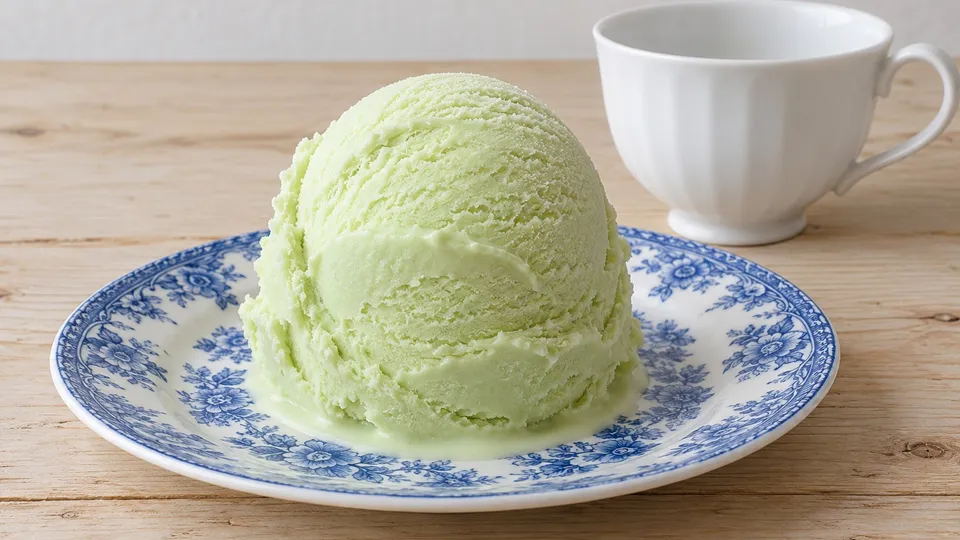 Cook it todayPistachio Ice Cream (1896)
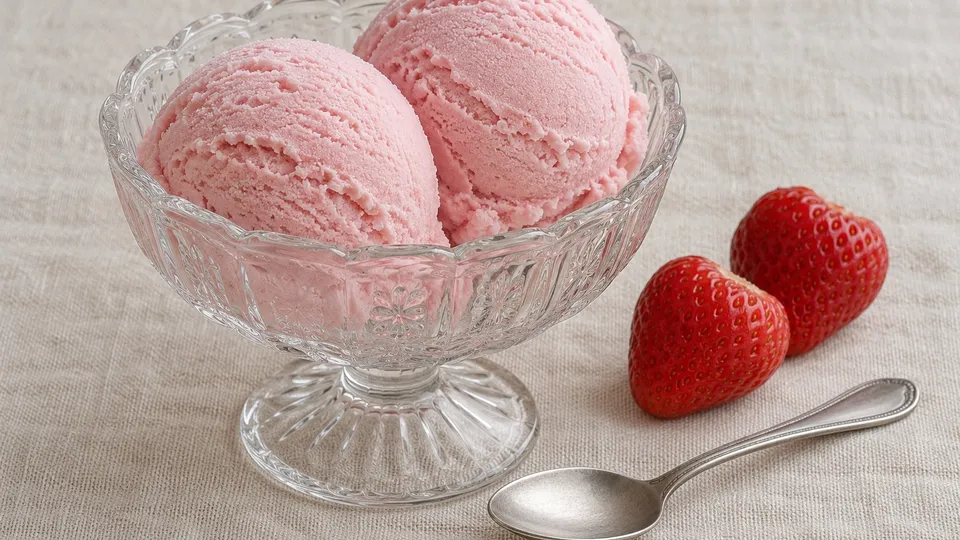 Cook it todayStrawberry Ice Cream (1896)
Sources
- Elizabeth W. Champney, Witch Winnie: The Story of a “King’s Daughter” (Edinburgh and London: Oliphant, Anderson and Ferrier, 1890; first published New York: White and Allen, 1889), pp. 9, 75 to 78, 87, 90 to 91, 142 to 143, 149, 154 to 155, 244 to 245.
- “Our Book Table,” The New-York Evangelist, December 26, 1889, p. 1.
- G. V. Frye, Frye’s Practical Candy Maker (Chicago, copyright 1884), pp. 62 to 63, 66 to 67, 69, 85 to 86.
- George William Askinson, Perfumes and Their Preparation, trans. Isidor Furst (New York: Norman W. Henley, 1892), p. 68.
- Fannie Merritt Farmer, The Boston Cooking-School Cook Book (Boston: Little, Brown, 1896), pp. 372, 373, 375.
- “Elizabeth Williams Champney (opens in a new tab),” Vassar Encyclopedia, Vassar College.
- Clarence E. Horton Jr., “King’s Daughters and Sons (opens in a new tab),” Encyclopedia of North Carolina (University of North Carolina Press, 2006), at NCpedia, and “Margaret Bottome (opens in a new tab),” Asbury Theological Seminary.
- “Woman’s Christian Temperance Union (opens in a new tab),” Kansapedia, Kansas Historical Society.
- Federal Reserve Bank of Minneapolis, “Consumer Price Index, 1800- (opens in a new tab).”
- “Henry Maillard, Confectioner (opens in a new tab),” Flatiron NoMad Partnership.