Prohibition takes effect · United States
What Did Americans Cook When the Bars Closed in 1920?
Saloons closed on January 17, 1920. The cookbooks of the dry years show the food they offered for home entertaining: cheese on toast, waffles, cookies, sundaes.
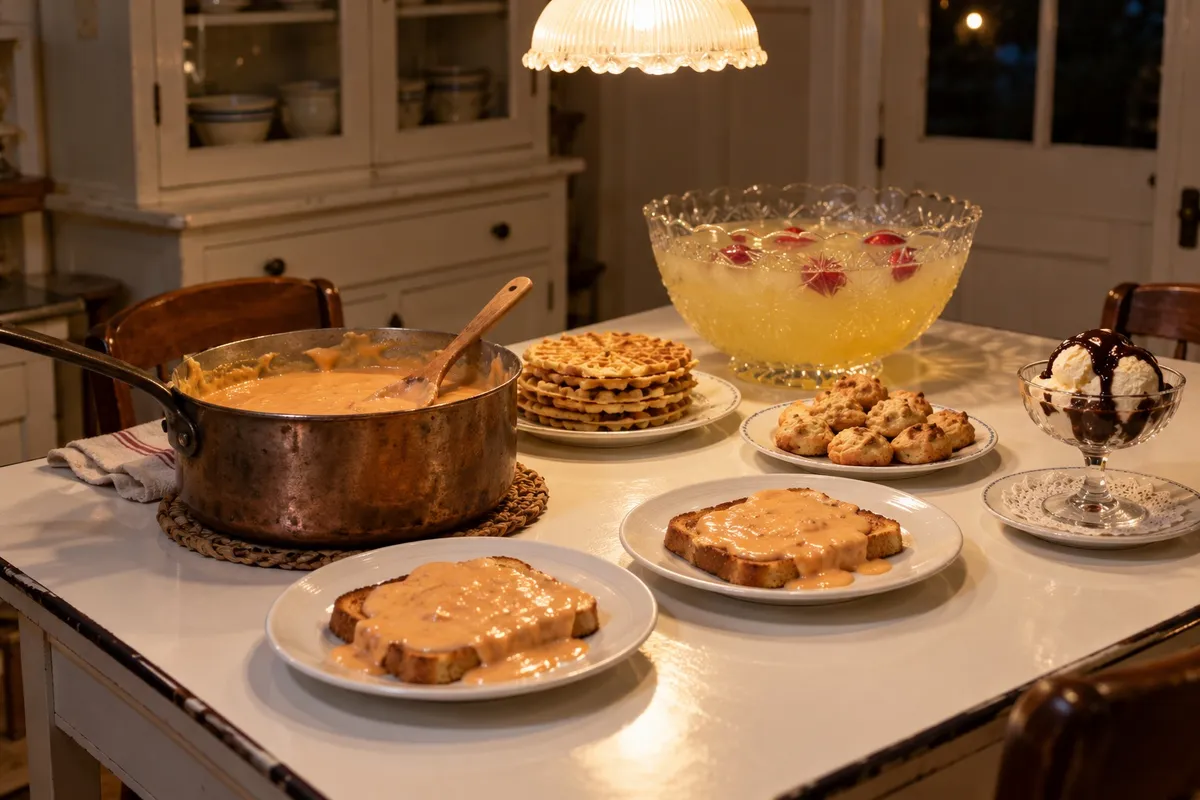
The cookbooks of the dry years give the answer: melted cheese stirred up in the kitchen with beer, waffles under creamed beef, cookies set out beside the punch bowl, and the ice cream sundae, which one hostess’s book offered in place of a drink. Nationwide Prohibition began on January 17, 1920, and the saloons closed. No record says what the country ate that night, but the books printed in the years that followed show what they expected people to serve at home.
Dry at midnight
The Eighteenth Amendment banned the manufacture, sale and transport of intoxicating liquors, and the Volstead Act drew the line: anything of 0.5 percent alcohol or more counted as intoxicating. Neither law forbade drinking. Many people stockpiled wine and liquor in the last months of 1919, and those who could afford it laid in enough to drink legally at home.
What closed was the saloon, and with it a way of eating out. Many saloons set out a free lunch beside the beer: a Chicago survey of 1900 found counters laid with bread, several kinds of meat, vegetables and cheeses.
The hostess of to-day
One cookbook expected the evening to move indoors. Bertha E. L. Stockbridge’s What to Drink, published in New York in 1920, is addressed “To the Hostess of To-Day,” and its foreword opens: “The hostess of to-day will be called upon to serve drinks in her home more than formerly, I imagine.” The book is syrups, shrubs, fruit punches and cocktails without alcohol, and the verse in its front pages, signed “Anonymous,” ends “Make prohibition Paradise enow.”
Stockbridge gives a whole chapter to sundaes, “Because of the popularity of sundaes, and the preference shown by many for them instead of sweet or fruit drinks.” She serves them in sherbet glasses or wide champagne glasses, each on a small plate with a doily, and keeps her fudge sauce hot “in the double boiler or in a chafing dish until ready to serve.”
Written for men by men
Not every book of the dry years was as dry as hers. The Stag Cook Book, published in New York by George H. Doran in 1922 and subtitled “Written for Men by Men,” collects favorite recipes from well-known men, and Prohibition runs through it as a joke. Ellis Parker Butler’s bouillabaisse has this step: “Now have the Eighteenth Amendment repealed and add to the mixture one cup of White Wine.” Jerome Kern makes his terrapin sauce with “pre-Prohibition Sherry or Madeira,” and adds that if there is none, “names and addresses of seventy-one bootleggers can be supplied.”
Cheese and Volstead beer
The book’s fullest joke about a dry-years evening is Frank Ward O’Malley’s rum-tum-tiddy. It begins: “Take one country home in New Jersey. One dependable apple-jack bootlegger.” Guests drop in for applejack cocktails just as the cook wants to leave for the night, so the host drives her to the village and buys American cheese, a can of tomato soup and “a dozen bottles of beer—real beer, if you can get it, Volstead beer if you can’t.” Volstead beer meant, most likely, near beer, a malt drink kept under the law’s 0.5 percent.
Back at the house everyone is put to work. The cheese is melted with the soup, two eggs, chopped green pepper and a third of a bottle of beer, and poured over hot toast. O’Malley’s advice on where to eat it: “Serve preferably in the kitchen.” It is a cousin of Welsh rabbit, which the book says it beats.
The President’s waffles
Among the book’s contributors was the President: a plain recipe for waffles appears under the name of Warren G. Harding, in office since March 1921. The editor adds that there is “a great deal of argument about the proper dressing for waffles,” and that “President Harding is a staunch upholder of the gravy school and likes his in the form of creamed chipped beef.” As a senator, Harding had voted for the Eighteenth Amendment, and to override President Wilson’s veto of the Volstead Act.
The book doesn’t say how Harding’s creamed beef was made. Mary A. Wilson gives a version from the same years in Mrs. Wilson’s Cook Book, a Philadelphia book of 1920: dried beef cut fine with scissors, soaked in boiling water, and simmered in a milk sauce with parsley.
A dry Sunday dinner
Woman’s World printed the same kind of food for the family’s Sunday table. The Woman’s World Book of Fifty-two Sunday Dinners, the Chicago magazine’s book of 1924, says its menus were chosen “from among the choicest dinners of practical housekeepers in every section of the United States.” Its thirty-fifth menu, printed under a picture of bathers in the surf, is a cold summer spread: ham sandwiches and grated cheese sandwiches, fruit salad, spice layer cake, peanut cookies, stuffed dates, olives, salted nuts and homemade candy, with hot coffee and cold fruit punch. In this book a cocktail is fruit or shellfish served in a glass. None of its 52 menus lists wine, and the drinks they do name include coffee, grape juice, sweet cider and fruit punch.
The recipes
Temperance had reached the schoolroom long before the law: in an 1889 novel, a group of schoolgirls took a total abstinence pledge against candy. The four recipes here come from books printed in the dry years, from supper to sweet.
- Rum-Tum-Tiddy (1922): O’Malley’s cheese, tomato and beer sauce on hot toast, made today with beer or alcohol-free beer.
- President Harding’s Waffles (1922): the President’s waffles with creamed chipped beef after Mrs. Wilson’s 1920 recipe, from one of her breakfast menus.
- Peanut Cookies (1924): small drop cookies from the Woman’s World menu that ends with cold fruit punch. For the punch bowl, Forgotten Drink has Stockbridge’s ginger ale punch (opens in a new tab).
- Hot Fudge Sundae (1920): Stockbridge’s heavy fudge sauce over vanilla ice cream, with nuts.
Cooking it
Bake the cookies first, since they keep, and hold the fudge sauce over hot water, as Stockbridge did. Then make the Rum-Tum-Tiddy (1922) the way O’Malley meant it: last, at the stove, with everyone in the kitchen cubing cheese and chopping pepper, and a bottle of alcohol-free beer by each plate for the Volstead beer of his day. The four dishes are in our 1920s recipes, with the nibbles of the decade’s cocktail hour. For the rest of a dry table’s glasses, Forgotten Drink, our sister site, has five alcohol-free drinks for a 1920s party (opens in a new tab).
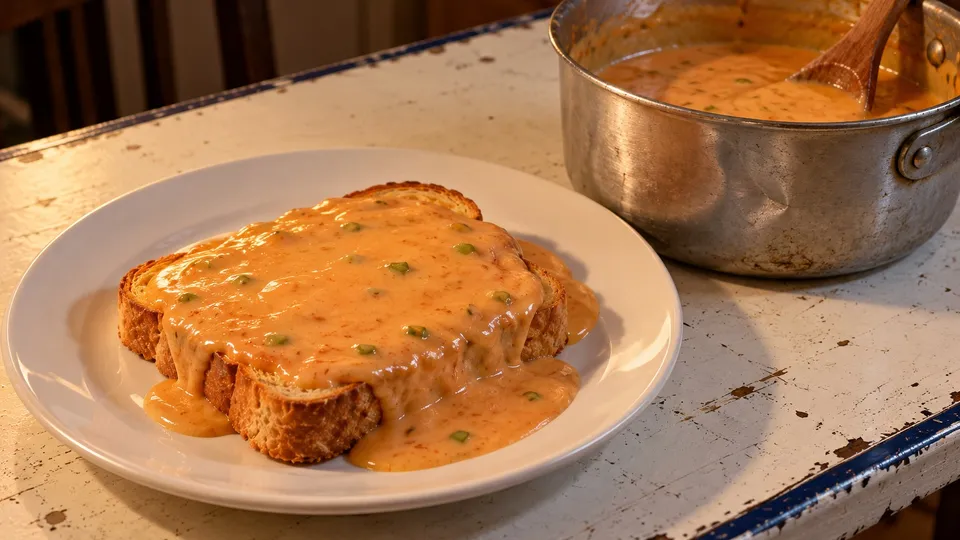 Cook it todayRum-Tum-Tiddy (1922)
Sources
- Bertha E. L. Stockbridge, What to Drink: The Blue Book of Beverages (New York and London: D. Appleton and Company, 1920), pp. vii, 135, 142.
- C. Mac Sheridan, ed., The Stag Cook Book: Written for Men by Men (New York: George H. Doran Company, 1922), pp. 36, 37, 81, 106 to 107.
- Mary A. Wilson, Mrs. Wilson’s Cook Book (Philadelphia: J. B. Lippincott Company, 1920), p. 329.
- The Woman’s World Book of Fifty-two Sunday Dinners (Chicago: Woman’s World Magazine Co., 1924), p. 44.
- National Prohibition Act (Volstead Act), October 28, 1919, “The Volstead Act (opens in a new tab),” National Archives DocsTeach.
- “Florence Harding’s Waffles (opens in a new tab),” Cooking with the First Ladies, Ohio History Connection, via the National Women’s History Museum.
- Joint Resolution Proposing the Eighteenth Amendment, December 18, 1917, “18th Amendment (opens in a new tab),” National Archives DocsTeach.
- Senate roll calls on S. J. Res. 17, August 1, 1917 (passage, 65 to 20 (opens in a new tab)), and on H.R. 6810, October 28, 1919 (passed over the President’s veto, 65 to 20 (opens in a new tab)), from the Congressional Record, at Voteview, UCLA.
- “Warren G. Harding (opens in a new tab),” The American Presidency Project, UC Santa Barbara.
- Royal L. Melendy, “The Saloon in Chicago (opens in a new tab),” American Journal of Sociology 6, no. 3 (November 1900), pp. 289 to 306, full text at the Internet Archive.
- Jackie Apoyan, “Last call before the Dry Decade (opens in a new tab),” The Mob Museum, January 16, 2020.