Boston Tea Party · Boston Harbor, Boston, Massachusetts
What Was on the American Tea Table Before the Boston Tea Party?
Boston Tea Party food: no Boston account names what was eaten at tea before December 16, 1773, but the colonies’ cookbooks point to wigs, biscuits and cakes.
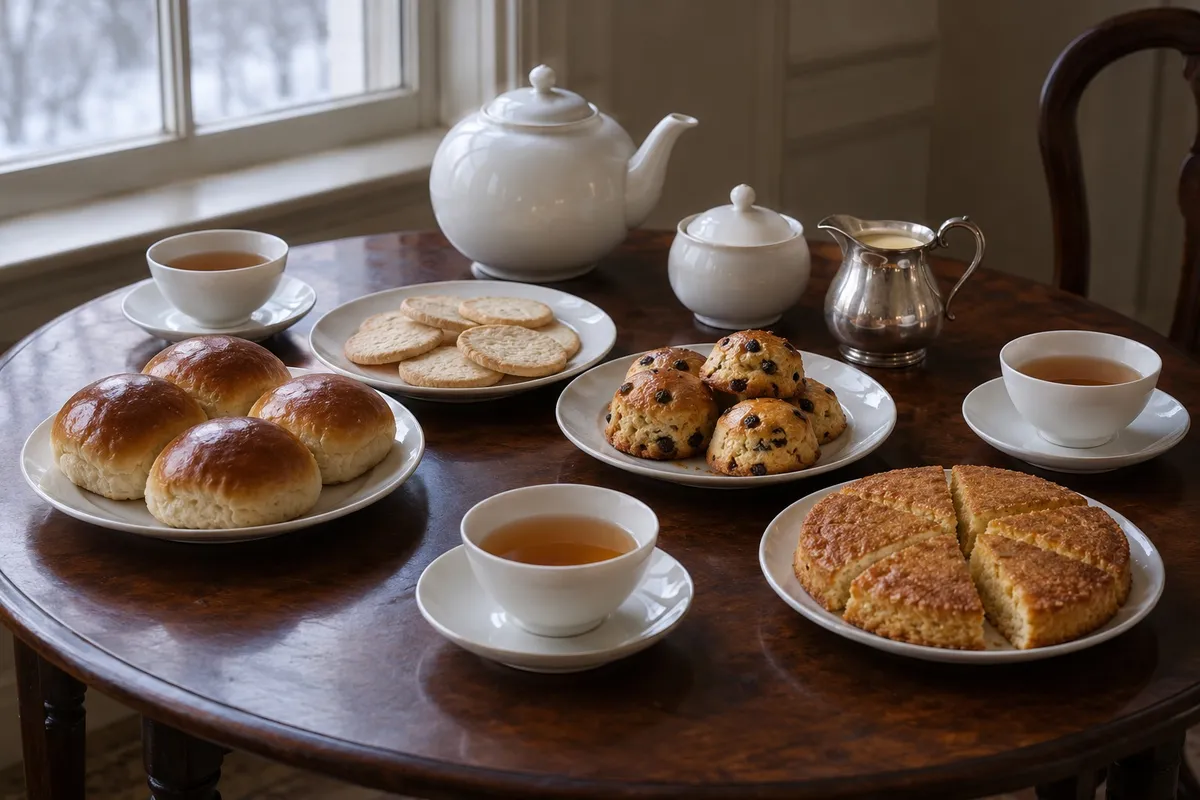
No Boston account says what was eaten with tea in the years before the Tea Party; the tea itself, drunk by the dish, is what the letters and diaries record. The cookbooks the colonies bought and copied fill the gap: spiced yeast buns called wigs, plain biscuits and small rich cakes, and New England had its own flat cakes of Indian meal. In Boston that table was political years before the night of December 16, 1773, when 342 chests of the East India Company’s tea went into the harbor.
Swearing off tea
The first fight over the tea table was fought at home. On January 31, 1770, upwards of 300 “Mistresses of Families” in Boston signed an agreement to join the town’s merchants in giving up tea. The Boston Evening-Post printed it on February 12. The women promised “we will totally abstain from the Use of that Article (Sickness excepted),” and that “we will absolutely refuse it, if it should be offered to us upon any Occasion whatsoever,” until the Revenue Acts were repealed.
The tax they objected to was the Townshend duty on tea. When Parliament repealed the Townshend revenue duties on March 5, 1770, it kept that one.
Tea time in Boston
The boycott didn’t last. Between 1771 and 1773, Boston was the largest legal importer of tea in the colonies, and Dutch tea, untaxed in the Netherlands and cheaper, was smuggled in as well.
A Boston schoolgirl kept a record of the habit. Anna Green Winslow, sent from Nova Scotia to live with her aunt, kept a diary from November 1771 to May 1773, and she records tea again and again: “I drank tea at Aunt Suky’s,” one entry reads, and another, “It’s now tea time.” In the matter of clothes she called herself “a daughter of liberty,” choosing “to wear as much of our own manufactory as pocible.” What she ate with her tea she didn’t write down; her entries name who poured and who called. For the food, the evidence is the cookbooks the colonies used.
Cakes from London books
What went on the plate came largely from English books. Eliza Smith’s The Compleat Housewife became, in 1742, the first cookbook printed in America, when William Parks published it in Williamsburg, Virginia, from the fifth London edition and left out recipes whose ingredients were “not to be had in this country.” Hannah Glasse’s The Art of Cookery Made Plain and Easy, first published in London in 1747, sold extremely well in the colonies; George Washington and Thomas Jefferson both owned copies.
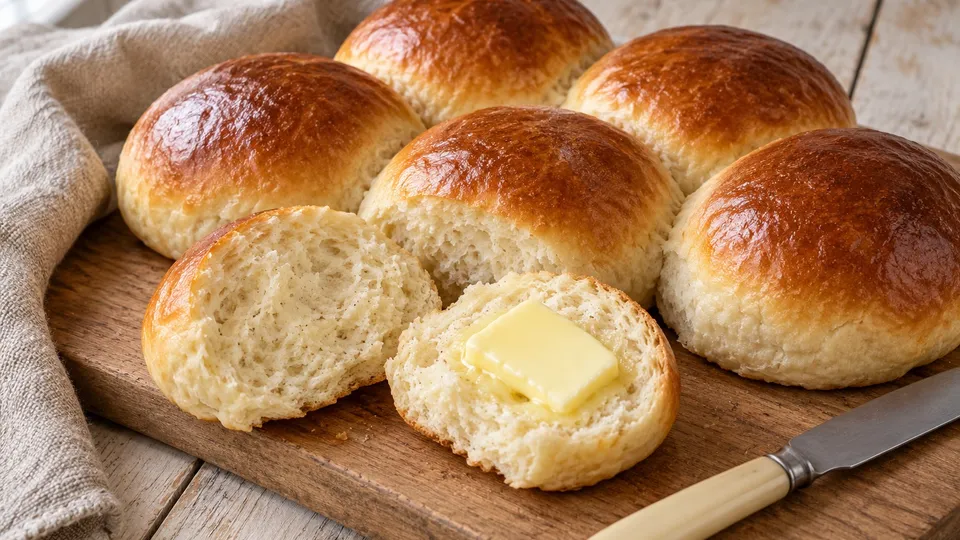
Glasse’s chapter of cakes holds the small baking of the period. Her Shrewsbury cakes are flour, sugar, eggs, cream and rose water rolled “into thin Cakes,” with no butter at all. Her Portugal cakes are a pound each of flour, sugar and butter with ten eggs and currants, baked in small tins. Her “very good Wigs” are a rich, spiced yeast dough, and they follow Smith’s recipe of 1739 almost word for word. Books copied each other freely, and Glasse was accused of it in her own lifetime.
Colonial households kept their own versions. A manuscript recipe book dated 1764, kept by Sarah Fayerweather of eastern Massachusetts, has its own Portugal cakes: “Take flour, Butter & Sugar, a pound of Each, a Quarter pound of Currants a little Canary & Spice.”
Indian meal
New Englanders called cornmeal Indian meal, and they baked it into a flat cake known as johnny cake, or hoe cake. Corn was the grain of the Native peoples of North America. At Plymouth in 1621, William Bradford wrote, Squanto showed the English settlers how to plant it and tend it, and “Indian meal” kept that origin in its name. The name johnny cake is in print in American English by 1739. The first printed recipe for the cake made with cornmeal is believed to be the one in Amelia Simmons’s American Cookery (Hartford, 1796), the first known cookbook written by an American: scald a pint of milk, “put to 3 pints of indian meal, and half pint of flower,” and “bake before the fire.”
December 16
The Tea Act of May 1773 let the East India Company sell its tea in America directly, and cheaply enough to undercut the smugglers, with the Townshend duty still paid. Three ships brought the company’s tea into Boston that winter, the Dartmouth, the Eleanor and the Beaver.
British law gave the Dartmouth twenty days to unload and pay the duty. On December 16, the last day, a crowd of perhaps 5,000 to 7,000 people filled the Old South Meeting House. That evening, men disguised as Mohawks boarded the three ships and broke open the chests. By the company’s manifest there were 340; the usual count is 342. They held 92,616 pounds of tea, and it all went into the water.
Coffee instead
Afterward the tea table changed. In July 1774, John Adams, writing from Falmouth, in what is now Maine, told his wife Abigail how he had asked Mrs. Huston of the house where he stayed whether a weary traveler might have a dish of tea, “provided it has been honestly smuggled, or paid no Duties.” She answered: “No sir, said she, we have renounced all Tea in this Place. I cant make Tea, but I’le make you Coffee.” Adams drank coffee every afternoon after that. “Tea must be universally renounced,” he wrote. “I must be weaned, and the sooner, the better.”
The recipes
None of these four is named in a Boston account of tea. They are what a Boston household could have made from books it could buy in the early 1770s: three from Hannah Glasse’s book of 1747, and a cake of Indian meal from Amelia Simmons’s American Cookery, printed twenty-three years after the Tea Party and believed to be the first printed recipe for it made with cornmeal.
- Very Good Wigs (1747): Glasse’s buttery yeast buns spiced with nutmeg and ginger.
- Shrewsbury Cakes (1747): thin, crisp rose-water biscuits made without butter.
- Portugal Cakes (1747): small pound cakes with currants, rose water and sherry, the sweet that turns up in a Massachusetts recipe book of 1764.
- Johnny Cake (1796): Simmons’s cake of Indian meal scalded with milk, the everyday corn cake of New England.
A tea for December 16
Start the Very Good Wigs (1747) first: the dough needs an hour or more in a warm spot to rise, time enough to roll and bake the Shrewsbury cakes before the wigs go into the oven. The wigs also made our list of historic recipes worth cooking again. All four cakes are among our 18th-century recipes, with the soups Glasse wrote for ships at sea. Forgotten Drink, our sister site, shows how tea, coffee and chocolate were made in 1685 (opens in a new tab), when all three were still new in Europe.
 Cook it todayVery Good Wigs (1747)
Sources
- “Boycott Agreement of Women in Boston (1770) (opens in a new tab),” from the Boston Evening-Post, February 12, 1770, in Nancy A. Hewitt, ed., Exploring American Histories: A Survey with Sources, document 5.2.
- Anna Green Winslow, Diary of Anna Green Winslow, a Boston School Girl of 1771 (opens in a new tab), ed. Alice Morse Earle (Boston: Houghton, Mifflin, 1894), Internet Archive.
- John Adams to Abigail Adams, 6 July 1774, Founders Online (opens in a new tab), National Archives.
- Hannah Glasse, The Art of Cookery Made Plain and Easy (London, 1747).
- Eliza Smith, The Compleat Housewife, 9th ed. (London, 1739).
- Amelia Simmons, American Cookery (Hartford: Hudson & Goodwin, 1796).
- Sarah Fayerweather Cookbook, 1764 (opens in a new tab), Schlesinger Library, Radcliffe Institute, Harvard University, transcription on FromThePage.
- “Boston Tea Party (opens in a new tab),” Encyclopaedia Britannica.
- “Johnny cake (opens in a new tab),” Online Etymology Dictionary.
- William Bradford, History of Plymouth Plantation, 1620–1647, vol. 1 (Boston: Massachusetts Historical Society, 1912), the year 1621.