Portugal Cakes (1747)
Reader ratingsPortugal cakes from Hannah Glasse’s The Art of Cookery Made Plain and Easy of 1747: small pound cakes of flour, sugar and butter with whisked eggs, rose water, sherry and currants, baked in little tins.
- Recipe makes
- 24 small cakes
- Prep
- Cook
- Total
Take the butter out of the refrigerator 15 minutes ahead so it rubs in easily. The cakes cool in the pans for 5 minutes and on a rack for 10 more.
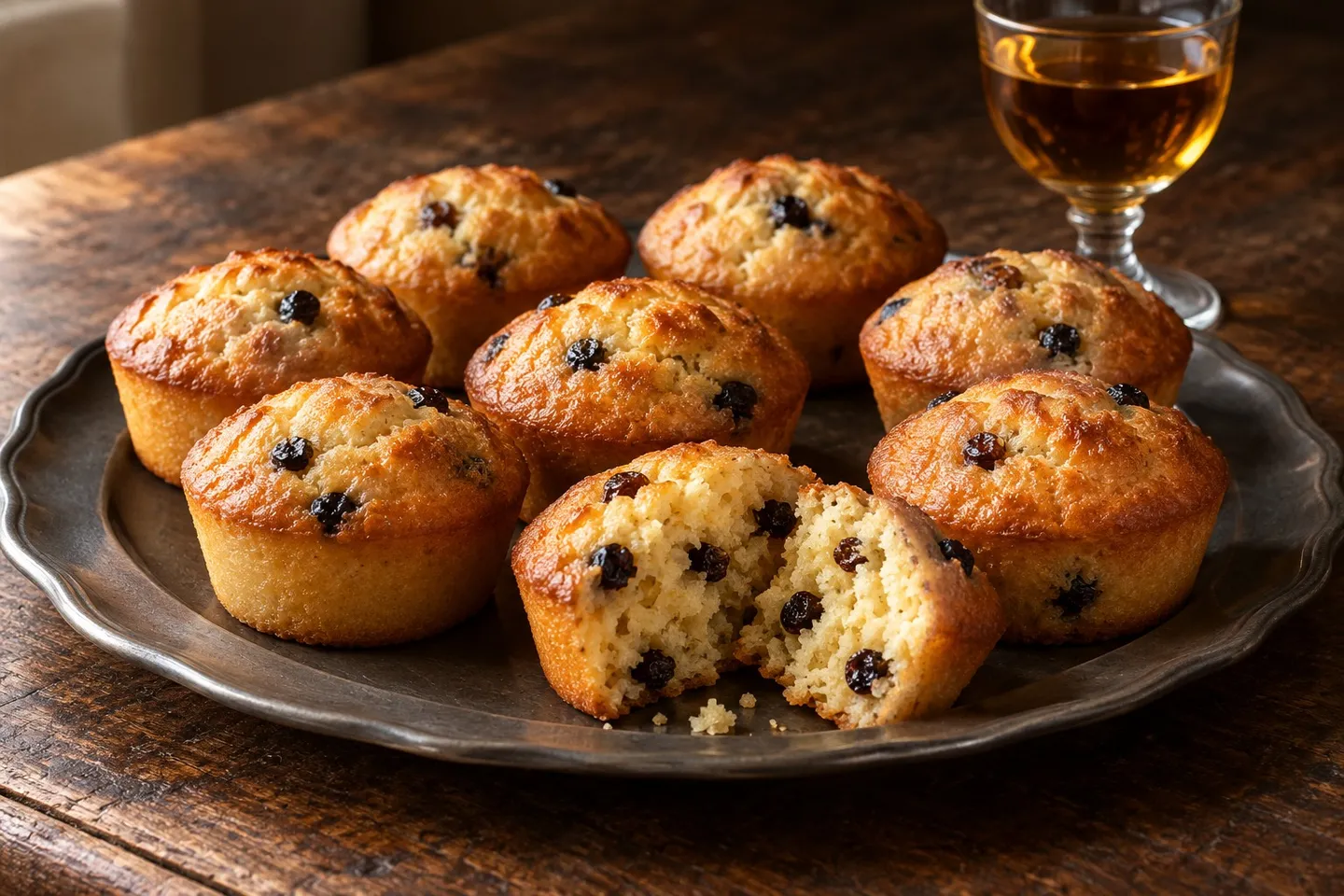
Portugal cakes, small currant cakes, one broken open.
The story behind the recipe
Sarah Fayerweather of eastern Massachusetts wrote Portugal cakes into a recipe book dated 1764: flour, butter and sugar, “a pound of Each,” with currants and “a little Canary & Spice.” They are small pound cakes, and Hannah Glasse had printed them in London in 1747, a pound each of flour, sugar and butter enriched with ten eggs, scented with rose water and sack and studded with currants. Neither book records who ate them with tea in Boston; the recipe here is Glasse’s.
Rubbed, then whipped
Glasse’s method is unusual for a pound cake. Instead of beating the butter and sugar to a cream, she rubs the butter into the flour and sugar “till it is thick like grated white Bread,” then adds the rose-water, the sack and ten eggs, and tells the cook to “whip them very well with a Whisk.” The batter goes into buttered tin pans “but half full.” She leaves out the baking time; Eliza Smith’s Portugal cakes of 1739, a similar mixture, take “little more than a quarter of an hour.”
She adds a note on keeping. Made without currants, “they’ll keep half a Year,” and with almonds in place of the flour, “These are another Sort and better.”
Read more about this recipe
Making it today
We halve the recipe and use five eggs, whisked in until the batter is light. A muffin pan stands in for the little tins, and dry sherry for the sack. Filled halfway, each cup makes a small, domed cake.
Sarah Fayerweather’s cakes are why they are on the table in What Was on the American Tea Table Before the Boston Tea Party?, beside Glasse’s butterless Shrewsbury Cakes (1747).
MIX into a Pound of fine Flour, a Pound of Loaf Sugar beat and sifted, then rub into it a Pound of pure sweet Butter, till it is thick like grated white Bread, then put to it two Spoonfuls of Rose-Water, two of Sack, ten Eggs, whip them very well with a Whisk, then mix into it eight Ounces of Currants, mix’d all well together; butter the Tin Pans, fill them but half full, and bake them; if made without Currants they’ll keep half a Year; add a Pound of Almonds blanch’d, and beat with Rose-Water as above, and leave out the Flour. These are another Sort and better.
Recipe makes: 24 small cakes
Ingredients
For 24 small cakes. Quantities are shown as written.
Quantities as written here, for 24 small cakes.
- All-purpose flour8 oz
- Granulated sugar8 oz
- Unsalted butter, cool but not hard, plus a little for the pans8 oz
- Large eggs5
- Rose water1 tbsp
- Dry sherry1 tbsp
- Dried currants4 oz
Measurement notes
Ingredients as written here
- 8 oz all-purpose flour
- 8 oz granulated sugar
- 8 oz unsalted butter, cool but not hard, plus a little for the pans
- 5 large eggs
- 1 tbsp rose water
- 1 tbsp dry sherry
- 4 oz dried currants
Equipment
- Large mixing bowl
- Second mixing bowl
- Electric mixer or a large whisk
- Two 12-cup muffin pans
- Wire rack
Instructions
Heat the oven to 350°F (175°C) and butter the muffin cups well.
Mix the flour and sugar in the large bowl. Cut the butter into small pieces and rub it in with your fingertips until the mixture looks like fine breadcrumbs.
In the second bowl, whisk the eggs with the rose water and sherry until frothy. Pour them into the flour mixture and beat with the mixer on medium speed, or hard with the whisk, for 2 to 3 minutes, until the batter is smooth, pale and light. Stir in the currants.
Spoon the batter into the cups, filling each only halfway.
Bake for 18 to 22 minutes, until risen, golden and springy, and a toothpick pushed into the center of a cake comes out clean.
Leave in the pans for 5 minutes, then lift out onto the rack to cool.
Nutrition
170calories per serving
- Recipe makes
- 24 small cakes
- Servings
- 24
Estimated per cake (24) from USDA FoodData Central values for the listed ingredients.
Recipe notes
When adjusting quantities
This is half of Glasse’s batch. Fill the cups only half full, as she says, so the cakes stay small.
Notes
Quantities mentioned in these notes don’t change when you adjust the servings.
For Glasse’s almond version, replace the flour with 8 oz of blanched almonds, finely ground, and leave out the currants if you like. Store the cakes in an airtight tin. Contains wheat, egg and milk; the almond version contains tree nuts.
Scaling changes the ingredients only; pan sizes and cooking times need their own judgment. To adapt this recipe further, try the recipe tool at TuneMyRecipe (opens in a new tab), our sister site.
Sources and attribution
After Hannah Glasse, The Art of Cookery Made Plain and Easy (London, 1747), Portugal Cakes
Recipe details
- Course
- Dessert
- Dish family
- Breads & Cakes
- Region
- British
- Era
- 18th century
- Main ingredient
- Fruit
- Difficulty
- Easy
- Occasion
- Everyday meal