RMS Titanic, third-class meals · Third class, North Atlantic
What Did Third-Class Passengers Eat on the Titanic?
The Titanic’s third-class menu for April 14, 1912: porridge and ham and eggs, roast beef and plum pudding, stewed figs at tea and gruel at supper.
Third-class passengers on the Titanic were offered four meals on Sunday, April 14, 1912. Breakfast was oatmeal porridge and milk, smoked herrings with jacket potatoes, ham and eggs, bread, butter, marmalade, Swedish bread, tea and coffee. Dinner brought rice soup, roast beef with brown gravy, sweet corn, boiled potatoes and plum pudding with sweet sauce. Tea was cold meat, cheese, pickles and stewed figs with rice, and supper was gruel, cabin biscuits and cheese. All of it is printed on one small card that survives, which tells us what the White Star Line offered that day. It doesn’t tell us who ate what, or how much.
The card for April 14
The card is headed “White Star Line” over a picture of the ship, then “R.M.S. ‘Titanic,’ April 14, 1912” and “Third Class,” with the four meals in capitals down the middle. One copy was photographed by Chitose Suzuki for the Associated Press on May 1, 2005, at the Larz Anderson Auto Museum in Brookline, Massachusetts, where it was on show before an auction. Its present owner isn’t known, and neither is the passenger who first kept it. Its reverse has not been published.
Like the first-class dinner card from the same evening in What Was the Last First-Class Dinner on the Titanic?, it is a printed offer, and it carries the same limit: it shows the kitchen’s plan for the day, and nothing of the plates.
What was on the third-class menu?
The card prints its four headings in this order, with the dishes under each as they appear:
- Breakfast: Oatmeal Porridge & Milk; Smoked Herrings, Jacket Potatoes; Ham & Eggs; Fresh Bread & Butter; Marmalade; Swedish Bread; Tea; Coffee.
- Dinner: Rice Soup; Fresh Bread; Cabin Biscuits; Roast Beef, Brown Gravy; Sweet Corn; Boiled Potatoes; Plum Pudding, Sweet Sauce; Fruit.
- Tea: Cold Meat; Cheese; Pickles; Fresh Bread & Butter; Stewed Figs & Rice; Tea.
- Supper: Gruel; Cabin Biscuits; Cheese.
Breakfast alone offers cereal, fish, potatoes, meat, eggs and two kinds of bread. Dinner runs from soup through a roast to a pudding and fruit. Cabin biscuits, of an unnamed kind, appear twice, at dinner and again at supper. Tea and coffee are printed at breakfast, and tea again at the meal called tea; the card names no drink at dinner or supper.
Four meals, and which one was dinner
Read with modern habits, the card can mislead. Its “Dinner” is the second meal of four. Paul Louden-Brown, writing for Titanic Belfast, describes third-class dinner as the main meal of the middle of the day, set apart from the evening dinners of first and second class. The card itself prints no times, so his account supplies the shape of the day: a full breakfast, a midday roast, a tea of cold meat and cheese, and a small supper at the end.
That makes “Tea” two things on one card, the name of a meal and a drink served at it. And it puts the gruel in its place. A supper of gruel, cabin biscuits and cheese came after a day that had already offered roast beef, plum pudding, herrings and ham. Seasickness, appetite and choice don’t appear on a menu, and no record of portions survives, so four meals offered need not mean four eaten.
The notice at the foot
Under the supper line, in smaller type, the card turns from food to service:
Any complaint respecting the Food supplied, want of attention or incivility, should be at once reported to the Purser or Chief Steward. For purposes of identification, each Steward wears a numbered badge on the arm.
A passenger who couldn’t name a steward could still give the number on his arm, and the card names the two officers to take it to. Louden-Brown suggests the notice also worked as advertising, in a trade where emigrants could choose between lines. Either way it is a printed instruction. Whether anyone used it that week, and what happened if they did, nobody recorded.
What passengers remembered
Two survivors’ memories of the food were recorded decades later. Gus Cohen, who traveled third class, said in an interview for British Pathé, dated to 1970 in the Titanic Archive’s transcription, that they were treated “like as if we were in a third class restaurant in regards to the food.” The same interview stresses how third-class passengers were kept to their own parts of the ship, so his praise for the food sits beside a clear memory of where he could not go.
Olaus Abelseth recorded his memories for Prairie Public Television in 1978. He remembered going to breakfast on the Sunday morning, before a church service, but named no dishes. Neither man describes a particular meal from the card, and two memories recorded so late can’t speak for everyone in third class.
Porridge, figs and gruel in a 1906 kitchen
The card names its dishes and gives no recipes. For three of its dishes, a London household guide printed six years before the voyage fills in the method: Mrs. Beeton’s Book of Household Management in Ward, Lock’s new edition of 1906. Isabella Beeton had died in 1865, and the preface to this edition says that “more than two thousand new recipes” in it were contributed by C. Herman Senn. The ship’s cooks may never have opened it; it shows how an English kitchen of the day made the same dishes.
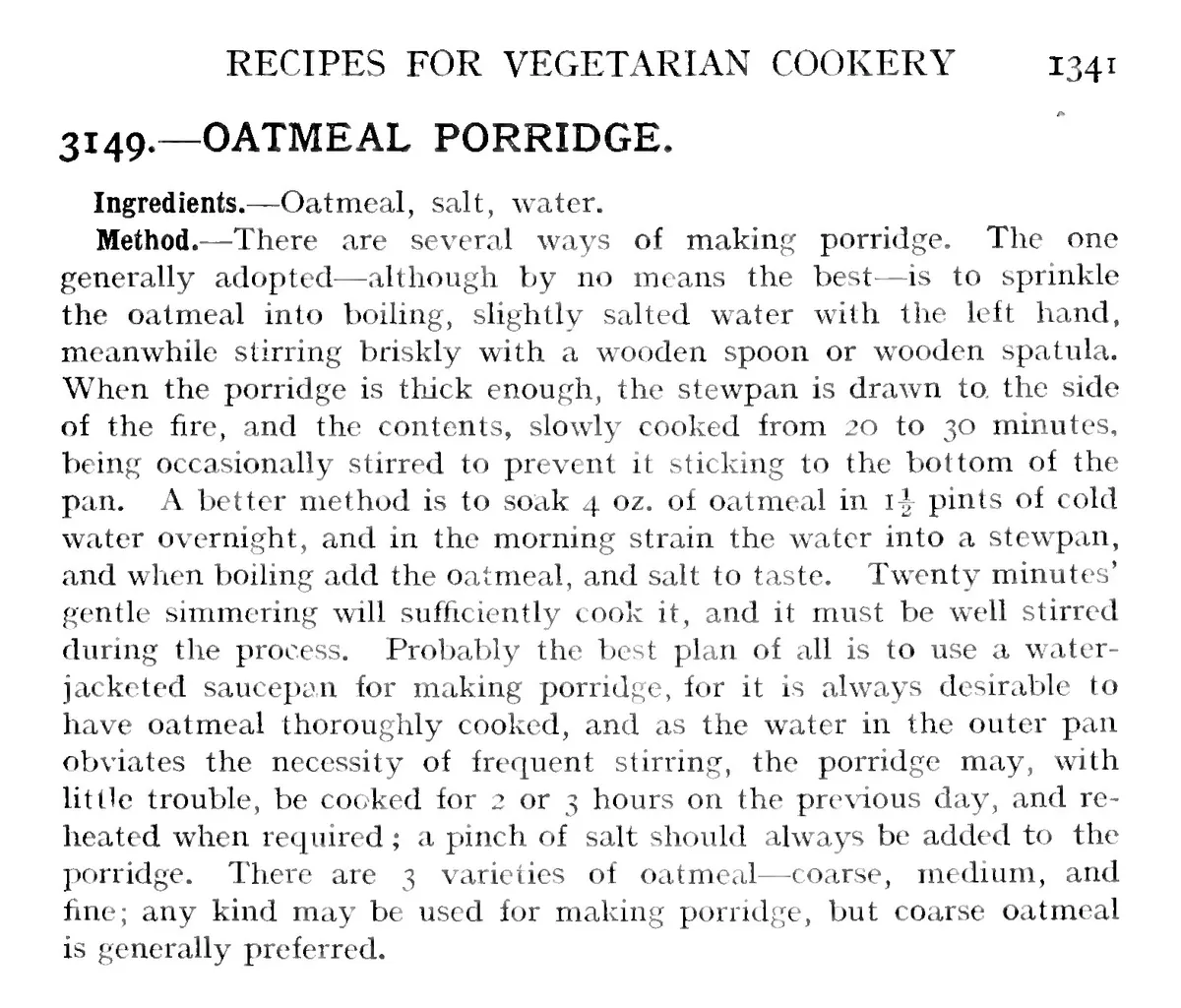
Its oatmeal porridge sits in the chapter of vegetarian cookery and offers three methods, one of them cooked two or three hours the day before in a water-jacketed pan. On the grain, the book says “any kind may be used for making porridge, but coarse oatmeal is generally preferred.” Its oatmeal gruel is in a different chapter, invalid cookery, and is a different thing: one tablespoon of fine oatmeal to a pint of water or milk and water, simmered and strained. The card says only “Gruel,” with no grain named, so oatmeal is our choice for it.
The figs show the gap between card and cookbook most clearly. The card has stewed figs and rice. Beeton stews a pound of figs with sugar, lemon juice and a pint of water in a covered jar and ends: “Serve with a good custard sauce.”
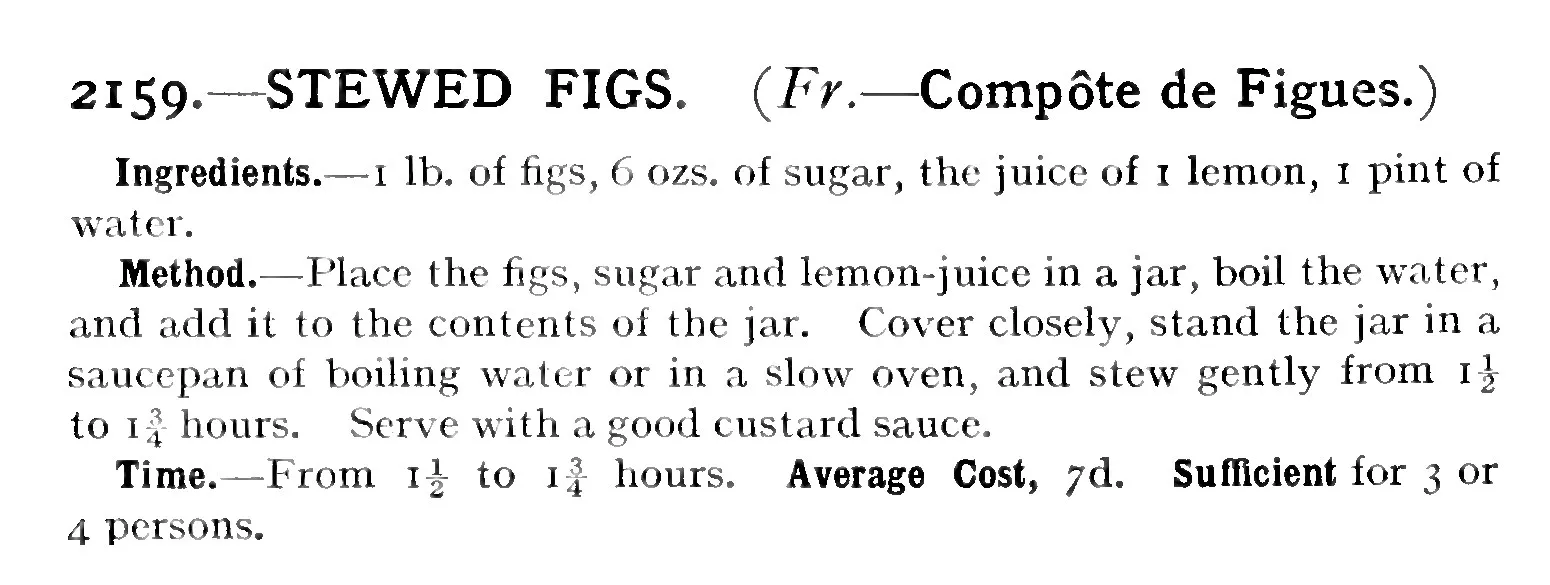 Stewed figs in Mrs. Beeton’s Book of Household Management (London: Ward, Lock, 1906), p. 1040.
The plum pudding with sweet sauce that ended third-class dinner already has a recipe on TuneMyRecipe, our sister site, in What They Ate on the Titanic: Three Classes, Three Tables (opens in a new tab), along with the salmon mayonnaise and curried chicken of the other tables.
The recipes
Three dishes from the card, in the order of the day. Each comes from the 1906 Beeton and says where we filled a gap.
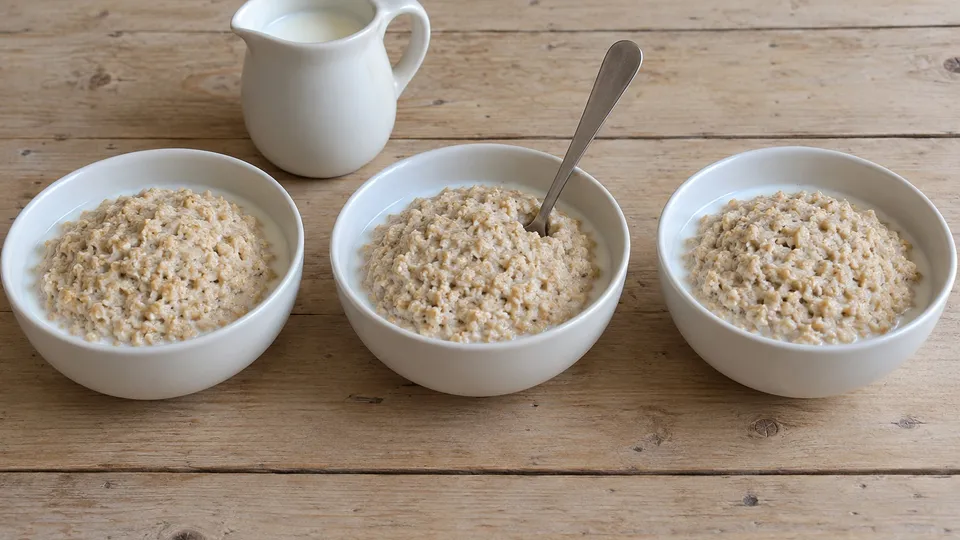
- Oatmeal Porridge (1906): the first item at breakfast, from the book’s “better method,” with the oatmeal soaked overnight and milk at the table as the card names it.
- Stewed Figs (1906): the sweet at tea, stewed in a covered jar and served with Beeton’s custard sauce, with the card’s rice as the other way to serve them.
- Oatmeal Gruel (1906): the first item at supper, a thin, strained drink of oatmeal with milk and water.
A working day on one card
The first-class card of the same Sunday mixes hotel French with English. This one has not a word of French on it, from the porridge at the top to the cheese at the foot.
The porridge begins the night before: Beeton’s better method soaks the oatmeal in cold water overnight, then cooks it in that strained water in the morning for about twenty minutes, so the card’s first dish needs almost no work at dawn. The three recipes join the first-class dishes of that same Sunday in our Edwardian recipes, and the tea and coffee poured in every class are on Forgotten Drink, our sister site, in What Did People Drink on the Titanic? (opens in a new tab)
 Cook it todayOatmeal Porridge (1906)
Sources
- White Star Line, third-class bill of fare, R.M.S. “Titanic,” April 14, 1912: an original card photographed by Chitose Suzuki for the Associated Press (AP photo 05050104381) at the Larz Anderson Auto Museum, Brookline, Massachusetts, May 1, 2005, with its caption in the Vindicator photo archive (opens in a new tab).
- Paul Louden-Brown, Titanic: Food for All Classes (opens in a new tab), Titanic Belfast.
- Gus Cohen, interview for British Pathé (dated 1970), transcription at the Titanic Archive (opens in a new tab).
- Olaus Abelseth, interview for Prairie Public Television (1978), State Historical Society of North Dakota, transcription at the Titanic Archive (opens in a new tab).
- Mrs. Beeton’s Book of Household Management, new edition (London: Ward, Lock, 1906), preface pp. vi–vii, nos. 332, 2159, 3149 and 3268, pp. 265, 1040, 1341 and 1379–1380, read in the Wellcome Collection copy at the Internet Archive (opens in a new tab).