Oatmeal Porridge (1906)
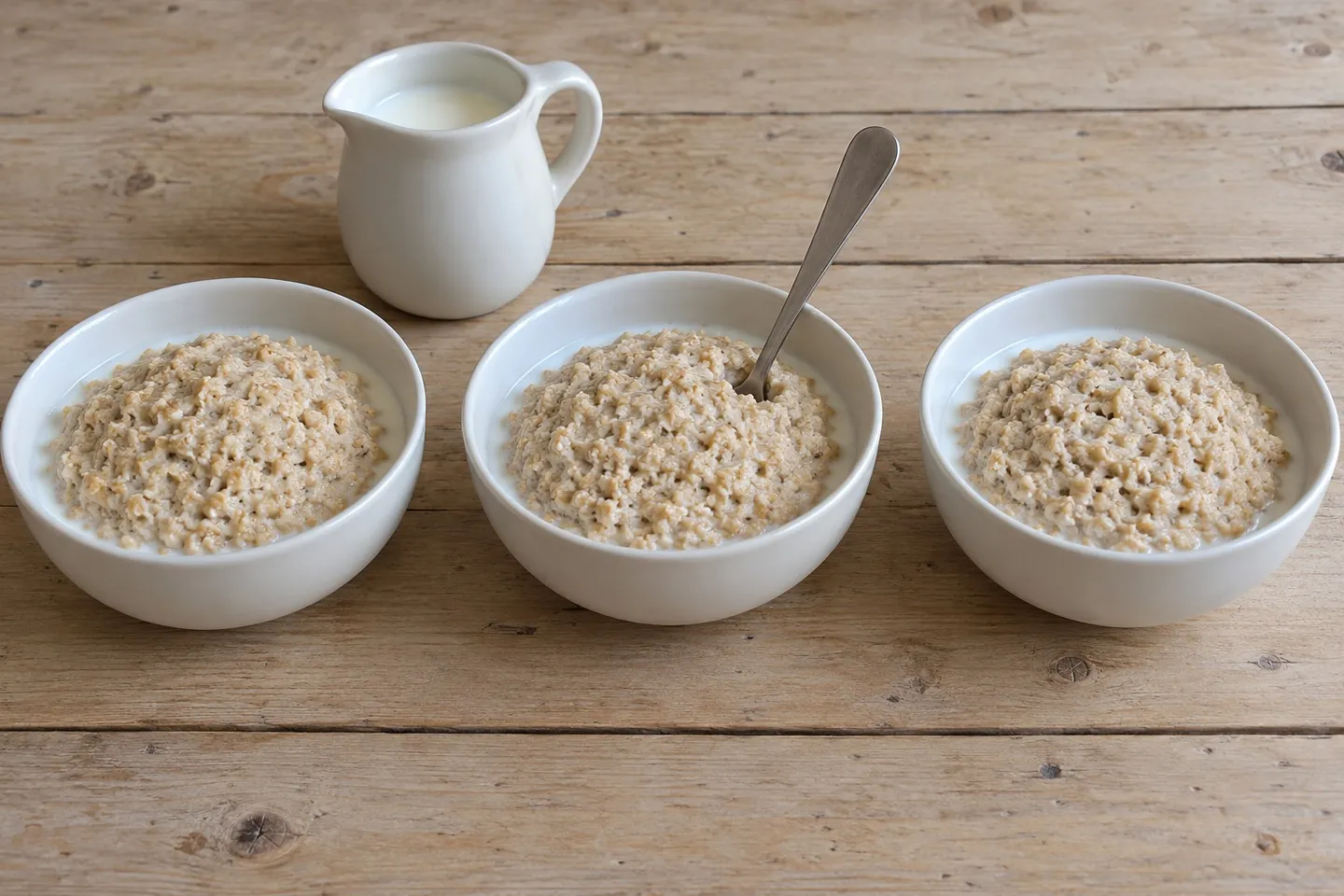
Reader ratingsOatmeal porridge with milk, the first dish at third-class breakfast on the Titanic on April 14, 1912: coarse oatmeal soaked overnight, from the 1906 Beeton.
- Recipe makes
- 3 bowls
- Prep
- Cook
- Total
The oatmeal soaks overnight, about 8 hours, in the refrigerator. In the morning the porridge needs 20 to 30 minutes of gentle simmering.
Three bowls of oatmeal porridge with milk poured round, and a jug of milk.
The story behind the recipe
“Oatmeal Porridge & Milk” is the first line under Breakfast on the Titanic’s third-class card for Sunday, April 14, 1912, ahead of the smoked herrings, the ham and eggs and the marmalade. The 1906 edition of Mrs. Beeton gives it more thought than its three ingredients would suggest.
How was oatmeal porridge made in 1912?
The menu lists “Oatmeal Porridge & Milk”; this recipe comes from Mrs. Beeton’s Book of Household Management in Ward, Lock’s new edition of 1906. How the ship’s galley made its porridge isn’t recorded.
The book ranks three ways of doing it. The common one, scattering oatmeal into boiling salted water, it calls “by no means the best.” A better one soaks the oatmeal in cold water overnight. Best of all, it says, is a water-jacketed saucepan, a pan standing in an outer pan of water, in which porridge can cook for two or three hours the day before and be warmed up when wanted. The aim behind all three is spelled out: “it is always desirable to have oatmeal thoroughly cooked.”
The recipe sits in the book’s chapter of vegetarian cookery, and the very next recipe uses up what was left: oatmeal scones, made by kneading flour into cold porridge, cutting it into three-cornered pieces and baking them on a griddle or in the oven. Beeton’s porridge itself is only oatmeal, salt and water. The milk comes from the card, which names it with the dish.
Read more about this recipe
Making it today
We use the book’s better method and its quantities, 4 ounces of oatmeal to 1½ pints of cold water, which make three bowls. The book prefers coarse oatmeal, so that is what we use: the cut grain sold as pinhead or steel-cut oats. Soaking it in the refrigerator overnight is our choice, and so are the quarter teaspoon of salt and the cup of milk poured over at the table.
The rest of that day’s card, from the herrings to the cheese at supper, is set out in What Did Third-Class Passengers Eat on the Titanic? The same grain, thin and strained, closed it as Oatmeal Gruel (1906).
3149.—OATMEAL PORRIDGE.
Ingredients.—Oatmeal, salt, water.
Method.—There are several ways of making porridge. ...
Recipe makes: 3 bowls
Ingredients
For 3 bowls. Quantities are shown as written.
Quantities as written here, for 3 bowls.
- Coarse oatmeal115 g
- Cold water850 ml
- Salt1/4 tsp
- Whole milk250 ml
Measurement notes
Ingredients as written here
- 115 g coarse oatmeal
- 850 ml cold water
- 0.25 tsp salt
- 250 ml whole milk
Equipment
- Bowl with a cover
 Fine sieve
 Medium saucepan
 Wooden spoon
Instructions
Put the coarse oatmeal in a bowl, pour over the cold water, cover and leave in the refrigerator overnight, about 8 hours.
In the morning, set the sieve over the saucepan and pour in the oatmeal and its water, so the water runs into the pan and the oatmeal stays in the sieve.
Bring the water to a boil over medium heat, then stir in the soaked oatmeal and the salt.
Turn the heat down low and simmer gently for 20 to 30 minutes, stirring often and right to the bottom of the pan, until the grains are tender and the porridge is thick and creamy. If it starts to stick before the oatmeal is tender, turn the heat lower and stir more often.
Spoon the porridge into bowls and pour the milk over it at the table.
Nutrition
200calories per serving
- Recipe makes
- 3 bowls
- Servings
- 3
Estimated per bowl (3) from USDA FoodData Central values for whole oats and whole milk, counting all the milk.
Recipe notes
When adjusting quantities
Beeton’s 4 oz of oatmeal to 1½ pints of water makes three bowls; double everything for six.
Notes
Quantities mentioned in these notes don’t change when you adjust the servings.
Beeton’s best plan, the water-jacketed pan, is a double boiler today: the porridge can cook in it for two or three hours the day before, as the book suggests, then be chilled and warmed through in the morning with a little extra milk. Cooked porridge keeps covered in the refrigerator for up to 3 days.
Rolled oats are a different product, steamed and flattened, and cook in a few minutes; the book’s 20 minutes are for cut oatmeal. Our changes from no. 3149: the overnight soak in the refrigerator, a set amount of salt, the milk, and the three bowls. Oats are often processed alongside wheat; look for oats labeled gluten-free if that matters.
Scaling changes the ingredients only; pan sizes and cooking times need their own judgment. To adapt this recipe further, try the recipe tool at TuneMyRecipe (opens in a new tab), our sister site.

Sources and attribution
After Mrs. Beeton’s Book of Household Management, new edition (London: Ward, Lock, 1906), Oatmeal Porridge, no. 3149; dish as printed on the Titanic’s third-class bill of fare of April 14, 1912
See the original pages (scan at Internet Archive) (opens in a new tab)
Recipe details
- Course
- Breakfast
- Region
- British
- Era
- Edwardian
- Source decade
- 1900s
- Event
- Titanic, 1912
- Main ingredient
- Grains & riceMilk & cream
- Difficulty
- Easy
- Occasion
- Everyday meal