The wedding breakfast of Princess Elizabeth and Lieutenant Philip Mountbatten · Ball Supper Room, Buckingham Palace, London
What Was Served at Princess Elizabeth’s Wedding Breakfast in 1947?
Sole Mountbatten, partridge en casserole and an iced bombe named for the bride: the 1947 royal wedding breakfast, in a Britain still on rations.
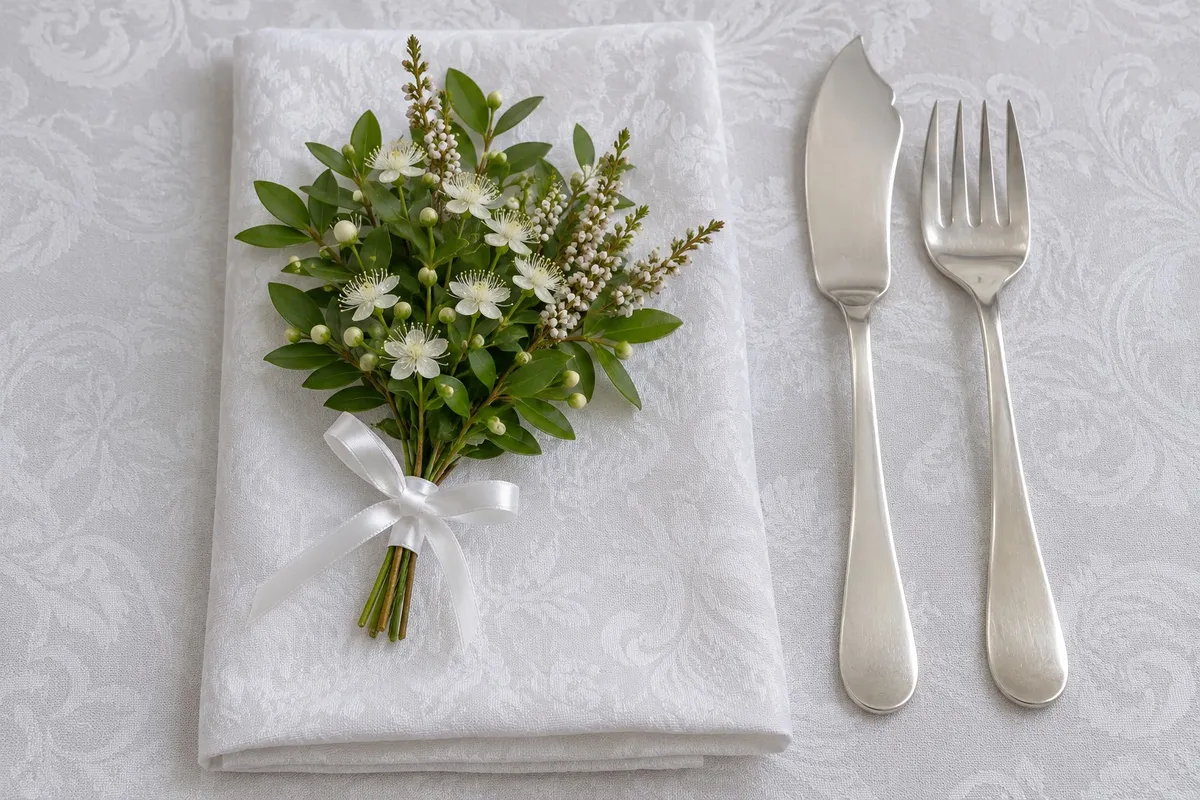
Filet de Sole Mountbatten, Perdreau en Casserole and Bombe Glacée Princess Elizabeth: those are the three dishes the royal household lists for the wedding breakfast that followed the marriage of Princess Elizabeth and Lieutenant Philip Mountbatten at Westminster Abbey on 20 November 1947. It was served at lunchtime in the Ball Supper Room at Buckingham Palace, for 150 guests, according to the Royal Collection Trust, which has exhibited the printed menu.
A wedding on the ration
Britain married off its heir in the lean years after the war. Bread, never rationed while the fighting lasted, went on the ration in July 1946 and stayed there until July 1948. The princess paid for her wedding dress with clothing ration coupons. Hundreds of people sent her their own coupons to help, and the royal household records that they had to be returned, since using them would have been illegal.
The weeks before the wedding brought new cuts, and Hansard records them. On Saturday 8 November the Minister of Food, John Strachey, announced a potato ration of 3 lb a head a week. When the Commons debated it on the Monday, Herbert Butcher, the member for Holland with Boston, said that after bringing in bread rationing the minister had now “surrendered the last line of defence, which was the unrationed supply of potatoes.” On 17 November, three days before the wedding, Edith Summerskill, the ministry’s parliamentary secretary, told the House that bacon was arriving from Canada again after a strike, but that the ration “will remain at one ounce per week” to save dollars.
Some foods were never rationed at all. Fish stayed off the ration, and so did game. A sole and a partridge on a 1947 menu needed no coupons, which CBC News, in its guide to royal wedding feasts, gives as the likely reason for the partridge. In places that autumn, game birds were even a nuisance. The same afternoon as the bacon answer, a Labour member asked the Minister of Agriculture to have pheasants treated as pests for the damage they were doing to newly sown corn. Tom Williams saw “no grounds for treating pheasants generally as pests,” and a Conservative member offered his side of the House’s help in thinning them out. The butter, eggs and cream that a fish sauce and an iced bombe call for were another matter, and the card is silent on where they came from.
The cakes show the shortage most plainly. The couple received eleven wedding cakes, the royal household records, and only one was the official cake: nine feet high in four tiers and baked by McVitie and Price. It used ingredients from all around the world, among them sugar from the Girl Guides in Australia, which gave it the name “The 10,000 Mile Cake.” The Royal Collection Trust notes that the cakes were made from ingredients sent from overseas because rationing was still in force. The bridegroom cut the official cake with the Mountbatten sword, a wedding present from the King.
The royal household’s account adds two details of the room. The string band of the Grenadier Guards played during the meal, and each guest’s favor was a small posy of myrtle and white Balmoral heather.
Reading the card
Press guides published since, CBC’s among them, print a longer card, with green beans, noisette potatoes, a salade royale, dessert and coffee around the three courses. The royal household names only the three, and they are the ones followed here.
Each name on the menu is written in the French of the professional kitchen, and Auguste Escoffier’s A Guide to Modern Cookery, published in English in London in 1907, sets those rules out.
Filet de Sole Mountbatten is fillets of sole, and the form suits the occasion. Escoffier explains that fillets go on the menu of a dinner because “they dish more elegantly and are more easily served than the whole fish,” while the whole sole belonged at an ordinary luncheon. The second word is the groom’s new surname. A sole named for a person is an old move in his book, which lists fillets of sole Lady Egmont and Marie Stuart, and he notes that a sole poached in a fine wine could carry the wine’s name on the menu, “Sole au Barsac.” What the Mountbatten sole was dressed with, the card leaves to the kitchen.
Perdreau en Casserole is young partridge, perdreau being the young bird. For Escoffier “en casserole” meant a bird pot-roasted in butter in an earthenware dish and “served in the same,” generally with no vegetables added. He prints no separate partridge en casserole, because “all the recipes given for pheasants may be applied to partridge,” and his pheasant en casserole is cooked in butter alone, finished with a few drops of brandy and a spoonful of game gravy, and sent to the table “burning hot.”
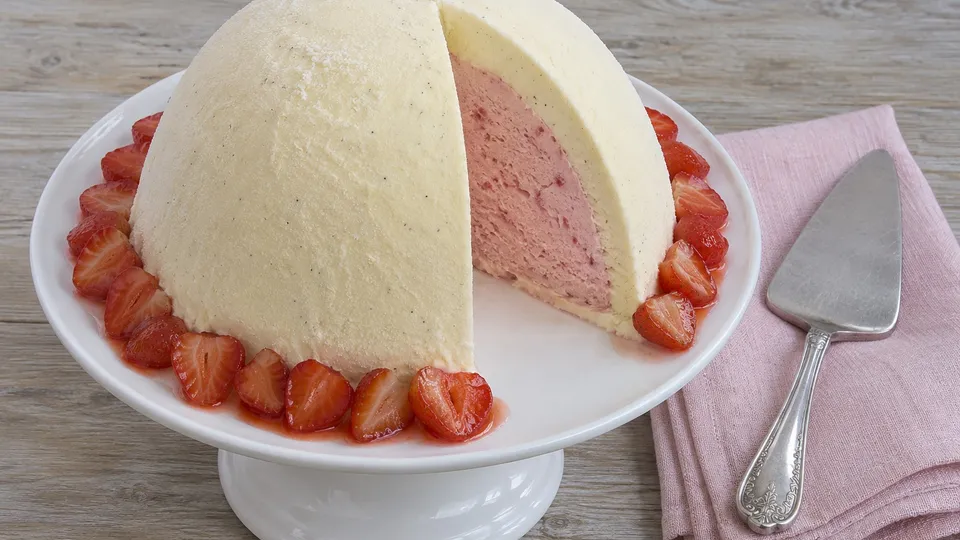
Bombe Glacée Princess Elizabeth is an iced bombe named for the bride. In Escoffier’s book a bombe is a mold lined with a thin coat of ice and filled with a mixture of egg yolks, syrup and whipped cream, then frozen for hours and turned out; his list of more than eighty bombes names them after places, operas and people, from Aïda to Victoria. The card gives this one no flavor. Later press accounts say it held strawberries, out of season in November; CBC adds that they came from a royal greenhouse.
The recipes
We found no published recipe from the palace kitchen, so these three are built from the 1907 Guide, where the French names on the card are spelled out. Each recipe page says what is ours.
- Fillets of Sole in White Wine (1907): fillets poached in white wine and fish stock, coated with a butter sauce of egg yolks, for the sole named for the groom.
- Partridge en Casserole (1907): young partridges pot-roasted in butter in a covered dish, with brandy and game gravy, served in the dish.
- Strawberry Bombe (1907): Escoffier’s Bombe Alhambra, vanilla ice cream around a strawberry filling, ringed with strawberries in kirsch.
The same Guide supplies the dishes for an earlier royal occasion in hard times, the Sultan of Morocco’s train dinner in the summer of 1945, in What Was on the Royal Train’s Menu in 1945? The dinners given to London’s poor for the coronation of the bride’s great-grandfather, Edward VII, are in What Did London’s Poor Eat at the King’s Dinner in 1902?
Cooking it
Escoffier left his bombes “two or three hours in the ice,” and a home freezer wants longer, so make the Strawberry Bombe (1907) the day before and keep the day itself for the sole and the partridge.
 Cook it todayStrawberry Bombe (1907)
Sources
- “70 facts about The Queen and The Duke of Edinburgh’s Wedding (opens in a new tab),” The Royal Family (royal.uk).
- “The Wedding Breakfast Menu for the marriage of Princess Elizabeth and Lieutenant Philip Mountbatten (opens in a new tab),” Royal Collection Trust, RA F&V/Wedding/1947/QE II.
- House of Commons debates, 10 November 1947, “Potato Rationing (opens in a new tab),” vol. 444, cols. 155 to 166; 17 November 1947, “Bacon Ration (opens in a new tab),” cols. 820 to 821, and “Pheasants (opens in a new tab),” cols. 803 to 804. Hansard.
- A. Escoffier, A Guide to Modern Cookery (London: William Heinemann, 1907), nos. 250, 818 to 894, 1832, 2747, 2757, 2826 to 2834, and the notes on soles and partridges.
- “An illustrated guide to the British royal wedding feasts of the past (opens in a new tab),” CBC News.