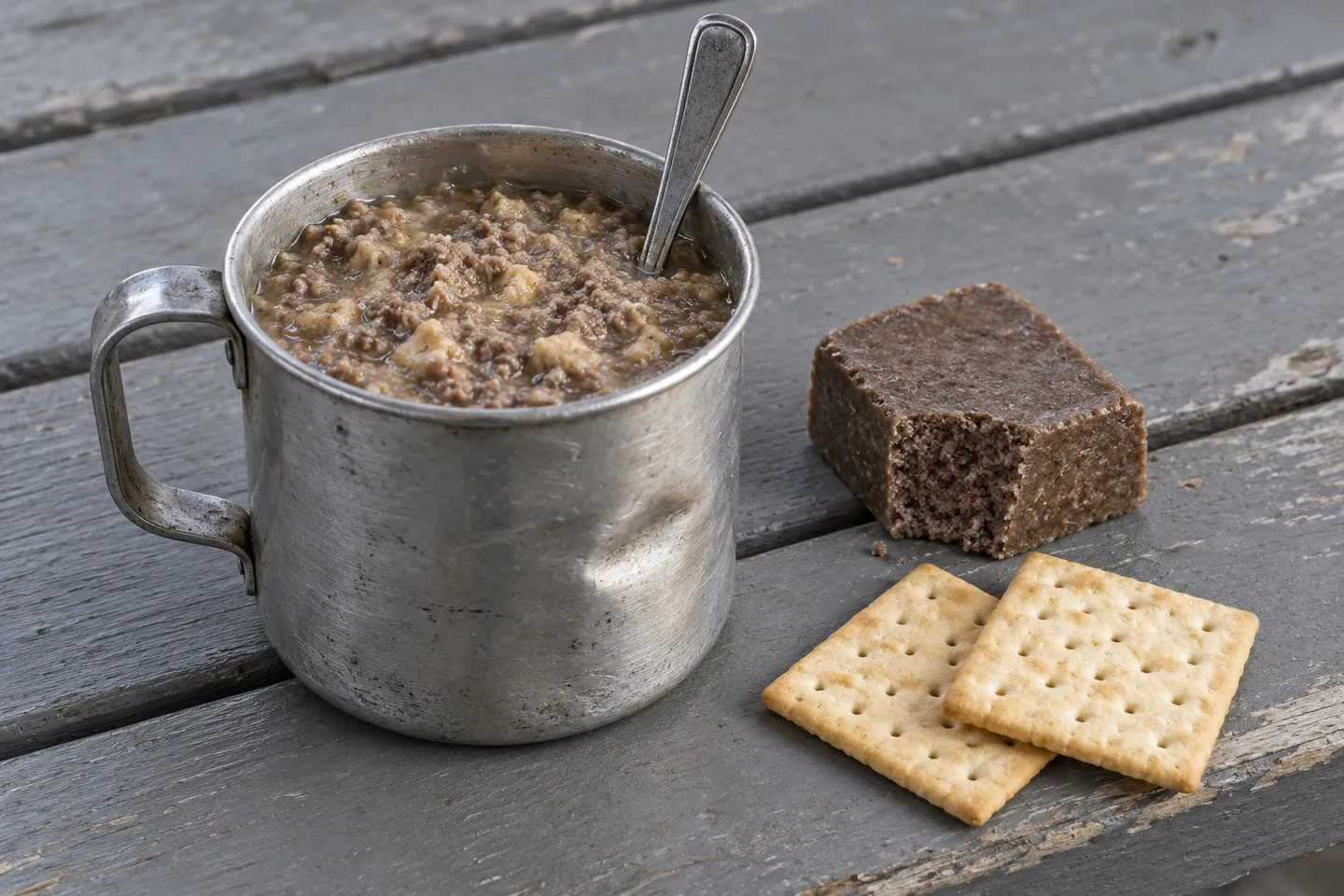
Sledging Hoosh (1911)
Reader ratingsSledging hoosh, the thick camp soup of Scott’s sledge journeys, made at home: beef pemmican boiled with water and broken ship’s biscuit, with an optional pinch of curry powder.
- Recipe makes
- 2 bowls
- Prep
- Cook
- Total
The pemmican can be made days ahead: press it into a small dish and chill it until firm, and it keeps for a week in the refrigerator. The hoosh itself takes fifteen minutes.
Sledging hoosh with pemmican and biscuit.
The story behind the recipe
What was hoosh?
Hoosh was what Scott’s men ate on the march, and the glossary to his journal gives it one line: “a thick camp-soup with a basis of pemmican.” Pemmican, biscuit and water went into the cooker together and came out as something between a stew and a porridge, eaten in the tent at the end of the day. It is the other half of the midwinter story, the food that waited once the sledges left the hut.
Read more about this recipe
What did Scott’s men put in their hoosh?
Apsley Cherry-Garrard’s figures for the winter journey of 1911 give the proportions: a third more biscuit than pemmican by weight, with butter on the side.
On the way back from the Pole the party had horsemeat to add, and one night’s stew of pemmican and horsemeat was, Scott thought, the best hoosh of the journey. Curry powder went into the pot too: on Christmas Day 1911 the hoosh carried slices of horsemeat flavored with onion and curry powder. It didn’t always agree with Scott. In March 1912 he wrote that a small spoonful mixed into his melted pemmican gave him violent indigestion.
Making it today
This is our reconstruction, not a recipe anyone wrote down. Bought pemmican is hard to find, so we make it the old way, with dried beef ground to a coarse powder and mixed with an equal weight of melted beef fat. For the biscuit we use plain hardtack or unsalted water crackers. Each bowl holds about a quarter of a man’s daily pemmican on that winter journey and an eighth of his biscuit, our proportion, and comes to roughly 800 calories, most of it fat. The curry powder follows the Christmas hoosh of 1911.
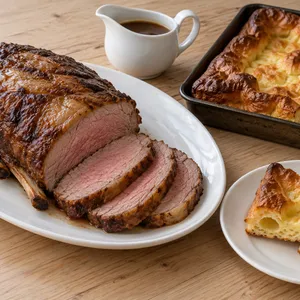
What Did Scott’s Men Eat for Midwinter at Cape Evans? sets the hoosh beside the feast, and the Roast Beef and Yorkshire Pudding (1906) is what they ate in the hut that June.
Hoosh, a thick camp-soup with a basis of pemmican.
Recipe makes: 2 bowls
Ingredients
For 2 bowls. Quantities are shown as written.
Quantities as written here, for 2 bowls.
Pemmican
- Plain dried beef or unseasoned beef jerky3 oz
- Beef tallow (rendered beef fat)3 oz
Hoosh
- Water16 fl oz
- Unsalted water crackers, or ship’s biscuit or hardtack4 oz
- Salt
- Curry powder (optional)1 pinch
Measurement notes
Ingredients as written here
- 3 oz plain dried beef or unseasoned beef jerky
- 3 oz beef tallow (rendered beef fat)
- 16 fl oz water
- 4 oz unsalted water crackers, or ship’s biscuit or hardtack
- Salt
- 1 pinch curry powder (optional)
Equipment
- Food processor or blender
- Small saucepan for melting the fat
- Small dish, about 4 inches across
- Medium saucepan with a lid
 Wooden spoon
Instructions
For the pemmican, use dry, brittle dried beef; if your jerky is soft and leathery, dry it in a 200°F (95°C) oven for 30 minutes and cool it before grinding. Grind the dried beef in the food processor or blender to a coarse, fluffy powder.
Melt the beef tallow gently in the small saucepan until just liquid. Pour it over the beef in a bowl and stir until every bit of meat is coated.
Press the mixture into the small dish. Use it warm, or chill it until firm and cut it into pieces when you need it.
For the hoosh, break the biscuits into pieces about the size of a thumbnail and bring the water to a boil in the medium saucepan. Water crackers need no soak; ship’s biscuit or hardtack should soak in the measured water for 30 minutes before it comes to the boil.
Crumble the pemmican into the boiling water and stir until the fat has melted. Add the broken biscuit, unless it is already in the pan, and the curry powder, if using, and simmer for about 5 minutes, stirring, until the biscuit has softened and the hoosh is thick enough to hold a spoon upright for a moment. Add a little more water if it gets too stiff.
Taste and add salt; dried beef varies, so it may need none. Serve hot in mugs or bowls.
Nutrition
795calories per serving
- Recipe makes
- 2 bowls
- Servings
- 2
Estimated per bowl from USDA FoodData Central values for the listed ingredients.
Recipe notes
When adjusting quantities
Each bowl is about a quarter of the pemmican and an eighth of the biscuit in a man’s daily ration on Cherry-Garrard’s winter journey.
Notes
Quantities mentioned in these notes don’t change when you adjust the servings.
No one recorded how much curry went in; start with a pinch. For a sweeter evening meal in the expedition’s manner, follow the hoosh with a mug of cocoa. Choose dried beef or jerky with no sweet or smoky marinade. Shredded packet suet won’t do in place of tallow, because it is coated in flour; render fresh beef suet, or buy tallow. The chilled pemmican keeps for a week in the refrigerator. Contains wheat.
Scaling changes the ingredients only; pan sizes and cooking times need their own judgment. To adapt this recipe further, try the recipe tool at TuneMyRecipe (opens in a new tab), our sister site.

Sources and attribution
Our reconstruction from the sledging ration in Robert Falcon Scott, Scott’s Last Expedition, vol. 1 (London: Smith, Elder, 1913), and Apsley Cherry-Garrard, The Worst Journey in the World (London: Constable, 1922)