Pilchard Pancakes (1944)
Reader ratingsMashed potato and pilchards with leek, parsley and dried egg, fried by the spoonful: the Ministry of Food’s high tea fish cakes of November 1944.
- Recipe makes
- 16 to 20 small cakes, for 4
- Prep
- Cook
- Total
The potatoes boil for about 20 minutes; the cakes fry in two or three batches, a few minutes a side.
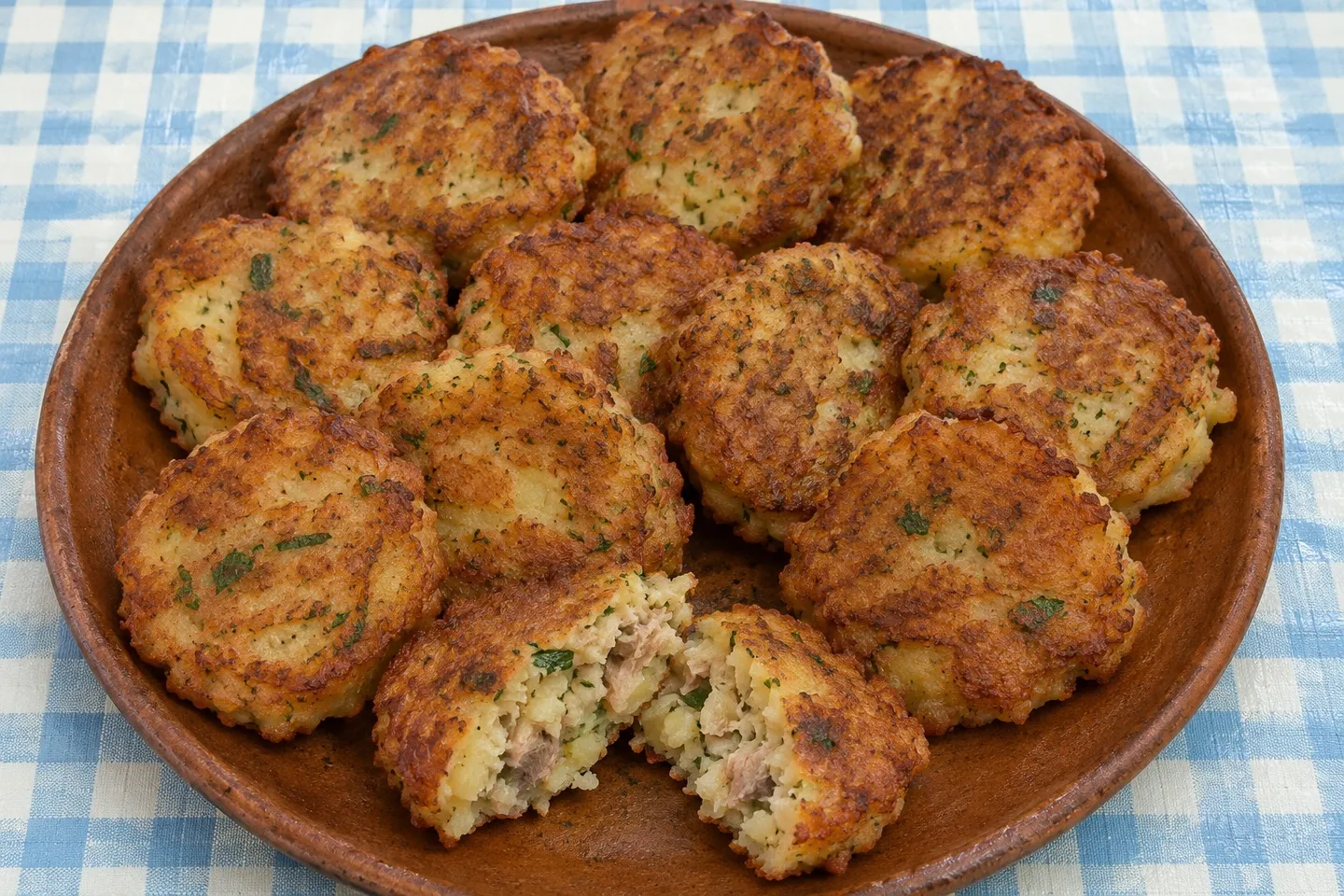
Small fried potato and pilchard cakes, flecked with parsley, on an earthenware plate.
The story behind the recipe
Mashed potato does most of the work in these little fried cakes, and two pilchards give the whole batch its fish. The Ministry of Food printed them as the main dish of Menu 2 in High Teas and Suppers, War Cookery Leaflet No. 18, in November 1944, with a raw vegetable salad and bread, margarine and jam. They are pancakes by name only: there is no batter, just potato bound with egg and dropped into hot fat.
Fish that was never rationed
Fish stayed off the ration through the whole war. The Ministry’s 1946 account of its work explains that eggs, milk and fish didn’t suit a fixed ration, with supplies that swung by season and place and spoiled quickly. For eggs and milk it ran schemes of controlled distribution; for fish, it says, it “was found impossible” to even out supplies between consumers at all, and only a loose scheme among traders operated. Fish in tins was a different matter. From December 1941 canned fish was one of the first foods on the points scheme, bought with the points every person had to spend each four weeks.
The leaflet doesn’t say which kind of pilchard it means, only “2 Pilchards, mashed.” We read them as tinned, and the leaflet’s last menu points the same way, with “Pilchard & Cabbage Sandwiches” for a high tea. The dried egg is the other stretched ingredient, a single reconstituted egg holding together a pound of potatoes.
Read more about this recipe
Making it today
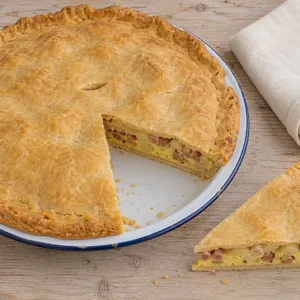
We use canned pilchards, drained of their brine or sauce. One fresh egg stands in for the leaflet’s dried one; the Recipe notes give the powder version. Floury potatoes are ours, and so is dripping for the hot fat, since the leaflet names neither. How the points and the weekly coupons fitted together between 1940 and 1954 is set out in What Was a Week’s Food Ration in Britain, 1940 to 1954? The Ministry’s other egg leaflet puts its powder with bacon in the Bacon and Egg Pie (1945).
Pilchard Pancakes
1 lb. Potatoes.
2 Pilchards, mashed.
1 tablespoonful chopped Leek.
2 tablespoons chopped Parsley
1 dried Egg, reconstituted.
Pepper and Salt.Peel, cook and mash potatoes, add pilchards, leek, parsley, dried egg and seasoning. Mix all together and drop dessertspoonsful of the mixture into hot fat. Brown on both sides.
Recipe makes: 16 to 20 small cakes, for 4
Ingredients
For 16 to 20 small cakes, for 4. Quantities are shown as written.
Quantities as written here, for 16 to 20 small cakes, for 4.
- Floury potatoes1 lb
- Salt for the cooking water1 tsp
- Canned pilchards, drained2
- Finely chopped leek1 tbsp
- Chopped parsley2 tbsp
- Large egg1
- Salt for seasoning1/4 tsp
- Black pepper1/4 tsp
- Beef dripping or lard for frying3 tbsp
Measurement notes
Ingredients as written here
- 1 lb floury potatoes
- 1 tsp salt for the cooking water
- 2 canned pilchards, drained
- 1 tbsp finely chopped leek
- 2 tbsp chopped parsley
- 1 large egg
- 0.25 tsp salt for seasoning
- 0.25 tsp black pepper
- 3 tbsp beef dripping or lard for frying
Equipment
 Peeler
 Knife and board
 Large pot
 Potato masher
 Can opener
 Bowl
 Fork
 Frying pan
 Wide spatula
 Plate lined with paper towels
 Instant-read thermometer
Instructions
Peel the floury potatoes and cut them into even chunks. Cover them with cold water in the large pot, add the salt for the cooking water and bring to the boil. Simmer for 15 to 20 minutes, until tender all the way through.
Drain the potatoes well, return them to the pot for a minute to steam dry, then mash them smooth. Let them cool for a few minutes.
Mash the canned pilchards with the fork in the bowl. Add the mashed potato, the leek, the parsley, the egg, beaten, the salt for seasoning and the black pepper, and mix well.
Heat a third of the beef dripping or lard in the frying pan over medium heat until hot.
Drop dessertspoonfuls of the mixture into the pan, leaving room between them, and flatten each one a little with the back of the spoon.
Fry for 3 to 4 minutes a side, turning once with the spatula, until brown on both sides and the middle of a cake reads 165°F (74°C).
Lift the cakes onto the lined plate and keep them warm while you fry the rest, adding more of the fat to the pan for each batch. Serve hot.
Nutrition
230calories per serving
- Recipe makes
- 16 to 20 small cakes, for 4
- Servings
- 4
Estimated per serving (4) from USDA FoodData Central values for potatoes, canned pilchards (sardines), egg and the fat absorbed in frying.
Recipe notes
When adjusting quantities
The leaflet’s quantities are for four. A double batch fries in more rounds; keep the first ones warm.
Notes
Quantities mentioned in these notes don’t change when you adjust the servings.
For the egg as printed, whisk 1 level tablespoon of dried whole egg powder with 2 tablespoons of water until smooth, the Ministry’s measure for one egg in its dried-egg leaflets (this one gives none), and use it at once. Canned pilchards, floury potatoes, dripping or lard, the frying times and the heat are ours. The leaflet gives no salt for the potato water; we add it and keep the seasoning light, since canned fish is already salted.
Scaling changes the ingredients only; pan sizes and cooking times need their own judgment. To adapt this recipe further, try the recipe tool at TuneMyRecipe (opens in a new tab), our sister site.
Sources and attribution
After Pilchard Pancakes, Menu 2, in High Teas and Suppers, War Cookery Leaflet No. 18 (Ministry of Food, November 1944)
See the original pages (scan at National Library of Scotland) (opens in a new tab)
Recipe details
- Course
- Main course
- Dish family
- Fish & Seafood
- Region
- British
- Source decade
- 1940s
- Main ingredient
- FishVegetables
- Difficulty
- Easy
- Occasion
- Rationing