Fireless Cooker Steel Cut Oatmeal (1909)
Reader ratingsFireless cooker steel cut oatmeal after The Fireless Cook Book, 1909: oats soaked all day, boiled hard for ten minutes and cooked slowly overnight for breakfast.
- Recipe makes
- About 3 cups, 4 servings
- Prep
- Cook
- Total
Soak the oats in the refrigerator for at least 9 hours (prep time includes the soak), boil them 10 minutes in the evening, and let the slow cooker run on low overnight, about 8 hours.
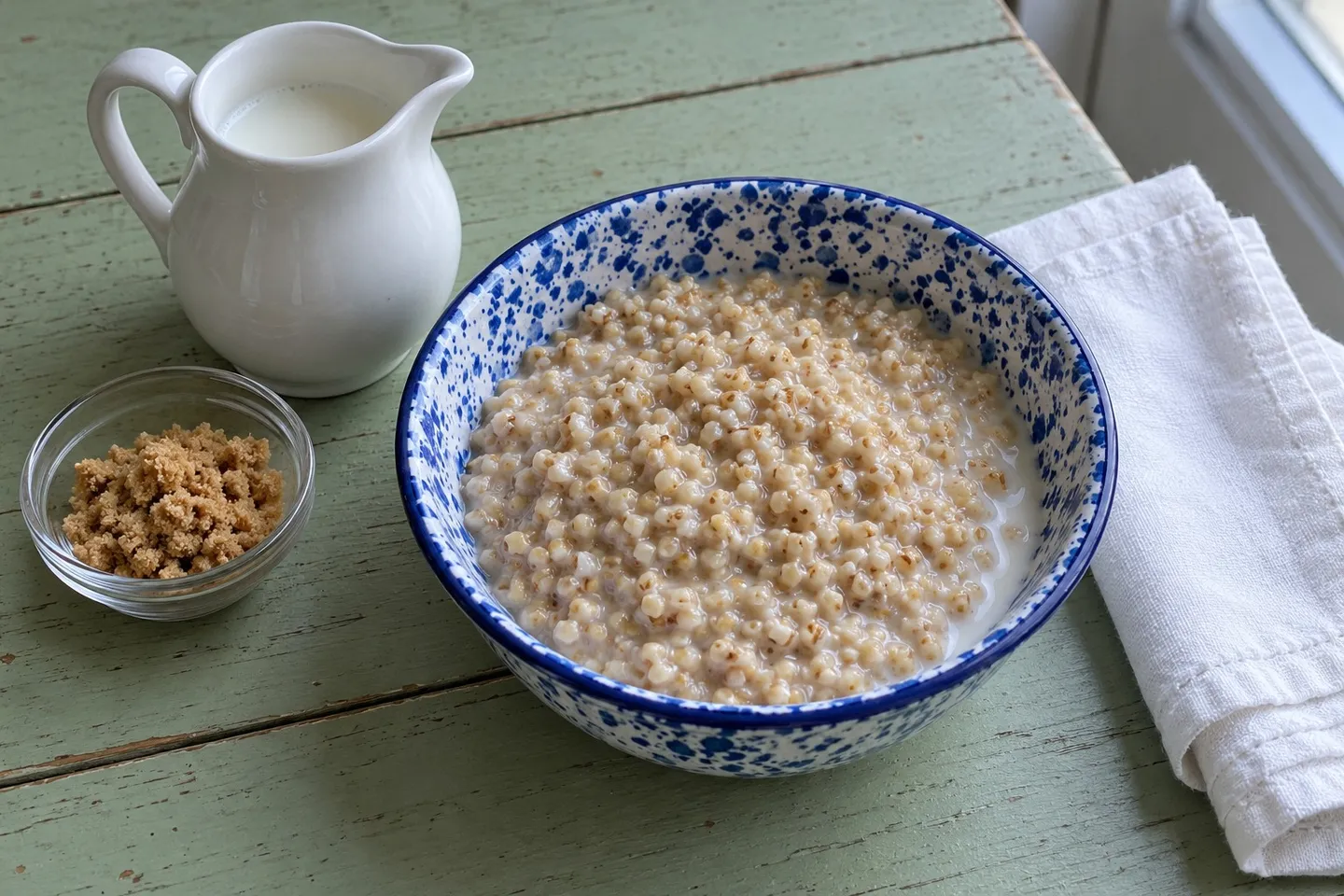
Bowl of overnight steel-cut oatmeal with milk and brown sugar.
The story behind the recipe
Oatmeal heads the list of foods the University of Wisconsin found the fireless cooker did best. Margaret J. Mitchell’s Fireless Cook Book of 1909 gives steel cut oatmeal in two lines and tells the cook to treat it “in the same manner as cracked wheat”: soak the grain nine hours or more, boil it hard for ten minutes, and shut it in the cooker. With ten hours in the box at a stretch, the porridge could cook through the night with no one up early to stir it.
How long did the oatmeal stay in the box?
Twenty hours, if you follow Mitchell to the letter. Her cracked wheat goes into the cooker for ten hours, is brought back to the boil, and goes in for ten hours more. Her other breakfast cereals get long hours too: hominy grits ten hours or more, Pettijohn’s Breakfast Food two to twelve, and even cream of wheat anything from one hour to twelve.
Read more about this recipe
Why a full pot mattered
The University of Wisconsin learned the hard way that a box only holds the heat the food brings into it. In its 1908 bulletin, a pint can of oatmeal boiled five minutes and left overnight in a small cooker failed: “In the morning it was cold and not well done.” Bigger quantities kept their heat far longer. Why Did Kitchens of the 1910s Cook Dinner in a Box? follows the rest of the Madison trials.
Making it today
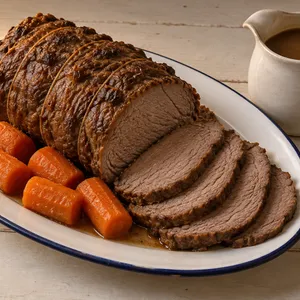
Mitchell’s soak and her ten-minute boil stay; her box becomes a small slow cooker set on low overnight, the time modern slow-cooker recipes for steel-cut oats give, because a slow cooker holds the porridge hot all night where a home-made box would let it drift lukewarm by morning. The soak happens in the refrigerator. Her water is six times the oats, more than the four times most modern recipes use, so expect a loose porridge that thickens as it stands in the bowl. For a dinner from the same book, there is the Fireless Cooker Pot Roast (1909).
Cook it in the same manner as cracked wheat. ...
Soak the cracked wheat in the cold water for nine hours or more; add the boiling water and salt, and let all boil hard for ten minutes in an uncovered pan. ...
Recipe makes: About 3 cups, 4 servings
Ingredients
For about 3 cups, 4 servings. Quantities are shown as written.
Quantities as written here, for about 3 cups, 4 servings.
- Steel-cut oats1/2 cup
- Cold water1 cup
- Boiling water2 cups
- Salt1/2 tsp
- Milk or cream, to serve (optional)
- Brown sugar, to serve (optional)
Measurement notes
Ingredients as written here
- ½ cup steel-cut oats
- 1 cup cold water
- 2 cups boiling water
- ½ tsp salt
- Milk or cream, to serve (optional)
- Brown sugar, to serve (optional)
Equipment
- Covered container for soaking
 Saucepan
- Small slow cooker, 1½ to 3 quarts
 Kettle
Instructions
In the morning, put the steel-cut oats and cold water in a covered container and refrigerate for at least 9 hours.
In the evening, tip the oats and their soaking water into the saucepan. Add the boiling water and salt, bring it back to a boil and boil hard, uncovered, for 10 minutes, stirring now and then so it does not stick.
Pour the boiling oatmeal into the slow cooker, cover and cook on low for about 8 hours, overnight.
In the morning, stir it well. The grains should be tender with a little chew left and the porridge creamy and on the loose side; it thickens as it stands. If it is too thick, stir in a little boiling water from the kettle.
Serve hot, with milk or cream and brown sugar if you like.
Nutrition
75calories per serving
- Recipe makes
- About 3 cups, 4 servings
- Servings
- 4
Estimated per serving (4) from USDA FoodData Central values for steel-cut oats; milk, cream and sugar not included.
Recipe notes
When adjusting quantities
Mitchell’s amounts, for 4 or 5. Doubled, it suits a 3- to 4-quart slow cooker better, since a small amount spread thin in a large cooker can catch at the edges.
Notes
Quantities mentioned in these notes don’t change when you adjust the servings.
The oats, water and salt are Mitchell’s, as are the soak of nine hours or more and the ten-minute hard boil. We soak the oats in the refrigerator, cook them in a slow cooker on low for about 8 hours and add the milk and sugar; her oats went into the cooker for ten hours, were brought back to the boil and went in for ten hours more, and she gives no way of serving them here. Don’t leave cooked porridge in an unheated box or a switched-off cooker. Chill leftovers in a shallow container within 2 hours and reheat them on the stove to 165°F (74°C); a slow cooker warms leftovers too slowly.
Scaling changes the ingredients only; pan sizes and cooking times need their own judgment. To adapt this recipe further, try the recipe tool at TuneMyRecipe (opens in a new tab), our sister site.

Sources and attribution
After Margaret J. Mitchell, The Fireless Cook Book (New York, 1909), Steel Cut Oatmeal and Cracked Wheat
See the original pages (scan at Internet Archive) (opens in a new tab)
Recipe details
- Course
- Main course
- Region
- American
- Era
- Edwardian
- Source decade
- 1900s
- Main ingredient
- Grains & rice
- Difficulty
- Easy
- Occasion
- Everyday meal
- Season
- Winter