Chinese Gravy (1917)
Reader ratingsChinese gravy from Shiu Wong Chan’s 1917 Chinese Cook Book: hot stock thickened with cornstarch and seasoned with soy, sugar and sesame oil, for chop suey.
- Recipe makes
- About 1 cup, enough to finish one chop suey for 4
- Prep
- Cook
- Total
Mix the cornstarch while the stock comes to the boil. Make it while a chop suey simmers, so it goes in hot.
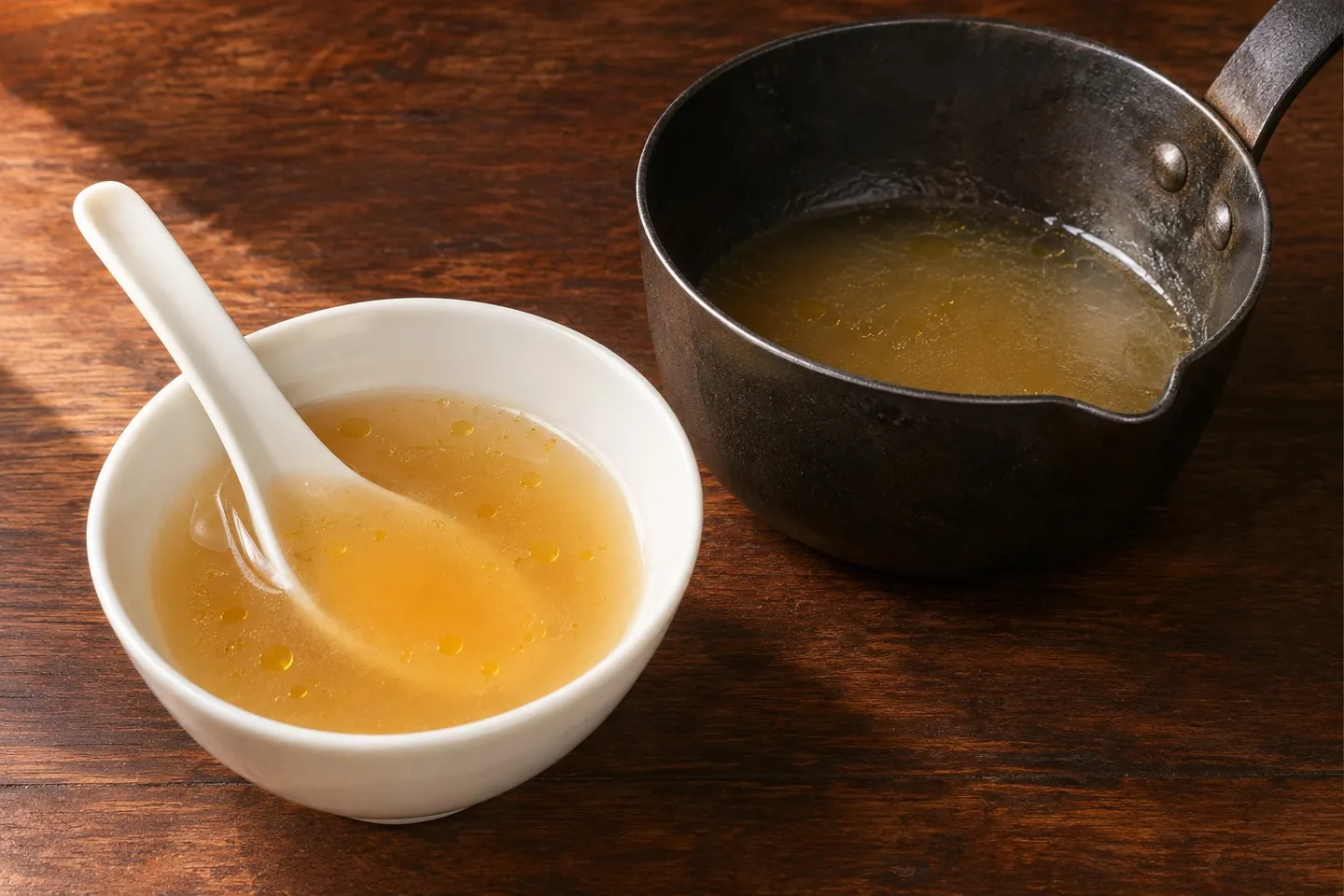
A small bowl of thin amber gravy with a porcelain spoon.
The story behind the recipe
Chinese gravy is the step that finishes most of the chop sueys in Shiu Wong Chan’s The Chinese Cook Book of 1917, and he printed it on page 11, among the “Preliminary Recipes” at the front of the book. It is a cup of primary soup thickened with a teaspoon of cornstarch, then seasoned with a little Chinese sauce, salt, sugar and a few drops of sesame-seed oil. Chan gave it a Chinese heading and the reading Hin Tout.
Why does the gravy come first?
Chan put his fundamentals at the start because, he wrote, “they are used in practically every dish.” The gravy sits at the end of a short chain. Its primary soup, on pages 8 and 9, is equal weights of chicken and lean pork slowly cooked down by half and strained clear, and Chan named it the reason a restaurant dish beats a home one: “the real secret is the primary soup.” He went further a page later: “The quality of a dish depends upon the nature of this primary soup.”
Chinese sauce, on page 10, was another matter. He sketched how it was made from white beans, then noted that it was called “See Yout, meaning sauce,” and could be bought ready prepared in any Chinese grocery store. His price list at the back gives it at 40 cents a bottle, about $10 today by US consumer prices (Minneapolis Fed / BLS CPI-U).
Read more about this recipe
Making it today
The big change is ours: low-sodium chicken stock from the store stands in for Chan’s primary soup, which took an afternoon and was cleared with a bowl of chicken blood. Soy sauce takes the place of See Yout, and toasted sesame oil the place of his sesamum-seed oil. Chan left the salt, sugar and oil to the cook, so their amounts are our choice, kept small. A teaspoon of cornstarch to a cup of stock makes a thin gravy, closer to a seasoned broth than a coating sauce, and it goes into the Bean Cake Chop Suey (1917) at the end. Chan’s readers sent to Mott Street for the sauce and the oil, copying the Chinese signs from his price list, and How Did a 1917 Cookbook Bring Chop Suey Home? follows one of those orders from the letter to the change.
Mix the cornstarch well in a little cold water; then stir into the boiling primary soup, and let boil until it thickens. ...
Recipe makes: About 1 cup, enough to finish one chop suey for 4
Ingredients
For about 1 cup, enough to finish one chop suey for 4. Quantities are shown as written.
Quantities as written here, for about 1 cup, enough to finish one chop suey for 4.
- Low-sodium chicken stock1 cup
- Cornstarch1 tsp
- Cold water1 tbsp
- Soy sauce1/2 tsp
- Sugar1/8 tsp
- Toasted sesame oil1/8 tsp
- Salt1 pinch
Measurement notes
Ingredients as written here
- 1 cup low-sodium chicken stock
- 1 tsp cornstarch
- 1 tbsp cold water
- ½ tsp soy sauce
- ⅛ tsp sugar
- ⅛ tsp toasted sesame oil
- 1 pinch salt
Equipment
 Small saucepan
 Small cup and spoon for mixing the cornstarch
Instructions
Stir the cornstarch into the cold water in a small cup until smooth.
Bring the chicken stock to a boil in the small saucepan over medium-high heat.
Stir the cornstarch mixture again, pour it into the boiling stock and keep stirring. Let it boil for about 1 minute, until it turns clear and thickens slightly.
Take the pan off the heat and stir in the soy sauce, sugar, toasted sesame oil and salt. Taste, and use it hot.
Nutrition
10calories per serving
- Recipe makes
- About 1 cup, enough to finish one chop suey for 4
- Servings
- 4
Estimated per serving (4) from USDA FoodData Central values for low-sodium chicken broth, cornstarch, soy sauce, sugar and sesame oil.
Recipe notes
When adjusting quantities
Chan’s amounts make one cup. Keep the cornstarch at a teaspoon to each cup of stock for the same thin gravy.
Notes
Quantities mentioned in these notes don’t change when you adjust the servings.
Chan’s own version starts from his primary soup: half a pound each of chicken and lean pork to every pint of water, cooked slowly for two and a half hours until about half has evaporated, then strained clear. A homemade stock on those proportions, without the chicken blood he used to clear it, can replace the bought stock; cool it quickly and keep it in the refrigerator. For a gravy with no alcohol at all, choose a soy sauce labeled alcohol-free, since some brewed soy sauces list alcohol among their ingredients. Contains soy and sesame; many soy sauces contain wheat.
Scaling changes the ingredients only; pan sizes and cooking times need their own judgment. To adapt this recipe further, try the recipe tool at TuneMyRecipe (opens in a new tab), our sister site.

Sources and attribution
After Shiu Wong Chan, The Chinese Cook Book (New York, 1917), Chinese Gravy
See the original pages (scan at Internet Archive) (opens in a new tab)
Recipe details
- Course
- Side dish
- Dish family
- Soups & Broths
- Source decade
- 1910s
- Difficulty
- Easy
- Occasion
- Everyday meal