Shiu Wong Chan’s The Chinese Cook Book is published in New York · New York City
How Did a 1917 Cookbook Bring Chop Suey Home?
Shiu Wong Chan’s 1917 Chinese Cook Book gave home cooks fifteen chop sueys, the gravy behind them and a way to order from Mott Street by tracing Chinese signs.
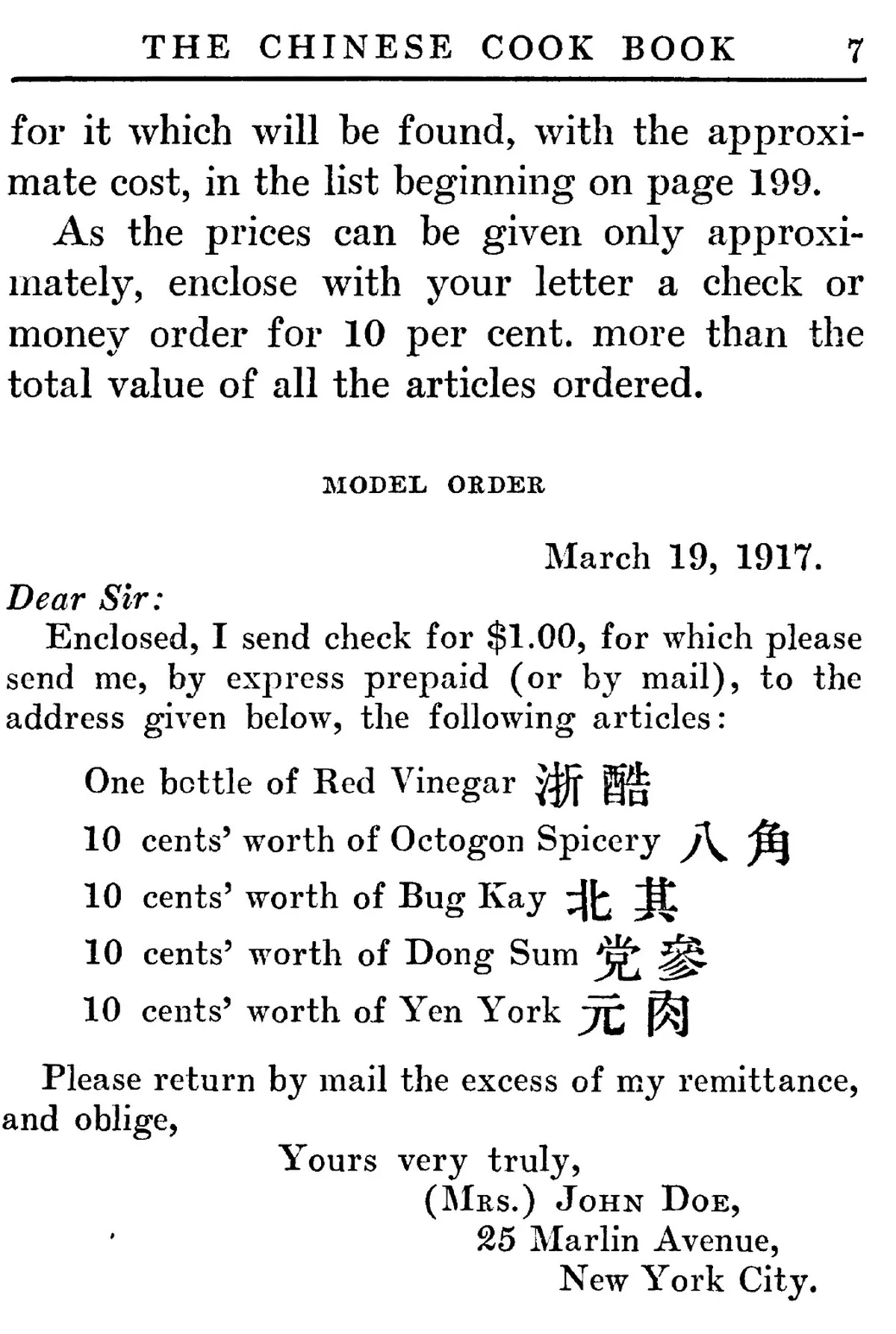
Shiu Wong Chan’s The Chinese Cook Book, published in New York in 1917, laid out the whole route from Mott Street to a home stove. It printed fifteen chop sueys, and most of them end on the same short instruction: “Add Chinese gravy.” It taught that gravy, and the soup behind it, at the front of the book. And for what an ordinary grocer didn’t sell, it gave six shop addresses and a way to order from them by mail without writing a word of Chinese: copy the Chinese sign from the page.
Housewife and restaurateur
Frederick A. Stokes Company of New York published the book, and Chan signed its preface “New York, May 18, 1917.” He meant it, he wrote, “not only for the housewife but also for the restaurateur,” and he set it out in “such a clear, simple form that any one by following its rules can prepare dishes of rare delicacy and flavor.” The title page promises more than a hundred recipes “for everyday food prepared in the wholesome Chinese way,” with Chinese pastry, candies and “Stove Parties” besides.
His opening chapter makes the case for the cooking. “Many Americans prefer Chinese cooking,” he wrote. “In fact, many Americans have Chinese cooks in their kitchens.” The chapter ends with a promise aimed at the first of his two readers: “Even the inexperienced housewife can prepare Chinese dishes of great flavor and delicacy.”
Fifteen chop sueys
The contents list fifteen dishes called chop suey: chicken, duck, lamb, plain, extra, beef, fish, shrimp, oyster, lobster, pigeon, partridge, winkle, bean cake and dry flat fish. The first, Chicken Chop Suey on page 37, opens with Chan’s note on the name.
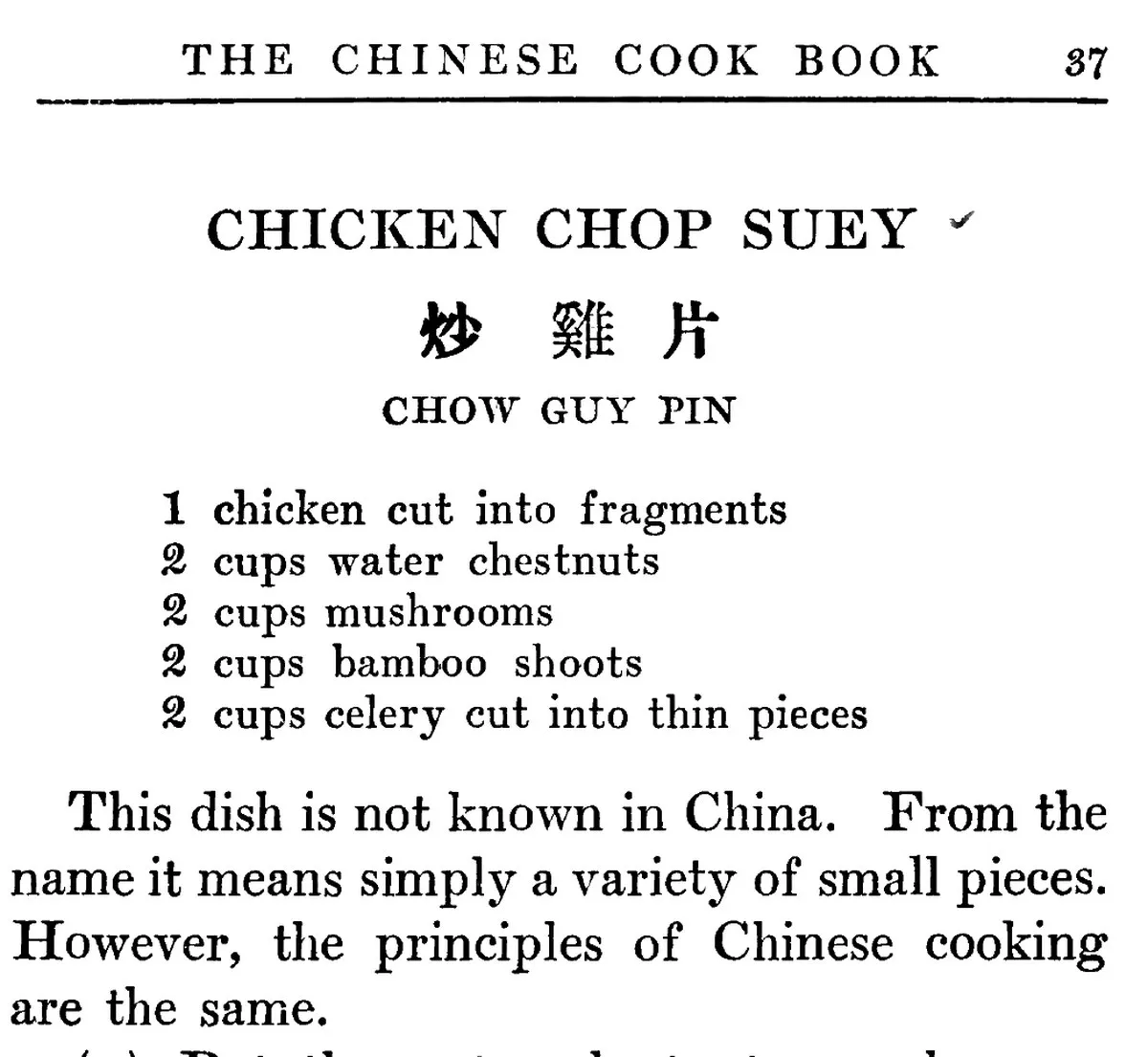 Chicken Chop Suey, from Shiu Wong Chan, The Chinese Cook Book (New York, 1917), p. 37.
Those principles are on page 5, in his “General Laws of Chinese Cooking.” A dish has three parts: the meat; secondary vegetables such as water chestnut, bamboo shoot, celery and Chinese mushroom; and a garnish of Chinese ham, chicken or roast pork in small dice, with parsley. The meat is cut to the size and shape of the vegetables. Under each English heading Chan printed the dish’s name in Chinese characters and a reading in Roman letters, so Chicken Chop Suey is Chow Guy Pin and Bean Cake Chop Suey is Do Fo Jap.
The plainest of them shows the frame. Plain Chop Suey on page 75 takes two pounds of pork cut into pieces “1/16 inch by ½ inch by 1 inch,” two pounds of bean sprouts and two cups of onion threads. They fry together for 10 minutes and cook for 15 more in water just to cover, and the recipe ends with the gravy. Bean Cake Chop Suey on page 148 runs the same four steps with bean cake in place of the sprouts. Its last line is three words long and carries more work than the rest of the page.
The gravy on page 11
“Since this is a foreign cook book,” Chan explained, the fundamentals come first, and “as they are used in practically every dish, a thorough knowledge of how to make them is a necessity.” His Chinese Gravy is short: a cup of primary soup brought to the boil and thickened with a teaspoon of cornstarch mixed in cold water, then seasoned with half a teaspoon of Chinese sauce, salt, sugar and a few drops of sesame-seed oil.
The cup of primary soup is the long part. Chan made it from equal weights of chicken and lean pork, half a pound of each to a pint of water and never less than six pints, cooked slowly for two and a half hours or until about half the liquid was gone, cleared of oil with a bowl of chicken blood, strained through a thick cloth and kept in the refrigerator. A better cook may help a restaurant dish, he allowed, “but the real secret is the primary soup.”
The sauce he let readers buy. He described Chinese Sauce, See Yout, as white beans boiled six hours with the liquid set in the sun until it browned, then added: “It can be bought, ready prepared, in any Chinese grocery store.” So the last line of a chop suey holds a stock that takes an afternoon, a thickening that takes a minute and a bottle from a Chinese grocer.
Trace the sign
His Marketing section starts where a reader would get stuck. “In addition to the meat and ordinary vegetables,” it begins, “there are articles used in Chinese cooking which are to be found only in Chinese grocery stores.” When ordering by mail, he told readers to write the American or Chinese name of the article, and also to “copy (or trace on thin paper) the Chinese sign” for it from the price list at the back. A cook who couldn’t read the characters could still send a grocer the right ones.
He even wrote the letter for them. The model order, dated March 19, 1917, asks for one bottle of red vinegar and ten cents’ worth each of Octogon Spicery, Bug Kay, Dong Sum and Yen York, each name followed by its characters, sent “by express prepaid (or by mail).” It is signed “(Mrs.) John Doe,” 25 Marlin Avenue, New York City, a sample name for a sample customer.
A dollar for 75 cents
Prices, Chan warned, “can be given only approximately,” so the reader should enclose a check or money order “for 10 per cent. more than the total value of all the articles ordered.” His own price list makes Mrs. Doe’s order easy to add up. Red vinegar is 35 cents a bottle, and the four ten-cent purchases bring the goods to 75 cents; ten percent more makes 82½ cents. The sample letter encloses $1.00 (about $26 today, by US consumer prices, Minneapolis Fed / BLS CPI-U) and closes: “Please return by mail the excess of my remittance, and oblige.” Chan’s sample sends more than his rule asks and leaves the grocer to make change.
The price list sells things the way a grocer might weigh them out. Bug Kay and Dong Sum cost 10 cents a handful, dry garlic 10 cents a teaspoonful, Chinese sauce 40 cents a bottle and bean cake 2½ cents a piece. A footnote explains that “Bug Kay is a plant used for nourishment.” The list ends with the hardware: a cooking-shovel for 35 cents, a frying-pan for $2.50 (about $65 today) and a double-boiler for $3.00. Yen York, the last item in the sample order, is missing from it.
Mott Street
All but one of the stores on page 198 are on Mott Street. Hip Chung Wing, a “Chinese Chop Suey Supply,” was at 11 Mott Street; Tuck High Company at 19 and Quong Yee Sing Company at 32 were Chinese grocery stores; Tai Jan & Company at 45 and Quong Tuck Wing Company at 59 were chop suey supply houses; and the Yat Kan Min Company, a noodle shop, was at 192 Park Row. A last paragraph turns to the restaurateur of the preface and sends anyone starting a Chinese restaurant to Soy Kee & Company, at 7 and 9 Mott Street, for chinaware, Chinese furniture and the rest.
A visitor’s guide from the year before puts that address on a shopping map. Rider’s New York City (Henry Holt, 1916), compiled and edited by Fremont Rider, lists under Oriental Goods, “in China-town; take 3d Ave. Elevated to Chatham Sq,” a “Say Kee Company, 7-9 Mott St.” The spelling differs from Chan’s Soy Kee; the address is the same. Rider files the shop under goods and says nothing of food. Alex Jay’s history of the firm on his blog Chinese American Eyes (2023) follows Soy Kee and its neighbor, the Port Arthur Restaurant, through postcards and photographs from about 1904 on.
Bean cake
Bean cake, the tofu of the chop suey, is on Chan’s price list too. At 2½ cents a piece, the ten pieces in Chan’s chop suey came to 25 cents (about $6.50 today), before the pork and onions. On page 147 he sketched how it was made: white beans soaked, ground in a water stone-grinder, cooked five hours with calcium powder, filtered and left to set, then tied in cloth and boiled. Then he conceded that the process “is really so complicated that it would require a separate volume to describe it.” The same page reports a factory in Paris making “millions of dollars each year” from bean cake, a figure the book gives no source for.
Bean cake runs through the later pages of the book: in the chop suey, in Chicken Starch Bean Cake, in a Stuffed Triangle Bean Cake and in an omelet. The omelet’s romanized heading is Fo Yung Dow Fo, and it ends as his general laws ask, with “Chinese ham dice and parsley” for the garnish.
What Chan’s pages can show is what he asked of a reader: a stock made ahead, a sign traced from a page, a dollar sent to Mott Street. No order from a reader, grocer’s invoice or marked-up kitchen copy has turned up to show who followed him. The historian Megan J. Elias, writing on a Boston University alumni blog in 2021, called the double audience “unusual and perhaps unrealistic” and read it as a reassurance to readers who knew Chinese food from restaurants that they would be getting “the ‘real thing.’” The gravy is one place where Chan’s two readers meet: the soup he called the restaurant’s secret, handed to the home cook.
The recipes
All three come from Chan’s 1917 book: the gravy that finishes his chop sueys and two of his bean cake dishes. No single meal served them together; the grouping is ours.
- Chinese Gravy (1917): thickened soup seasoned with sauce, sugar and sesame oil, the last step of the chop sueys.
- Bean Cake Chop Suey (1917): pork, bean cake and onion fried, simmered under a lid and finished with the gravy.
- Bean Cake Omelet (1917): Fo Yung Dow Fo, eggs turned in oil with fried bean cake, under ham and parsley.
The modern versions buy what Chan’s readers ordered or made. Firm tofu stands in for bean cake, soy sauce for See Yout and a low-sodium chicken stock for the primary soup, so the gravy takes minutes and needs no chicken blood. Another cookbook split a dish across its pages in 1893, when a Chicago fair book printed a New Mexican tamale whose method sat 118 pages from its filling, as What Did the Southwest’s Tamales Look Like in Print? tells. Chan’s chop suey and its gravy sit 137 pages apart.
Cooking it
Begin with the Chinese Gravy (1917), because most of Chan’s fifteen chop sueys end on it, and then make the Bean Cake Chop Suey (1917) to see what those three words, “Add Chinese gravy,” did to the pork, onion and bean cake.
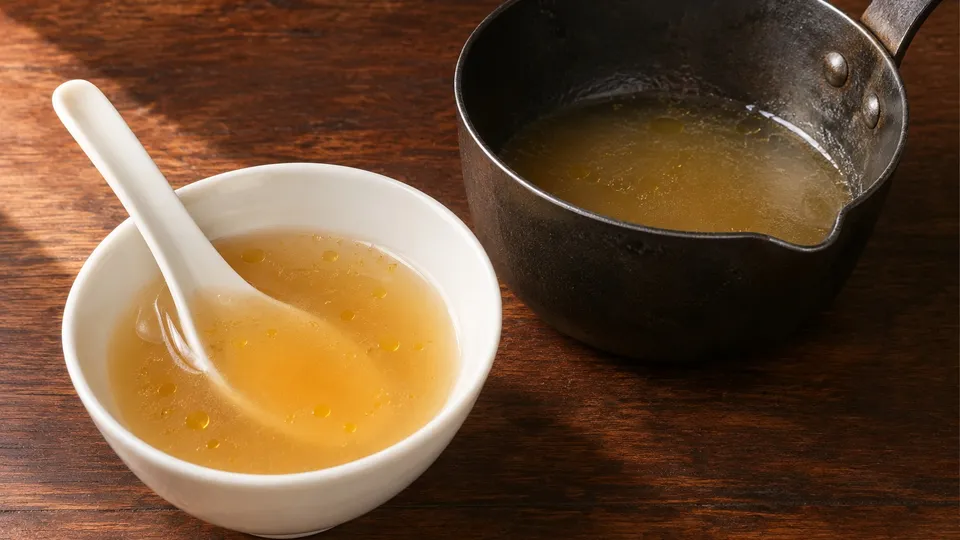 Cook it todayChinese Gravy (1917)
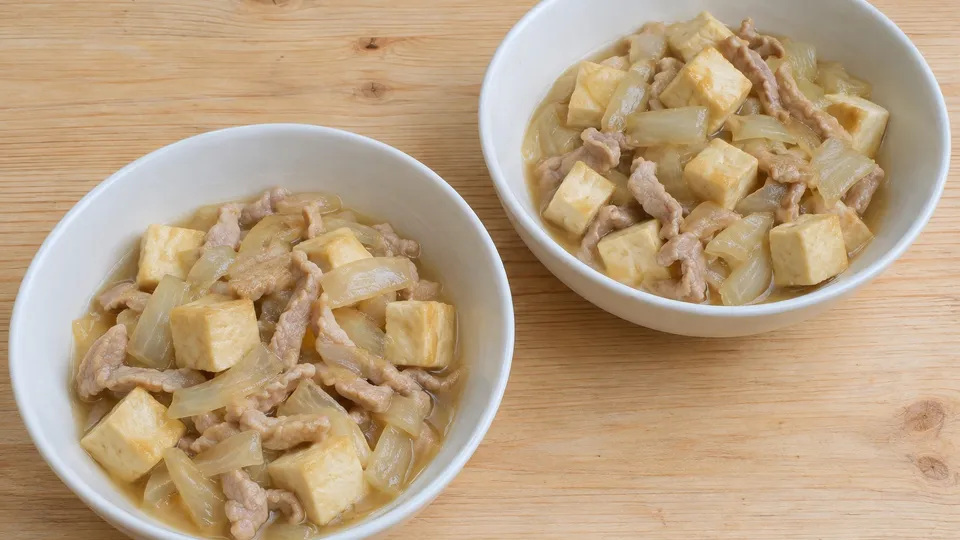 Cook it todayBean Cake Chop Suey (1917)
Sources
- Shiu Wong Chan, The Chinese Cook Book (New York: Frederick A. Stokes Company, 1917; title page undated, copyright 1917), pp. v–vi, 2, 4–11, 37, 75, 134, 147–148, 198–201. Library of Congress copy, Internet Archive (opens in a new tab).
- Fremont Rider, compiler and editor, Rider’s New York City and Vicinity, Including Newark, Yonkers and Jersey City: A Guide-Book for Travelers (New York: Henry Holt and Company, 1916), p. 78. Internet Archive (opens in a new tab).
- Alex Jay, “Graphics and Photography: Soy Kee & Company and Port Arthur Restaurant, New York City,” Chinese American Eyes, July 5, 2023. chimericaneyes.blogspot.com (opens in a new tab).
- Megan Elias, “Asian American Cookbooks,” Boston University Alumni blog, April 2021 (updated April 2023). bu.edu (opens in a new tab).
- FoodSafety.gov, “Safe Minimum Internal Temperatures,” for the modern pork and egg temperatures.