The cocktail hour before dinner · London and the United States
What Did You Nibble With a Cocktail in the 1920s?
Salted nuts, olives, cheese straws and rolled brown bread-and-butter: what a London cocktail book of 1925 set out with the shaker, and what dry America served.
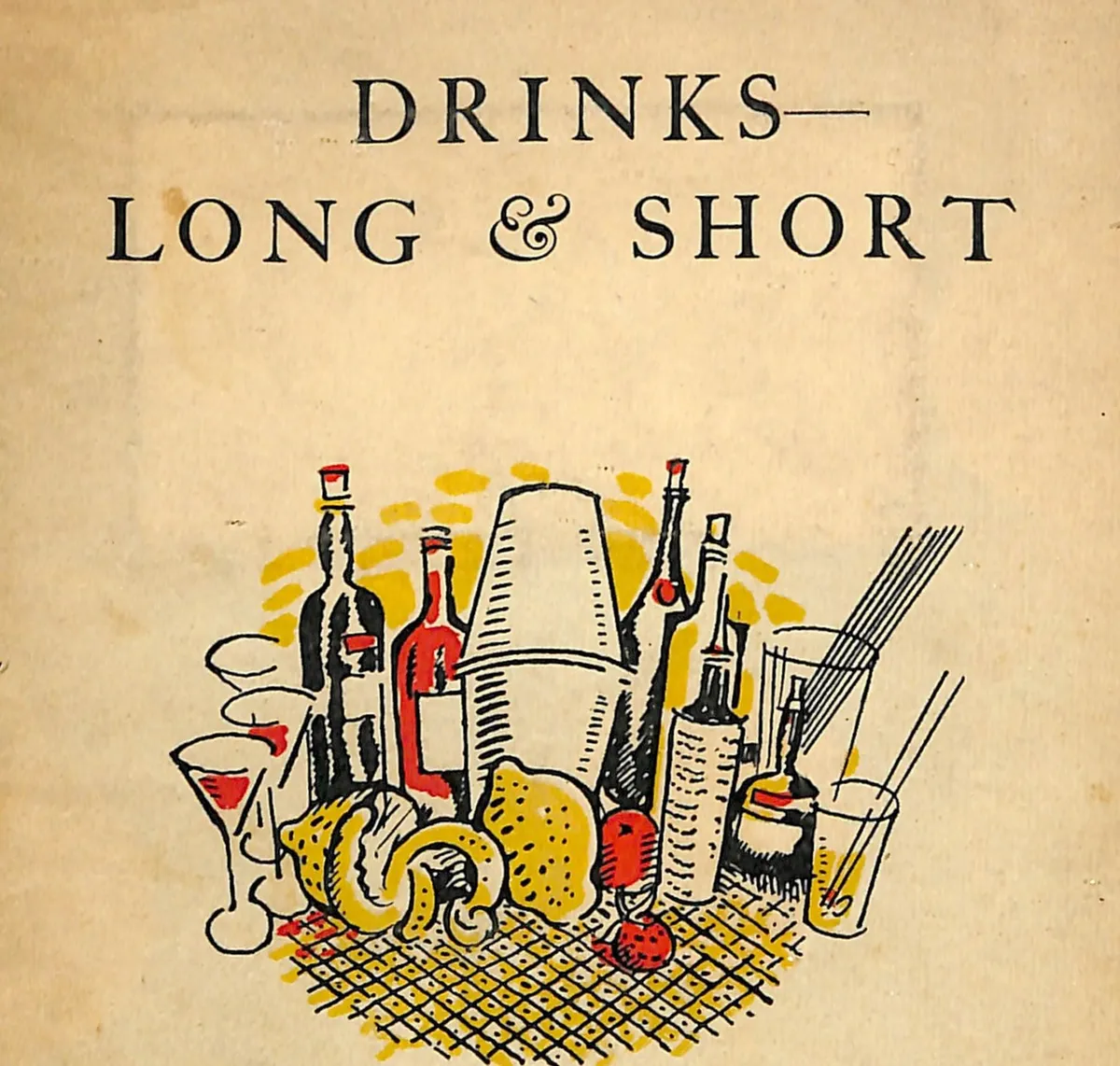
Salted nuts, olives, cheese straws and little rolls of brown bread-and-butter: small, salty things you could eat with one hand. A London book of 1925, Drinks: Long and Short, lists what to set out with the shaker before a dinner with fine wines: tiny sandwiches of pâté de foie gras or caviar, olives, salted nuts, crackers plain or cheese (the book’s “biscuits”), cheese straws, and brown bread-and-butter rolled around a strip of pimento. In the United States, where selling a cocktail was by then against the law, a 1924 Sunday-dinner book opens a menu with a “Fruit Cocktail” of grapefruit and puts stuffed olives, cheese straws and salted almonds later in the same meal. A 1922 book of men’s recipes adds two dishes that suit the same plate: celery stuffed with Roquefort, and deviled eggs.
A book for the hostess
Drinks: Long and Short was written by Nina Toye and A. H. Adair and published by Heinemann in 1925, with a preface by the French cook and writer X. Marcel Boulestin and a cover by the artist J. E. Laboureur. Its jacket calls it “a June book” and explains where the recipes came from: they were the drinks Adair served at “that newest and most intriguing of restaurants,” Boulestin’s, on a corner of Leicester Square under “a tricolor awning.”
The authors write for the hostess giving a dinner party, and they argue that the cocktail is the best way to start one. Nothing else, they say, “so adequately bridges the dull interval between the guests’ arrival and the announcement of dinner.” Sherry works too slowly. With a cocktail, the guests “unbend from their proud estate” and start talking.
Saving the palate for the wine
The food comes up in a practical paragraph, after advice on shaking and serving. The reason they give is the dinner wine.
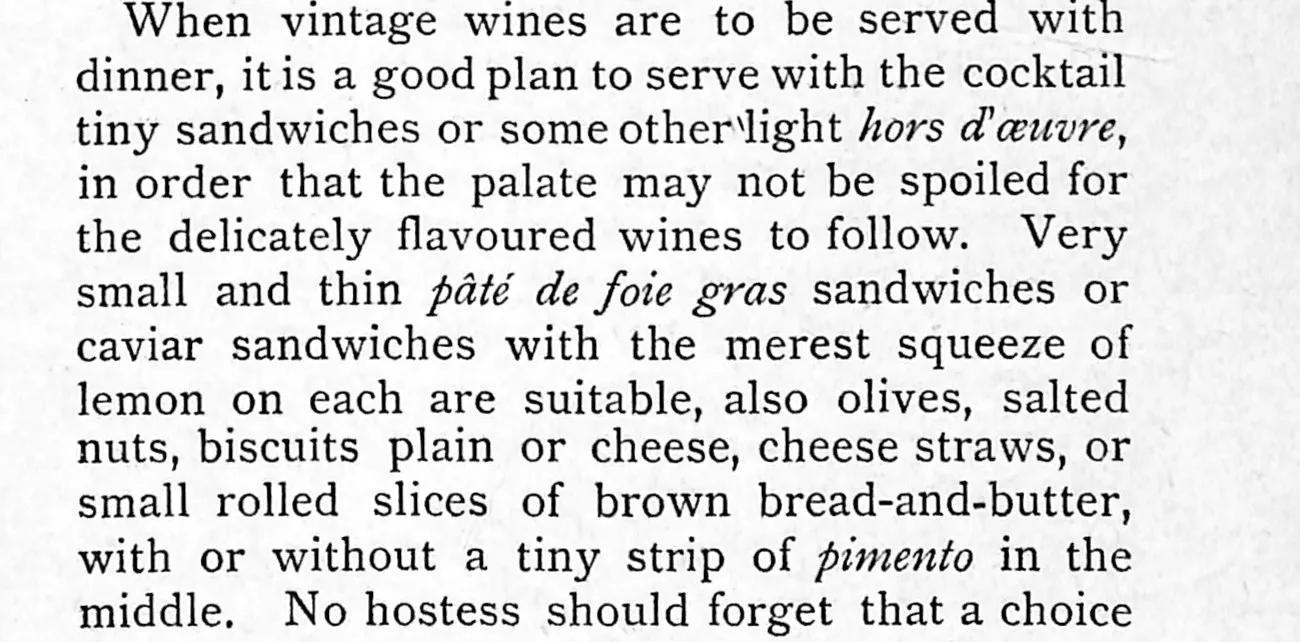 From Nina Toye and A. H. Adair, Drinks: Long and Short (London, 1925), p. 9.
When vintage wines were to follow, they advised serving “tiny sandwiches or some other light hors d’œuvre” with the cocktail, so that the palate would not be spoiled. Then comes the list. Each item is small and plain, and none of it is sweet. Then the paragraph turns to the hostess: “a choice wine has always the right of way.”
Matching was part of the art. A cocktail should be chosen with the dinner wines in mind, and “as a general rule the richer the food the stronger and brighter the cocktail.” A short wait between the cocktail and dinner kept the wine safe.
A box of salted almonds
Salted almonds and olives appear in the book before the list does, in its defense of the cocktail. A guest who drinks six or more at a sitting, the authors say, is no better than one who before dinner eats “a pound of caviare or six dozen oysters,” or who in the afternoon works through “a box of salted almonds or a barrel of olives.” The joke depends on readers knowing them as things eaten a few at a time.
Salted almonds were already on American dinner menus. Fannie Farmer’s Boston Cooking-School Cook Book sets them beside the celery on its New England Thanksgiving menu and, in its 1918 edition, gives two ways to make them: blanched almonds fried a handful at a time in olive oil, or in lard and clarified butter, then drained and sprinkled with salt.
Meanwhile in dry America
When the London book came out, Americans had been under Prohibition for five years. The law closed the saloons and stopped the sale of liquor, but drinking at home went on, as What Did Americans Cook When the Bars Closed in 1920? tells.
The American cookbooks of those years kept the small salty things on the table. The Woman’s World Book of Sunday Dinners, published in Chicago in 1924, gives a goose dinner that begins with its alcohol-free “Fruit Cocktail” and lists “Stuffed Olives” on the same menu, with the cheese straws beside the salad and the salted almonds with the after-dinner mints. The Stag Cook Book, published in New York in 1922, gathers recipes from well-known men, and two of them belong on the same plate. The newspaper correspondent Frazier Hunt gives stuffed celery: Roquefort creamed with butter and Worcestershire sauce, pressed into crisp white stalks. The page headed “Houdini” pairs scalloped mushrooms with deviled eggs, the halves trimmed at the ends so they stand upright, the yolks rubbed smooth with melted butter, cayenne, mustard and vinegar.
Neither page mentions cocktails. Hunt would serve his celery “with your dinner, or after dinner, or with the salad, or all alone,” and Houdini’s page names no occasion. Both dishes are small, cold and made ahead, which is why they sit on this plate.
The recipes
The rolled bread-and-butter comes from the London list itself. The almonds, cheese straws, celery and eggs come from American cookbooks of 1918 to 1924. The modern amounts, times and temperatures are ours.
- Salted Almonds (1918): blanched almonds fried in olive oil until pale gold, drained and salted.
- Cheese Straws (1924): pastry rolled with grated cheese and paprika three times, cut in strips and baked.
- Brown Bread-and-Butter Rolls with Pimento (1925): thin brown bread, buttered and rolled around a strip of red pimento.
- Stuffed Celery with Roquefort (1922): Frazier Hunt’s Roquefort and butter in crisp celery stalks.
- Houdini’s Deviled Eggs (1922): upright egg halves filled with buttery, peppery yolk, on dressed watercress.
Cooking it
Every one of these can be made a few hours ahead. Fry the almonds and bake the cheese straws in the morning; both keep in a tin. Stuff the celery and fill the eggs an hour or two before the guests come, and keep them covered in the refrigerator. Lay the plates out where people stand, and keep the portions small: by the book’s own logic, the dinner is still to come.
The one dish here that comes straight off the London list is the rolled bread-and-butter, and it wants only a thin brown loaf, soft butter and a jar of pimentos; roll it an hour before the bell and chill it so the spirals cut clean. All five plates are in our 1920s recipes, with the waffles and sundaes of the Prohibition table. For the drinks to pour with it, Forgotten Drink, our sister site, goes through the shakers of the decade in Cocktails in 1920s London and Paris (opens in a new tab).
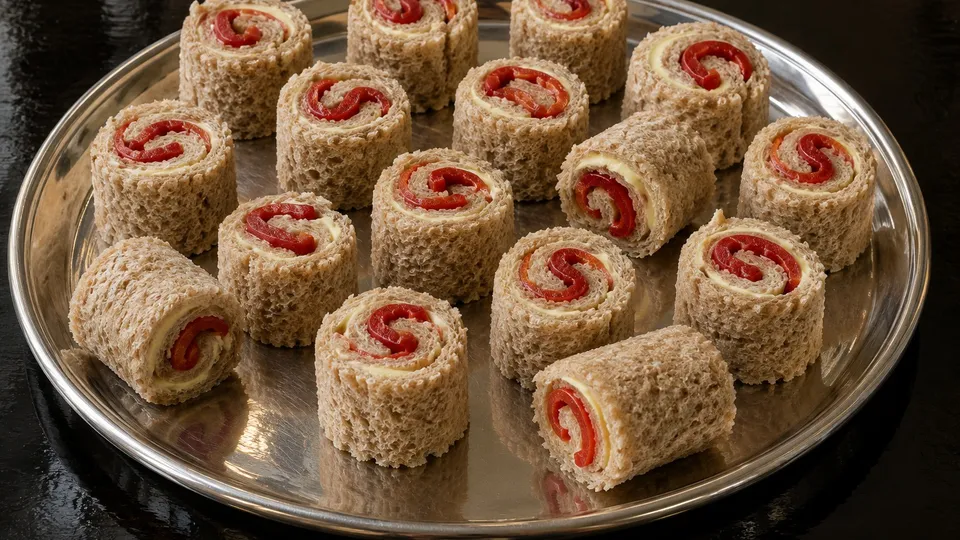 Cook it todayBrown Bread-and-Butter Rolls with Pimento (1925)
Sources
- Nina Toye and A. H. Adair, Drinks: Long and Short, with a preface by X. Marcel Boulestin (London: William Heinemann, 1925), jacket and pp. 2–5, 9–10.
- C. Mac Sheridan, ed., The Stag Cook Book: Written for Men by Men (New York: George H. Doran Company, 1922), introduction and pp. 83, 106 and 151.
- Fannie Merritt Farmer, The Boston Cooking-School Cook Book, revised edition (Boston: Little, Brown, 1918), pp. 535–536 and 610.
- Woman’s World Book of Sunday Dinners (Chicago: Woman’s World Magazine Co., 1924), pp. 57 and 63.